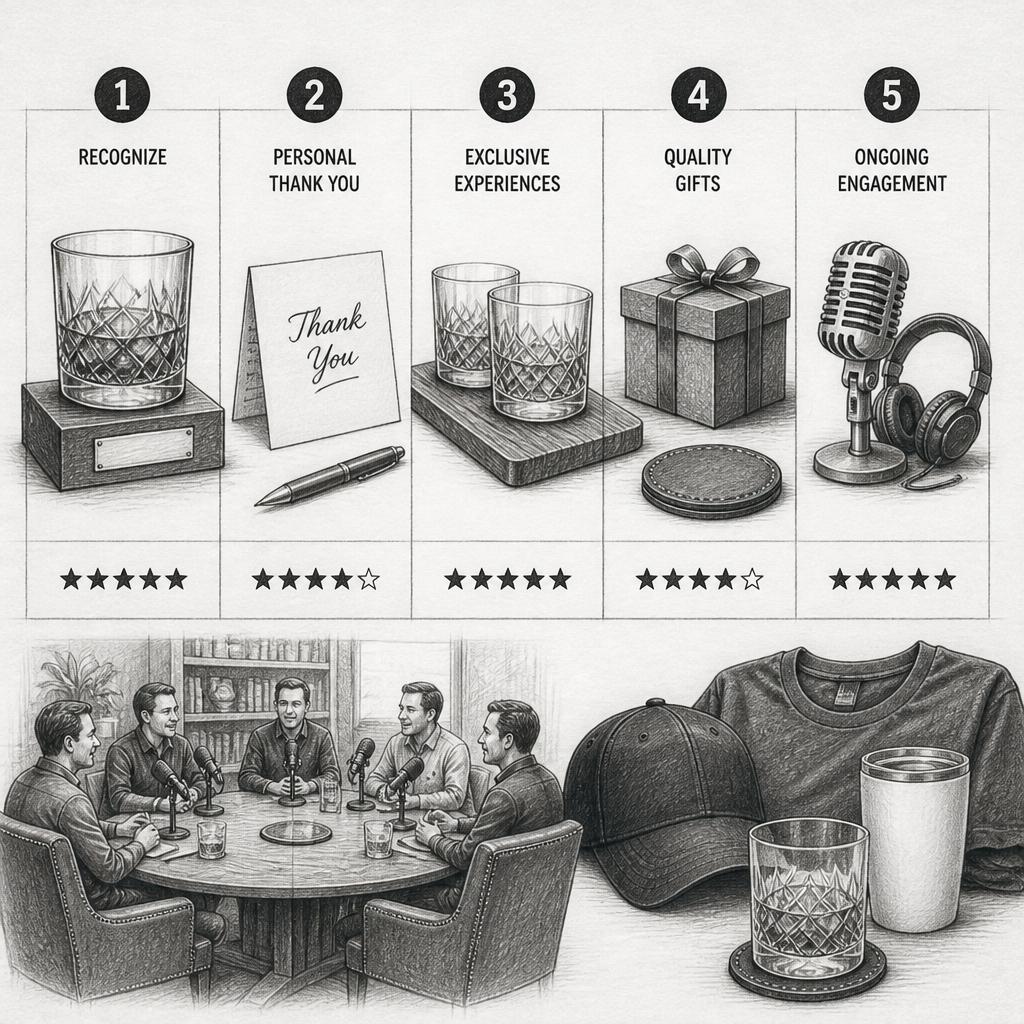
 blog
5 Ways to Show Appreciation to Board Members
Table of Contents
- Why Board Member Appreciation Matters for Nonprofit Leadership
- Personalized Thank-You Notes and Board Member Thank-You Message Examples
- Board Member Appreciation Gifts That Reflect Leadership
- How to Recognize Board Members in Public Settings
- Appreciation Message for Outgoing Board Members
- Professional Development and Continuous Learning Opportunities
- Building a Culture of Gratitude That Drives Board Retention
- Frequently Asked Questions
Last Updated: October 15, 2026
Why Board Member Appreciation Matters for Nonprofit Leadership
Board members volunteer their time, expertise, and networks, yet many nonprofits treat appreciation as an afterthought.
Boards with strong appreciation cultures report higher retention and stronger donor relationships: valued leaders attend more meetings, recruit better candidates, and open doors.
The challenge with 5 ways to show appreciation to board members isn't finding them, it's making those efforts feel personal rather than obligatory.
Personalized Thank-You Notes and Board Member Thank-You Message Examples
Handwritten notes remain one of the most powerful appreciation tools: they cost little but signal invested personal time.
The key is specificity. A generic "thank you for your service" gets filed away; a note referencing a specific contribution, donor, or committee accomplishment creates genuine recognition.
Handwritten vs. Digital Notes
Handwritten notes carry weight digital messages don't: they're tangible, they sit on a desk, and they're shared with family.
Still, timing matters more than format: a timely digital message beats a delayed handwritten one.
Board Member Thank-You Message Examples:
For consistent meeting attendance and engagement: "You've attended every board meeting this year and come prepared each time.
For recruiting a new board member: "You brought [Name] to the board, and they've already proven to be exactly what we needed.
Board Member Appreciation Gifts That Reflect Leadership
A thoughtful gift acknowledges board service while reinforcing the organization's values. Whether it lands or gets quietly re-gifted comes down to two variables: fit with the recipient's role and fit with your budget.
Match the Gift to the Board Role
Generic gifts fail because they ignore what each officer actually does. Start with the role, then choose an object that supports it.
- Chair or President: Something that signals presence and authority in a room, like a well-made desk object, leather portfolio, or barware they can use when hosting.
- Treasurer: Something that rewards rigor, like a high-quality pen, bound notebook, or governance publication subscription. Avoid anything frivolous; this is the board member most likely to notice impractical spending.
- Secretary: Something that honors the unglamorous work of minutes, records, and follow-through, like a personalized stationery set, document folio, or small engraved item.
- Development or Fundraising Chair: Something tied to relationship-building, like barware, a wine or coffee accessory, or an item they can bring to a donor dinner.
Cost Tiers That Respect Nonprofit Budgets
Small and mid-sized organizations rarely have a dedicated gift line item. A tiered approach keeps appreciation consistent without straining the budget.
- No-cost tier: Handwritten notes, a newsletter spotlight, a five-minute recognition moment at a board meeting, or a personal call from the Executive Director. These cost nothing but time and often outperform paid gifts because they are specific.
- Modest tier: A quality notebook, signed book relevant to the mission, small engraved item, or framed photo from a milestone. These work well for mid-year recognition or committee thank-yous.
- Higher tier: Reserved for end-of-term recognition or major milestones: premium barware, a leather portfolio, or a custom item that will live in the recipient's home or office.
Meaningful vs. Generic Gifts
Generic gifts, plaques, certificates, and branded pens feel obligatory and are often discarded. Meaningful gifts align with the recipient's interests or role.
A golf lover might appreciate quality golf accessories; someone who values intellectual growth, a business publication subscription; a leader who hosts client dinners, premium glassware.
The most effective gifts are high-quality, personal, and useful.
Barware works as a board appreciation gift because it fits the environment where board members operate: serious conversation, decision-making, and reflection.
How to Recognize Board Members in Public Settings
Public recognition serves a different purpose than private appreciation: it signals to the community that the organization values its board, builds the board's credibility, and reinforces a culture where service is noticed.
The most effective public recognition is specific and timely. A vague mention at the annual gala doesn't land; a detailed story about a board member's contribution, told in front of donors, staff, and community partners, creates impact.
Board Member Spotlights and Leadership Recognition
Board member spotlights are among 5 ways to show appreciation to board members, working in newsletter features, social media posts, event introductions, or recognition moments during board meetings.
A strong spotlight includes:
- The board member's name and role
- Their professional background or expertise
- A specific contribution they've made to the organization
- A personal detail that humanizes them (what they're passionate about, why they serve, a memorable moment)
Example spotlight:
"Meet [Name], chair of our Finance Committee. [Name] brings 20 years of nonprofit finance experience and serves as CFO of [Company].
Public recognition also works during board meetings. Dedicate five minutes to highlight a recent contribution, an event they led, or an initiative they championed.
Appreciation Message for Outgoing Board Members
Outgoing board members deserve recognition that honors their tenure and transitions them into alumni status. How an organization treats departing members signals to prospects how they'll be treated.
An appreciation message for an outgoing board member should:
- Acknowledge their tenure and the years they served
- Highlight major contributions or accomplishments during their service
- Note personal qualities that made them valuable (judgment, generosity, leadership style)
- Extend an invitation to stay connected (alumni network, advisory role, volunteer opportunities)
Example appreciation message for outgoing board members:
"After six years of service, [Name] is stepping down from the board, and we want to honor the impact they've had on this organization. [Name] joined us during a critical transition period and helped stabilize our finances, rebuild donor relationships, and chart a new strategic direction.
Outgoing board members often become donors, volunteers, or ambassadors. Treating departure as a transition rather than an ending keeps the relationship alive and strengthens the long-term network.
Professional Development and Continuous Learning Opportunities
Board members want to grow in their roles. Offering professional development signals that the organization invests in its leadership.
Professional development for board members might include:
- Board training workshops on nonprofit governance, fiduciary duty, or fundraising
- Industry conferences or seminars relevant to the organization's work
- Peer learning groups where board members from similar organizations share challenges and strategies
- Mentorship opportunities with experienced nonprofit leaders
These opportunities strengthen board capability and show that the organization values its members' growth. A board member who attends governance training returns with better skills and feels invested in.
Building a Culture of Gratitude That Drives Board Retention
Board retention depends on culture more than any single tactic. When board members feel valued, trusted, and part of something meaningful, they stay; when their time feels wasted or their contributions invisible, they leave.
But "culture of gratitude" is easy to say and hard to measure. A more useful approach is to treat appreciation like any other board function: define what it looks like, assign who owns it, and track whether it works.
What a Gratitude Culture Actually Looks Like
A gratitude culture requires intentional practice: recognizing contributions regularly, listening when board members raise concerns, following through on commitments, and celebrating wins together.
In practice, that shows up in a few repeatable habits:
- A standing five-minute recognition moment at the top of every board meeting
- A rotating spotlight in the newsletter or on social media, one board member per month
- A handwritten note from the Chair or Executive Director after any major contribution
- A short debrief after every major event or campaign that names who did what
A Framework for Hybrid and Remote-First Boards
Most appreciation advice assumes in-person meetings, an assumption that breaks down for remote or hybrid boards, now a large share of small and mid-sized nonprofits.
For remote-first boards, the same principles apply but the mechanisms change:
- Recognition moments move to the start of video calls. A five-minute spotlight works the same on a screen as it does in a room, as long as it is scheduled and not skipped.
- Handwritten notes matter more, not less. When board members rarely see each other in person, a physical note arriving in the mail carries disproportionate weight.
- Gifts ship. Barware, apparel, and other items can be sent directly, and the unboxing becomes its own small moment of recognition.
- Peer connection needs to be designed. Remote boards lose the hallway conversations that build relationships. A short pre-meeting social window, a quarterly virtual coffee pairing, or a peer learning group can replace some of that.
Organizations that do this well treat remote appreciation as a design problem, not a compromise.
Measuring Whether Appreciation Is Working
Appreciation correlates with retention, engagement, and fundraising performance, yet most organizations never check.
A simple measurement framework:
- Retention rate: What percentage of board members renewed their term this year compared to last year?
- Meeting attendance: Are the same members showing up, or are the same members missing?
- Committee participation: Are members volunteering for committees, or are the same few people carrying the load?
- Personal giving: Are board members increasing their own contributions year over year?
- Peer recruitment: Are current board members bringing in new candidates?
No single metric proves causation, but declining attendance, flat giving, and low recruitment signal that appreciation isn't landing, regardless of how many notes were sent.
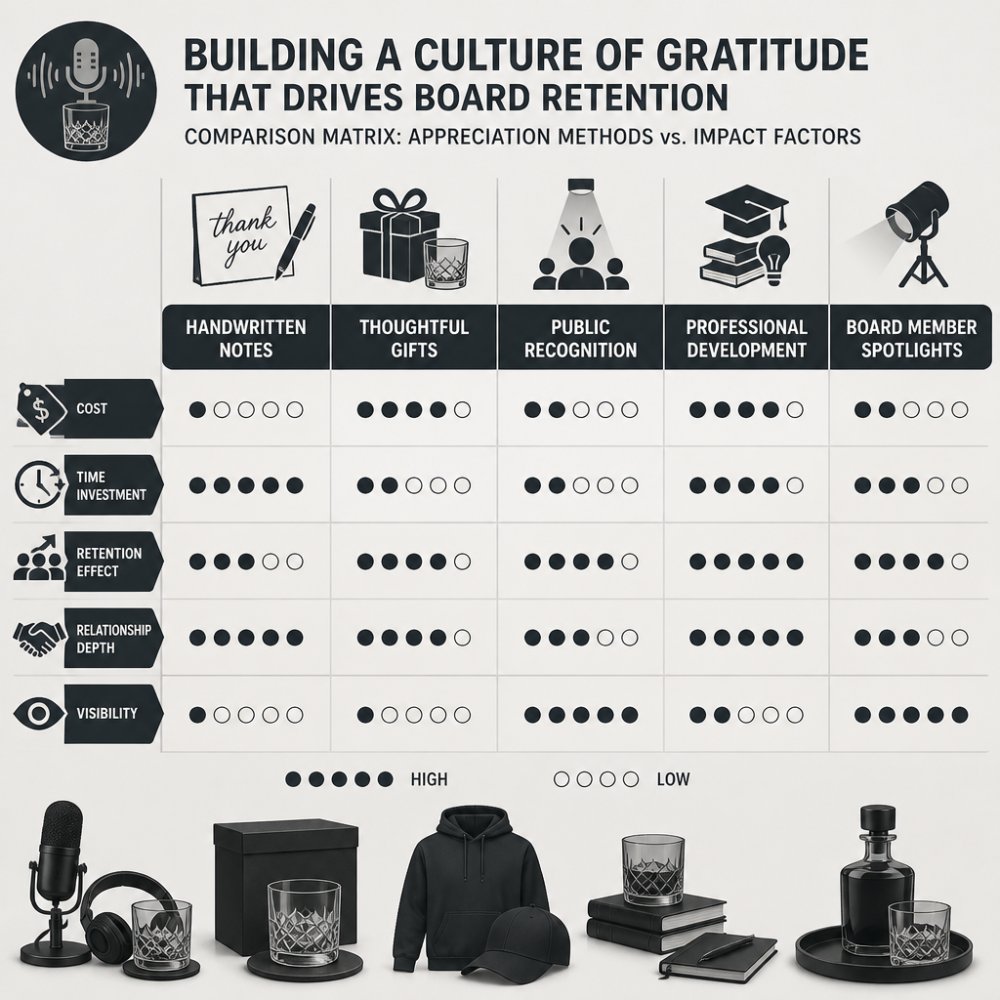
The most sustainable strategies combine approaches.
Gratitude flows both directions. Board members appreciate an organization that shows gratitude toward staff, volunteers, and donors.
Frequently Asked Questions
What should you write in a thank-you note to a board member?
A meaningful thank-you note should reference a specific contribution or decision the board member made, explain its impact on your organization's mission, and express genuine gratitude. Avoid generic language. Keep it concise (3-4 sentences), handwritten when possible, and personal in tone. Mention how their thought partnership strengthened board governance or advanced a strategic initiative. Personalization transforms a thank-you from obligatory to memorable.
How can you recognize board members without giving a gift?
Public recognition strategies cost nothing but deliver significant impact. Feature board members in your newsletter, highlight their contributions during board meetings, create a 'board spotlight' on your website or social media, nominate them for external leadership awards, or invite them to speak at events. These approaches build board culture and demonstrate that you value their service beyond a physical object. Recognition feeds volunteer engagement and board member satisfaction.
What are good appreciation gifts for board members?
Meaningful gifts reflect the board member's role and your organization's values. Consider premium barware (like a weighted old-fashioned glass with your organization's logo), personalized leather portfolios, engraved pens, or branded apparel that signals their ambassador status. Avoid generic corporate gifts. The best appreciation gifts serve a purpose in the recipient's professional life and remind them of their meaningful contributions every time they use them.
How do you measure whether your board appreciation efforts actually improve retention?
Track retention rates year-over-year and correlate them with appreciation initiatives you've launched. Survey board members anonymously about whether they feel valued and recognized. Monitor attendance at appreciation events and engagement in professional development offerings. Ask departing board members why they're leaving, their feedback reveals whether appreciation efforts are addressing real retention drivers. Strong donor stewardship and board member satisfaction metrics indicate your gratitude strategy is working.