 blog
5 Best Sensory Design Elements for Executive Offices
Last Updated: October 31, 2026
Quick Summary
The five best sensory design elements for executive offices are layered lighting, acoustics and noise control, tactile objects, biophilic design, and scent paired with visual calm. Sensory design works best when you fix sound and light first, then add touch, plants, and scent.
- Layer overhead, task, and accent light with dimmers instead of one harsh ceiling panel.
- Fix echo with rugs, fabric panels, and door seals before buying a white-noise unit.
- Choose one large, low-maintenance plant rather than many small pots that add clutter.
- Pick one light natural scent note and avoid stacking plug-ins on top of plants.
- Add one element at a time and live with it for a week before the next.
Table of Contents
- Why Sensory Design Belongs in the Executive Office
- Office Lighting for Focus: The First Element
- Acoustics and Noise Control: Protecting Concentration
- Tactile Objects for Meeting Focus: Weight in the Hand
- Biophilic Office Design: Bringing the Outdoors In
- Scent and Visual Calm: The Finishing Elements
- How to Build a Sensory-Friendly Office Design on a Real Budget
- Choosing the Tactile Centerpiece for Your Boardroom Table
- Frequently Asked Questions
Why Sensory Design Belongs in the Executive Office
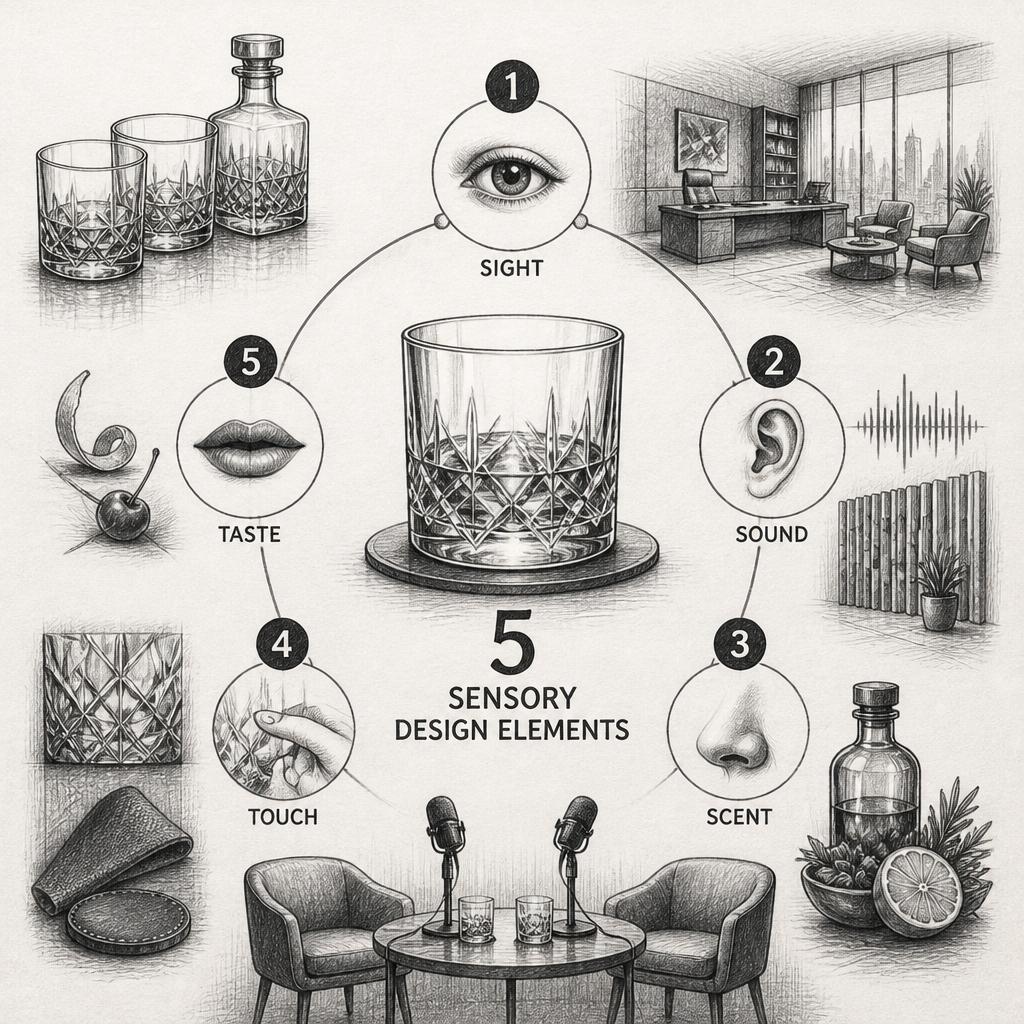
Sensory design is the practice of shaping a room around all five senses, not just how it looks. For executives, that means building a space where sight, sound, touch, smell, and taste support clear thinking instead of fighting it. This guide breaks down the five elements that matter most in an executive office.
Here is the core argument: most offices are designed for visitors, not for decisions. A lobby impresses. A boardroom should think.
Leaders spend long hours in one room. Small fixes to light and sound often do more for focus than a full remodel. Join Bourbon in the Boardroom to access exclusive bourbon content, community, and events.
The five elements below are ranked by impact and effort. A few cost almost nothing. Others take planning. All of them change how a room feels.
Office Lighting for Focus: The First Element
Light is the highest-impact fix in any executive office. Bad light causes eye strain and fatigue within an hour.
Start with these moves:
- Layer the light. Combine overhead, task, and accent sources instead of one bright ceiling panel.
- Use natural daylight. Position the desk near a window, but angle it to avoid screen glare.
- Add warm task lamps. A focused lamp beats a room-wide floodlight for close work.
- Install dimmers. Bright for reading, softer for conversation.
The Center for Daylighting research notes that daylight access shapes how people feel and perform indoors. A dimmable, layered setup gives the most control.
Watch out: a single harsh overhead light is the most common mistake. It flattens the room and tires the eyes by mid-afternoon.
Acoustics and Noise Control: Protecting Concentration
Sound is the sense executives underestimate most. A room can look perfect and still fail because of echo, hum, or hallway noise.
Acoustics is about controlling what the ear receives. Three moves handle most of it:
- Soften hard surfaces. Add rugs, fabric panels, and upholstered seating to absorb sound.
- Seal the gaps. Weatherstripping on the door blocks hallway chatter.
- Mask the rest. A quiet white-noise unit covers low-level hum.
Sound-absorbing finishes do the heavy lifting. A room with bare walls and hard floors bounces every voice, so calls feel louder and more tiring than they are.
Watch out: teams often buy a sound machine before adding any soft materials. Fix the echo first.
Tactile Objects for Meeting Focus: Weight in the Hand
Touch is the sense that anchors a conversation. A weighted object in the hand gives the mind something steady to hold, and it slows the pace of a meeting.
Tactile objects for meeting focus work because weight signals permanence. A heavy glass, a stone paperweight, a textured pen: each one turns a nervous habit into a grounding ritual.
What to look for:
- Real weight. A piece with heft feels deliberate; a light one feels disposable.
- Texture. Cut glass, brushed metal, or raw wood invites touch.
- A story. Objects with a mark or motto start conversations.
The Glass Packaging Institute on glassware quality explains why glass holds weight and clarity better than most materials. For a deeper look at what separates standard barware from executive-grade pieces, see what defines a premium glassware shop.
Biophilic Office Design: Bringing the Outdoors In
Biophilic office design means adding natural elements to a built space. It is not about turning the office into a garden.
Many guides stop at "add plants and wood." The executive-office angle is different. A leader's room has to look composed on camera, stay quiet during calls, and feel calm without looking like a waiting room.
What actually works in an executive office:
- One large, low-maintenance plant with presence. A single floor plant (a fiddle-leaf fig, a rubber tree, a large snake plant) reads as intentional. Ten small pots read as clutter and add watering chores. Choose a species that tolerates low light and a weekly watering schedule.
- Real natural materials at the touch points. A wood desk edge, a stone tray, a linen-covered chair. These are the surfaces a leader and guests actually touch, so the natural cue lands where it matters.
- A clear window line. Keep the sill and the sightline to the glass free of boxes and files. Daylight is the cheapest biophilic element in the room, and blocking it defeats the purpose.
- A quiet natural sound or scent, used sparingly. A small desktop water feature can mask low-level hum, but it must be cleanable and silent enough not to intrude on calls. A single living plant already contributes a faint natural scent; do not stack a plug-in on top of it.
Executive-specific trade-offs to plan for:
- Camera and backdrop. A large plant placed behind the desk gives video calls depth without visual noise. Avoid busy foliage directly behind the head, which distracts on camera.
- Maintenance ownership. Decide up front who waters, dusts, and replaces plants. A dead plant in an executive office undercuts the calm it was meant to create.
- Allergy and scent sensitivity. Some guests react to certain plants, soils, or natural scents. Keep a scent-free default and let the plant be the only natural cue in the room.
- Privacy. A window view is a biophilic asset, but ground-floor windows need sheers or film so confidential conversations are not visible from outside.
The U.S. General Services Administration on workplace health points to daylight and natural elements as factors in workplace well-being.
Scent and Visual Calm: The Finishing Elements
Smell and sight complete the room. Both work quietly, and both are easy to overdo.
On scent: pick one light, natural note and stop there. A subtle cedar or citrus keeps a room fresh. A heavy plug-in scent signals a cover-up, not calm.
On visual calm: reduce clutter and soften the edges.
- Clear the sightlines. Fewer objects on the table means less visual noise.
- Choose calm colors. Warm neutrals and deep tones settle a room.
- Repeat forms. Matching shapes and patterns read as order, not chaos.
Together, scent and sight decide whether a room feels restful or busy. Get them right and the space supports focus without anyone noticing why.
How to Build a Sensory-Friendly Office Design on a Real Budget
A sensory-friendly office design does not require a remodel. The gap most guides leave open is prioritization: which element first, based on the room you actually have, and how to tell whether it worked.
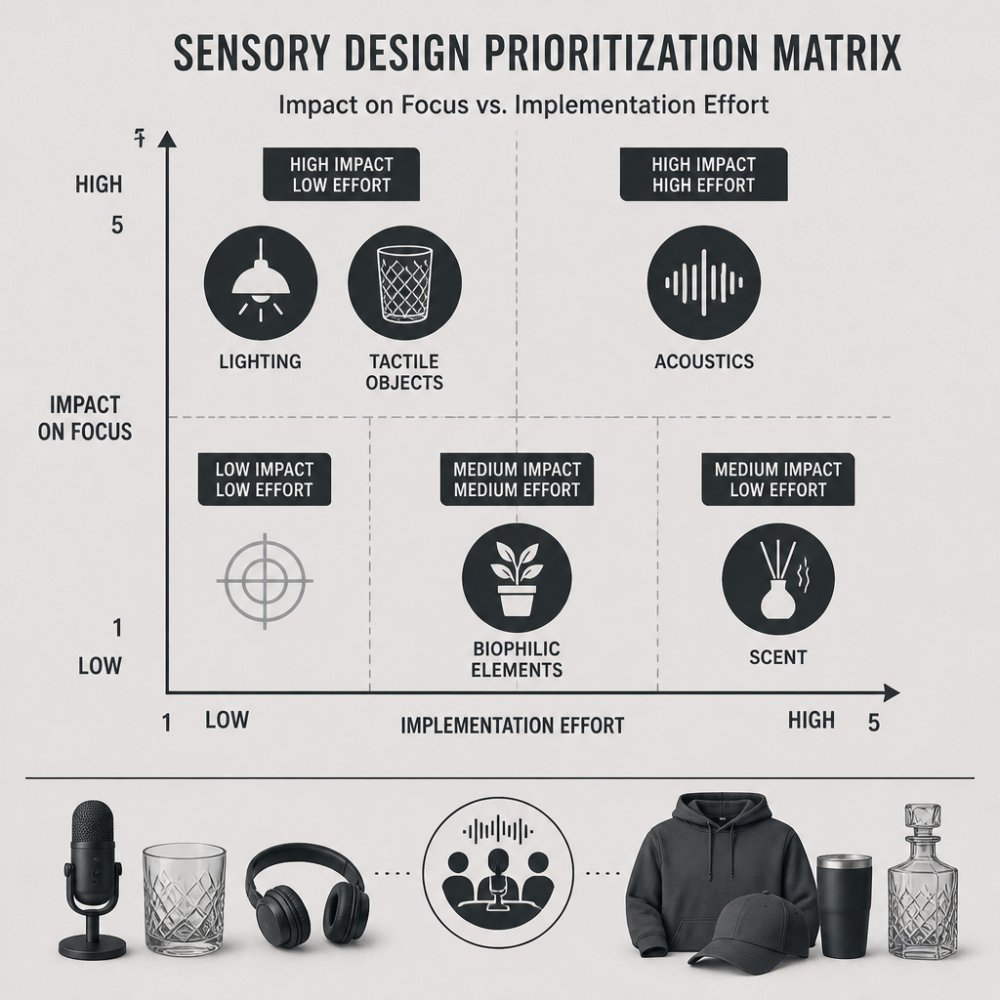
| Element | Effort | Impact on Focus | Start With |
|---|---|---|---|
| Lighting | Low | High | Dimmers and a task lamp |
| Tactile objects | Low | High | One weighted piece per seat |
| Acoustics | Medium | High | Rugs and door seals |
| Biophilic design | Medium | Medium | One large plant |
| Scent | Low | Medium | A single natural note |
Sequence by room condition, not by the table alone.
- If the room is loud or echoey: fix acoustics before anything else. Soft materials and door seals change how every call feels, and no amount of lighting or scent compensates for a bouncy room.
- If the room is dim or glare-prone: start with lighting. Layering and dimming are low-effort and high-impact, and they make every other element look better.
- If the room is already quiet and well-lit: move to tactile objects and biophilia. These are the elements that make a functional room feel deliberate.
- If the room is small: prioritize tactile and scent over large biophilic pieces. A single weighted object and one light natural note do more in a tight space than a floor plant that crowds the desk.
Measurable trade-offs to track.
- Noise: a simple phone sound-level app before and after soft materials gives a rough before/after reading. Rugs and door seals often make a noticeable difference on hallway chatter.
- Glare and eye comfort: note whether anyone squints or moves screens during afternoon meetings. A dimmer and a repositioned task lamp usually resolve it.
- Comfort ratings: ask the people who use the room to rate focus and comfort on a simple scale before and after each change. This is not a formal study, but it tells you whether a change earned its place.
- Maintenance load: track how often plants need care, how often scent needs refreshing, and how often soft materials need cleaning. Low-maintenance choices usually win over time.
A common mistake is buying everything at once. Pick one element, live with it for a week, then add the next. The room improves in steps you can actually feel, and you can reverse a choice that does not work without undoing the whole room.
Choosing the Tactile Centerpiece for Your Boardroom Table
The centerpiece is the one object everyone at the table touches. It should carry weight, look refined, and start a conversation without trying.
The Pour, from Bourbon in the boardroom, offers classic old-fashioned glassware designed for leaders who value meaningful conversations. Each short, wide glass has a weighted feel and an etched tagline on the bottom, and is built to serve as a tangible focal point for important discussions.
- Weighted feel for a premium, grounded experience
- Etched tagline underneath, a quiet conversation starter
- Classic design that stays sophisticated for years
To browse the collection and pick a centerpiece for your own table, visit the executive glassware collection.
Frequently Asked Questions
What is sensory design in an office?
Sensory design means deliberately shaping what people see, hear, touch, and smell in a workspace so the environment supports the work instead of competing with it. In an executive office, that usually means layered lighting, sound-absorbing surfaces, a few well-chosen tactile objects, natural materials, and restrained scent. The goal is not stimulation for its own sake. It is a room where a leader can concentrate through a long meeting and where guests feel at ease the moment they sit down.
How can lighting improve focus in an executive office?
Office lighting for focus works best in layers. Start with daylight where the room allows it, then add task lighting aimed at the desk surface rather than the eyes, and keep overhead light soft and adjustable. Cool, bright light suits analytical work; warmer, dimmer light suits conversation. The practical move is dimmers and separate circuits, so a boardroom can shift from a working session to an evening discussion without anyone squinting. Avoid a single harsh overhead fixture, which flattens the room and tires the eyes.
What office design elements help reduce noise and distractions?
Sound is the sense most executives underestimate. Soft materials do the heavy lifting: an area rug, fabric-covered chairs, curtains, acoustic ceiling tiles, and bookshelves all absorb reflections that make a room feel loud. Position the desk away from HVAC vents and doorways. For a boardroom, a sound-absorbing panel on one wall can change how a table of eight hears each other. Add a small white-noise source only if the room still feels echoey after the soft surfaces go in.
How do you make an office sensory-friendly for different employees?
Sensory-friendly office design starts with control and choice. Give people dimmable light, a quiet corner, and the option to move a tactile object or plant where they want it. Ask about preferences rather than assuming: some people find scent distracting, some need absolute quiet, and some focus better with background sound. Keep fragrances light and confined to common areas, offer seating with different textures, and make sure anyone can adjust their own immediate environment without asking permission.
A boardroom that engages the senses changes how people show up. Bourbon in the boardroom supports that shift with weighted, classic old-fashioned glassware built for meaningful conversations, each piece carrying the brand's signature logo and a unique etched tagline on the bottom. Get started with Bourbon in the boardroom and give your most important discussions a centerpiece worth reaching for.