 blog
7 Best Bourbon Glasses for Professional Settings
Last Updated: October 22, 2026
Quick Summary
The best bourbon glasses for professional settings are weighted old-fashioned glasses for boardroom pours, classic rocks glasses for standing receptions, and nosing glasses or copitas for structured tastings. Match the shape to how the glass will be handled, washed, stored, and replaced.
- A weighted old-fashioned glass is the boardroom workhorse: stable, substantial, and easy to replace.
- Classic rocks glasses suit everyday office use and standing receptions because they stack without chipping.
- Glencairn-style nosing glasses hold about 6 ounces to the rim, with working pours of 0.5 to 1 ounce.
- Skip nosing glasses and copitas at standing receptions, where tall bowls and stems invite breakage.
- Engraved old-fashioned glasses make the strongest gifts because the recipient already uses the shape.
Table of Contents
- Why the Right Bourbon Glass Matters in a Professional Setting
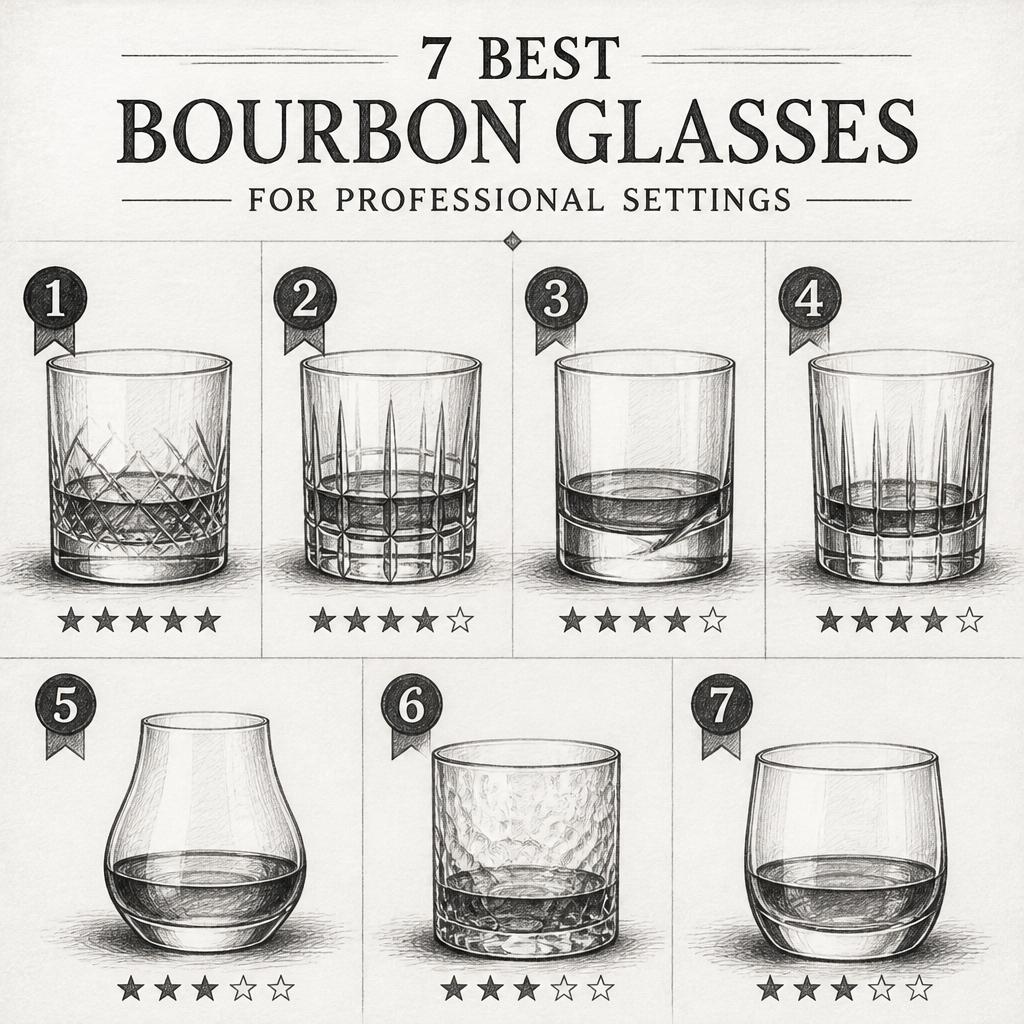
- Quick Comparison: 7 Best Bourbon Glasses for Professional Settings
- 1. The Pour Old-Fashioned Glass: The Boardroom Workhorse
- 2. Classic Rocks Glass: The Reliable Standard
- 3. Glencairn-Style Nosing Glass: For Serious Tasting
- 4. Copita Tasting Glass: Precision Without the Snifter Bulk
- 5. Crystal Whiskey Glasses: When Clarity and Weight Signal Quality
- 6. Engraved and Personalized Glasses: Bourbon Glasses for Gifts That Get Remembered
- How to Choose Bourbon Glasses by Use Case
- Frequently Asked Questions
Why the Right Bourbon Glass Matters in a Professional Setting
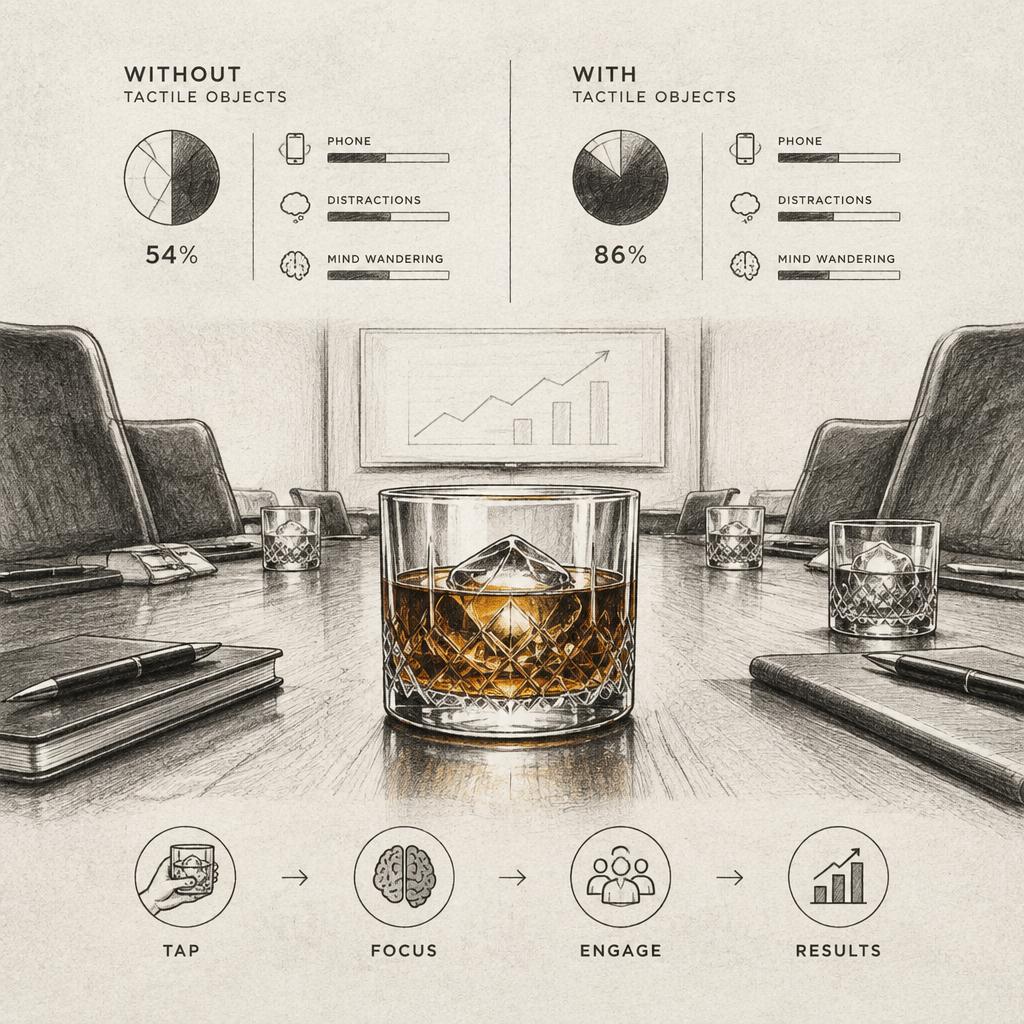
Bourbon glasses are not neutral equipment. The shape of the vessel decides how much aroma reaches the nose, how the liquid hits the palate, and how the glass feels in a hand during a long conversation. This guide from Bourbon in the boardroom covers seven styles worth considering when the setting is a boardroom, a client dinner, or a gift for a colleague. The stakes are higher than they look: a glass that narrows aroma too aggressively turns a relaxed pour into a chemistry exercise, while a glass that is too wide lets the ethanol dominate. Get the shape right and the bourbon does the talking.
The distinction that matters most is between a bourbon tasting glass and a rocks glass. A tasting glass concentrates aroma toward a narrow rim. A rocks glass opens wide, prioritizes ice and grip, and keeps the conversation moving. Neither is better. They serve different moments.
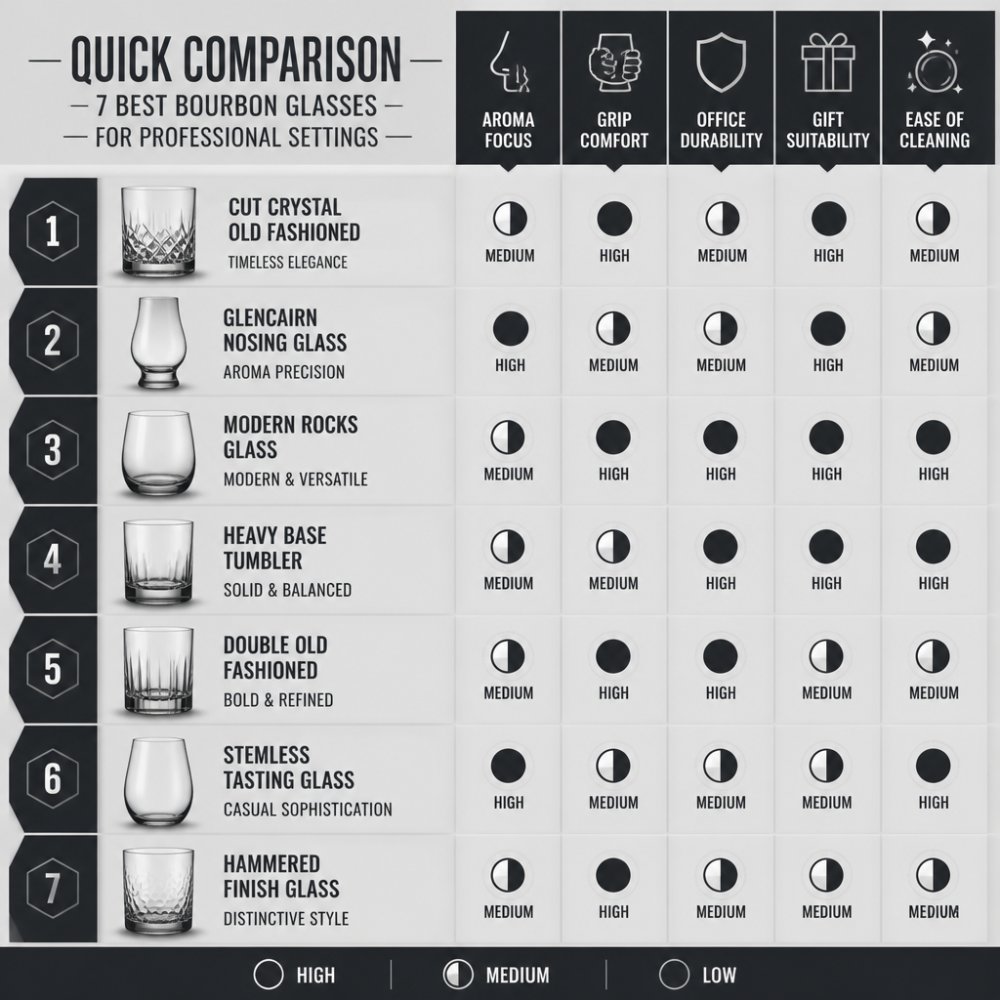
Quick Comparison: 7 Best Bourbon Glasses for Professional Settings
| Glass type | Aroma focus | Grip comfort | Office durability | Gift suitability |
|---|---|---|---|---|
| Weighted old-fashioned glass | Medium | High | High | High |
| Classic rocks glass | Low | High | High | Medium |
| Glencairn-style nosing glass | High | Medium | Medium | High |
| Copita tasting glass | High | Low | Low | Medium |
| Crystal whiskey glass | Medium | Medium | Medium | High |
| Engraved/personalized glass | Medium | Medium | Medium | Very high |
1. The Pour Old-Fashioned Glass: The Boardroom Workhorse
The most useful glass for a professional setting is a weighted old-fashioned glass, and The Pour builds its collection around exactly that shape. A short, wide bowl with real heft in the base sits stable on a table, resists a knock from a passing elbow, and feels substantial without being fragile. The Pour's version carries the brand's signature logo and an etched tagline on the bottom, which gives it a second job: it is a conversation starter that does not require anyone to force small talk.
That etched detail is the part most reviews miss. A glass with a line printed on the underside invites the person holding it to turn it over and read it, and that small physical gesture breaks the ice better than any scripted introduction.
2. Classic Rocks Glass: The Reliable Standard
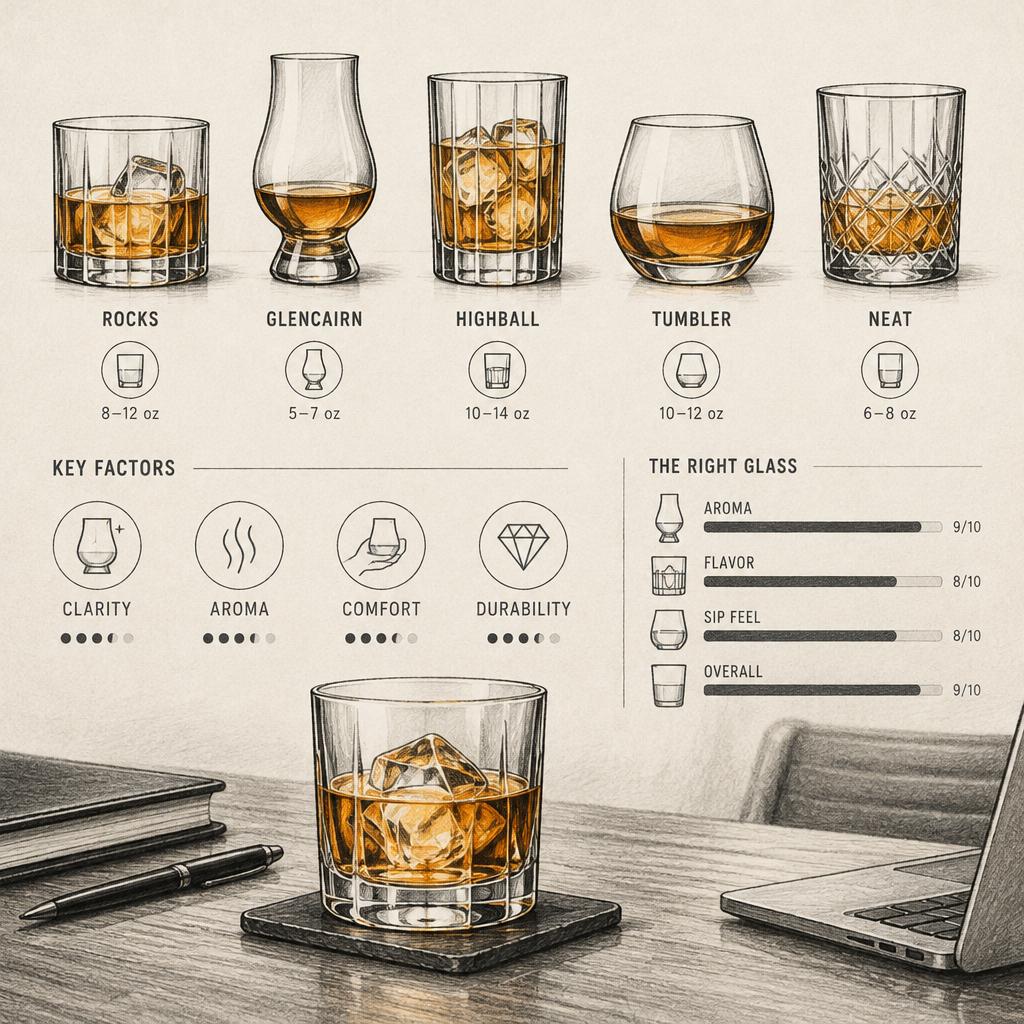
For everyday office use, the classic rocks glass remains the safest choice. It holds a neat pour, takes a large cube without crowding, and stacks in a cabinet without chipping. The trade-off is aroma: a wide opening lets ethanol escape alongside the sweeter notes, so a complex pour reads flatter than it should. Use it when the conversation matters more than the tasting notes.
3. Glencairn-Style Nosing Glass: For Serious Tasting
Glencairn-style nosing glasses are the reference shape for bourbon tasting, and the geometry is the reason. The bowl swells at its widest point, then tapers to a rim roughly half that diameter. That taper does two mechanical jobs at once: it traps the volatile compounds that carry vanilla, caramel, and oak lactones, and it keeps the ethanol from arriving at the nose in one overpowering wave. The narrow rim also reduces hand-to-nose interference, because the hand sits well below the opening.
A standard Glencairn-style glass holds about 6 ounces to the rim, but the working pour is far smaller, most tasting pours land between 0.5 and 1 ounce, which leaves the headspace needed for aroma to collect. The thick base is the other design feature worth noting: it adds stability on a table and gives the glass enough weight that it does not feel like a wine tasting glass borrowed for the wrong job. A common pattern in professional settings is to keep a small set of nosing glasses for structured comparisons and a separate set of tumblers for general service, because the two shapes do not substitute for each other.
The catch for professional settings is operational, not aesthetic. The tulip shape is less forgiving on a crowded table, a narrow base and a tall bowl make it easier to tip than a weighted tumbler, and the small capacity limits how much is poured, which is fine for a guided tasting and awkward for a reception where guests expect a full measure. Hand washing is the practical routine; the narrow opening makes the interior harder to dry than an open tumbler, and hard water spots show against the glass.
4. Copita Tasting Glass: Precision Without the Snifter Bulk
A copita delivers the aroma focus of a snifter in a smaller, stemmed format. The stem keeps the hand away from the bowl, so the bourbon warms less and the nose stays cleaner. It is the best glass for a structured tasting where several pours are compared side by side. It is a poor choice for a standing reception, where a stem is one bump away from a spill.
5. Crystal Whiskey Glasses: When Clarity and Weight Signal Quality
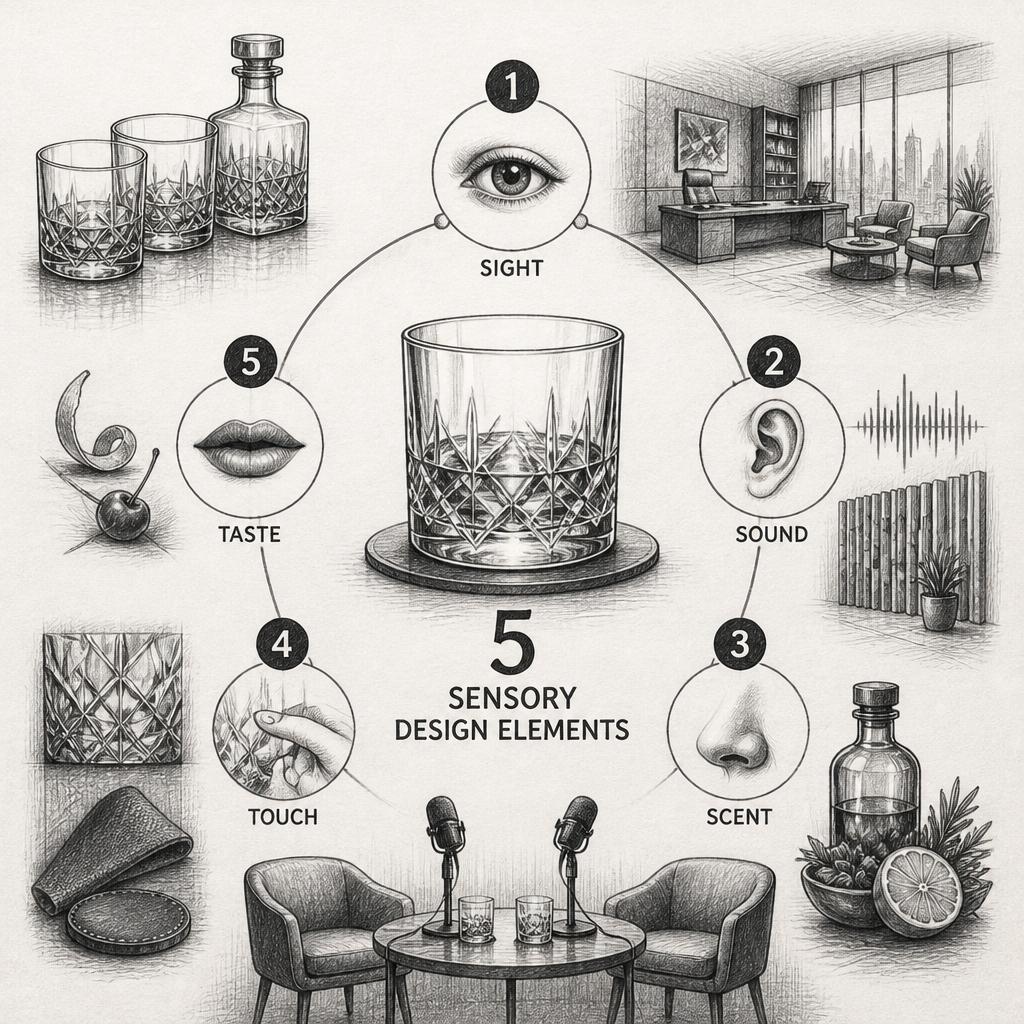
Crystal whiskey glasses earn their place on presentation. Lead-free crystal offers clarity and a bright ring when tapped, and the material's density supports a heavier base at a thinner wall. In a client-facing setting, that combination signals care without a word being spoken. The honest limitation is care: crystal is less forgiving of a dishwasher's heat cycle, so hand washing is the practical routine.
6. Engraved and Personalized Glasses: Bourbon Glasses for Gifts That Get Remembered
When the goal is a gift for a mentor, a retiring partner, or a client, engraved and personalized glasses carry more weight than any generic set. A name, a date, or a short line turns a glass into a keepsake. Bourbon glasses for gifts should be chosen for the recipient's habits, not the giver's taste: a rocks drinker will not use a nosing glass, however handsome the engraving.
How to Choose Bourbon Glasses by Use Case
Most bourbon-glass guides end with a product list. A professional setting needs a decision framework instead, because the glass that flatters a single pour is rarely the glass that survives a year of client dinners. Work through four questions in order, and the choice usually makes itself.
1. What is the moment? A structured tasting, a boardroom pour, a standing reception, and a gift each reward a different shape. Tasting rewards a narrow rim and a stem. A boardroom pour rewards weight and a wide opening. A reception rewards a stemless, low-center-of-gravity glass that survives a bump. A gift rewards a personal mark on a shape the recipient will actually reach for.
2. How many hands will touch it? Service ergonomics matter more than most buyers expect. A glass with a heavy base and a short bowl is easier to grip for guests with limited hand strength and less likely to be set down off-balance.
3. What is the cost of ownership? The purchase price is only the first cost. A glass that survives a dishwasher cycle, stacks in a cabinet, and can be reordered individually costs less over a year than a fragile set that must be replaced as a unit. Thick bases and simple shapes survive regular handling; thin walls and stems do not.
4. What does the setting signal? Clarity and weight read as care in a client-facing room. A bright, lead-free crystal tumbler with a solid base signals attention without a word; a thin, chipped tumbler signals the opposite. That signal is worth more than a marginal difference in aroma performance.
Use the answers to place the glass in one of four buckets:
- Boardroom and client meetings: weighted old-fashioned glass, stable, substantial, and easy to replace.
- Structured tastings: nosing glass or copita, narrow rim, stem or thick base, small working pour.
- Standing receptions: classic rocks glass, no stem, low center of gravity, wide opening, stacks for storage.
- Gifts and recognition: engraved old-fashioned glass, personal mark on a shape the recipient already uses.
Durability and cost of ownership matter more in an office than at home. Thick bases and simple shapes survive regular handling, and a consistent set means a single replacement order rather than a mismatched cabinet. Bourbon in the boardroom exists to support those leadership moments.
Frequently Asked Questions
What size bourbon glass is best for professional settings?
A short, wide old-fashioned glass holding roughly 8 to 10 ounces works best for meetings and boardroom pours. It leaves room for a standard 2-ounce pour plus a large ice cube without looking crowded, and the low center of gravity reduces spills on a conference table. Nosing glasses hold less, usually 5 to 6 ounces, which suits focused tasting sessions rather than casual conversation. Match the size to the setting: larger for discussion, smaller for evaluation.
Are crystal whiskey glasses better than regular glass for bourbon?
Crystal whiskey glasses feel heavier and clearer, and the lead-free versions used today are durable enough for regular office use. The added weight and clarity make a pour look more deliberate, which matters when you are hosting clients. Standard glass is cheaper to replace and survives dishwashers more forgivingly. For a boardroom where presentation counts, crystal earns its place; for high-turnover breakroom use, plain glass is the practical pick.
How do you choose bourbon glasses as a business gift?
Start with the recipient's use case. A mentor who tastes seriously will appreciate a nosing glass, while a colleague who drinks Old Fashioneds needs a rocks glass. Look for a weighted base, clean etching rather than printed logos, and a two-glass set that reads as a complete gift. Add a short note about why you chose it. Personalization helps, but keep initials or a company mark subtle so the glass still looks right on a home bar years later.
Should bourbon glasses have a heavy base?
A weighted base lowers the center of gravity, so the glass resists tipping when someone gestures mid-conversation. It also changes how the glass feels in hand, which is a large part of why a pour feels considered rather than casual. Very heavy bases can tire the wrist over a long evening, and they cost more to produce. For professional settings, a moderately weighted base is the sweet spot between stability and comfort.
The harder question is not which glass looks best but which one survives a real meeting schedule and still feels worth handing to a guest. Bourbon in the boardroom answers that with a classic short-wide old-fashioned design, a weighted feel for a premium experience, and an etched tagline on the bottom that turns the glass into a talking point. Add to cart and give the next conversation a proper focal point.