 blog
Are Premium Whiskey Glasses Worth It? A Leader's Guide
Table of Contents
- What Makes a Whiskey Glass Premium
- How Glass Shape Affects Aroma and Tasting Experience
- Best Whiskey Glasses for Bourbon: Neat vs. On the Rocks
- Durability and Real-World Performance
- The Value Equation: Longevity, Aesthetics, and Purpose
- How Long Does Opened Bourbon Last in Your Glass
- Is the Investment Right for You
- Frequently Asked Questions
Last Updated: September 20, 2026
What Makes a Whiskey Glass Premium
Premium whiskey glasses are engineered vessels designed to enhance how bourbon tastes, smells, and feels in your hand through material composition, weight distribution, and intentional design.
A premium whiskey glass concentrates aroma, manages ethanol burn, and provides a weighted drinking experience that transforms a simple pour into a conversation starter for business leaders and professionals.
Crystal vs. Standard Glass: The Material Difference
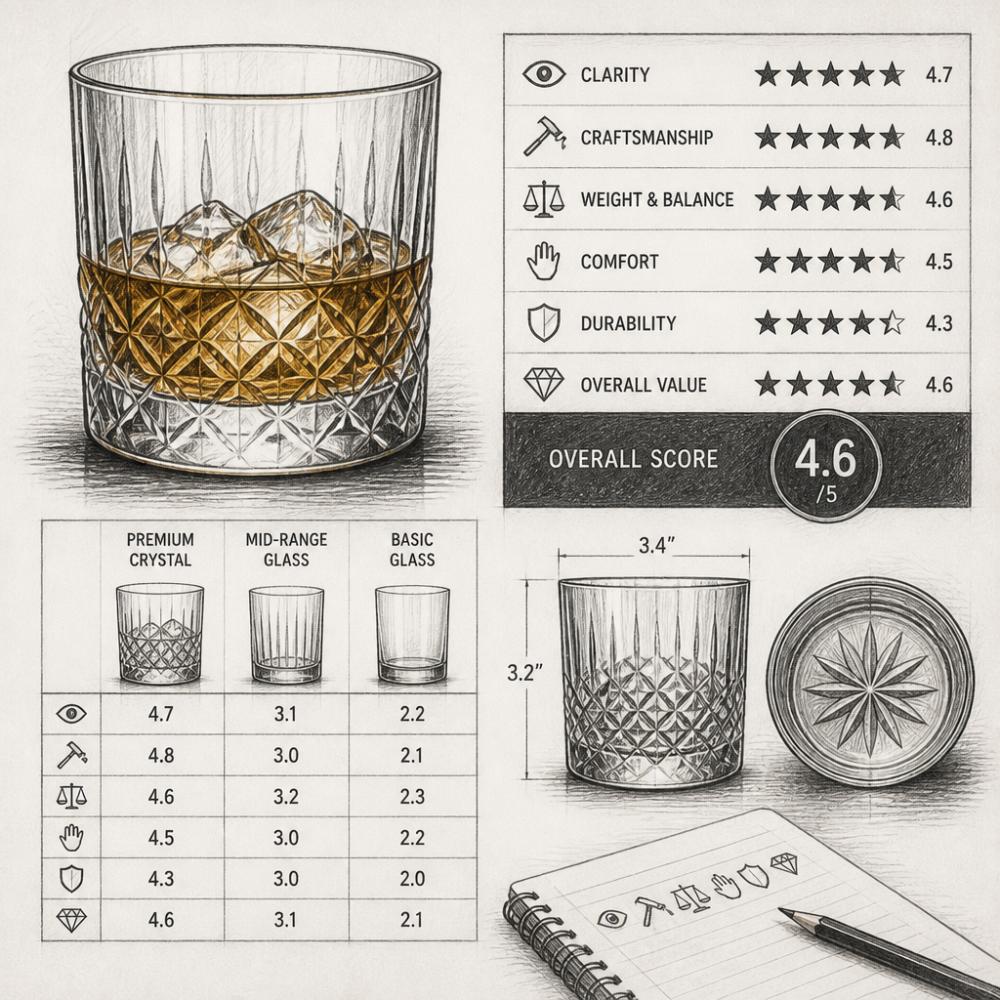
The fundamental distinction between premium and standard whiskey glasses lies in their composition. Standard glass contains silica, soda ash, and limestone, basic ingredients that create a functional drinking vessel. Premium whiskey glasses, particularly those made from lead-free crystal, include additional minerals like barium or zinc oxide that increase the refractive index, creating superior clarity and a distinctive weight.
Lead-free crystal is heavier than standard glass, providing a substantial feel that signals quality, and has higher thermal conductivity that subtly enhances volatile compound release. It's also more durable under repeated washing and thermal stress.
Premium crystal's clarity allows you to appreciate the bourbon's color and how light passes through it, making the visual component part of the tasting experience in professional settings.
Weight, Balance, and Tactile Feel
A weighted base and balanced proportions create a sense of intentionality that influences how you drink.
Premium whiskey glasses feature a heavy base that prevents tipping and creates a satisfying heft when lifted. When you hand a weighted glass to a colleague, they immediately notice the difference, it feels deliberate, not casual.
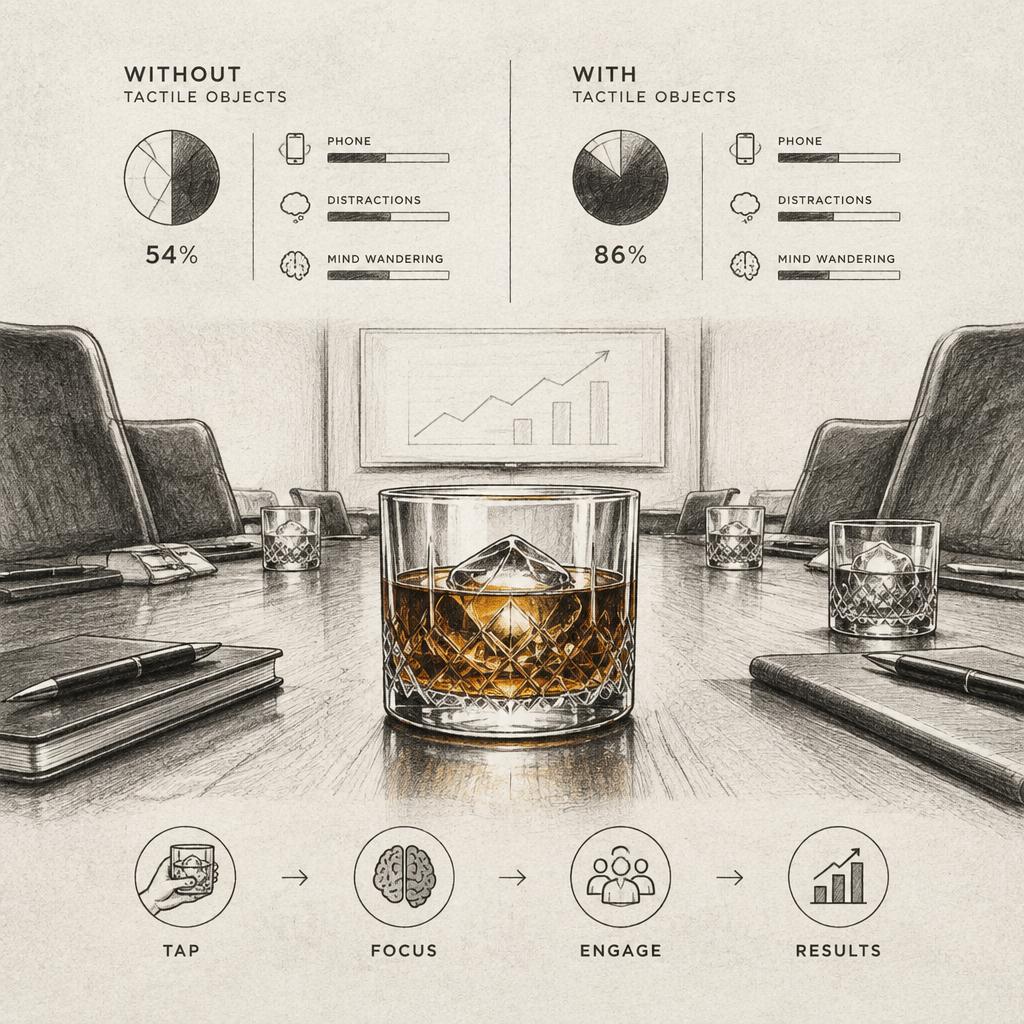
The short-wide rocks glass design provides ergonomic benefits: the wider bowl accommodates ice, the shorter height brings the rim closer to your nose, and your hand naturally cups the glass. For leaders in boardroom conversations, this design keeps focus on the discussion while the glass becomes a comfortable, grounding element.
How Glass Shape Affects Aroma and Tasting Experience
Glass shape controls how aroma reaches your nose and how volatile compounds escape, creating different sensory experiences that make premium whiskey glasses distinct from regular tumblers.
Ethanol evaporates quickly from a wide-open surface, while aromatic compounds evaporate more slowly. Premium glass design manages this imbalance by controlling rim diameter and bowl shape to concentrate aroma while allowing ethanol vapors to escape.
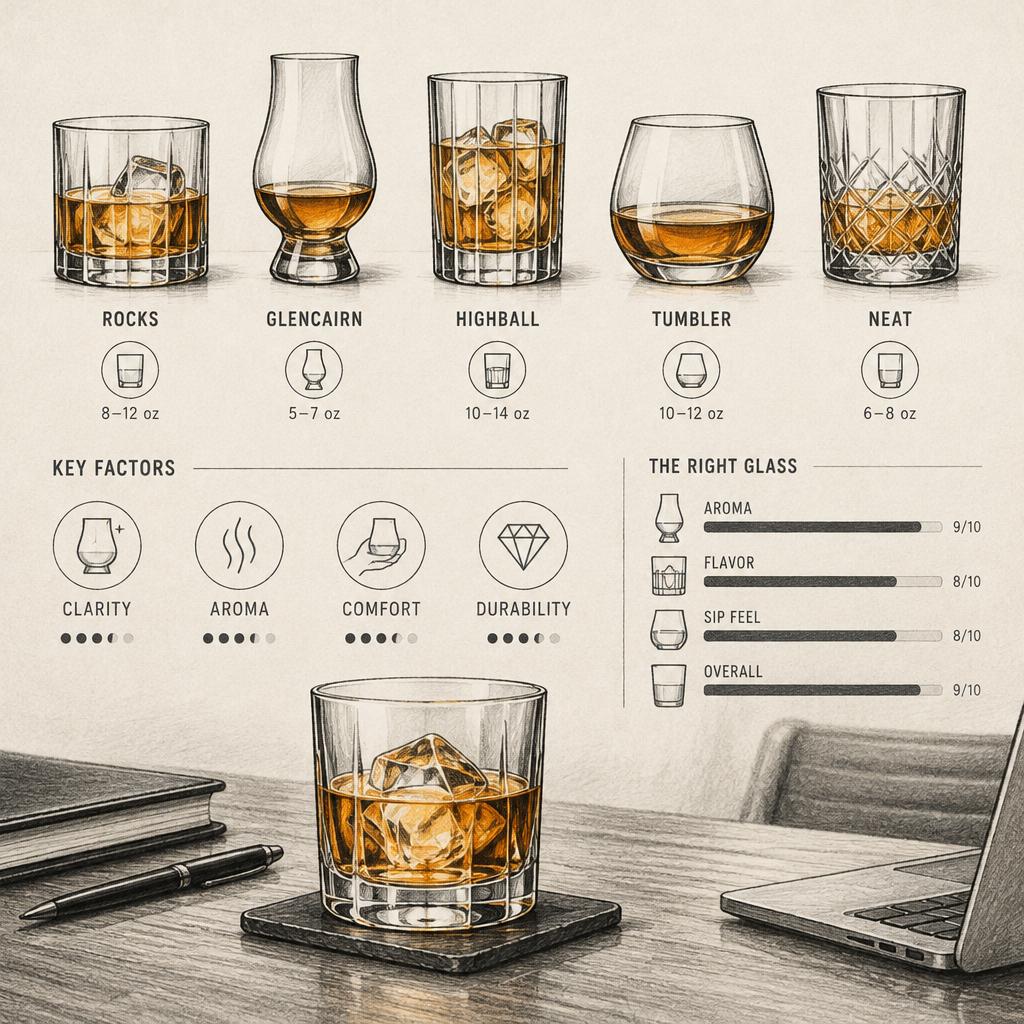
A Glencairn-style nosing glass features a tapered rim that creates a vapor pocket below the rim, concentrating aromatic compounds where your nose encounters them first. The wide bowl allows swirling without spilling. Professional tasters favor this design because it isolates subtle notes, vanilla, oak, spice, before ethanol burn overwhelms the palate.
The rocks glass features straight walls and a wider opening that accelerates evaporation and can enhance certain flavor compounds as the bourbon oxidizes. The design works well for bourbon served neat or on the rocks, accommodating ice without restricting the drinking experience. For longer conversations, the bourbon's character shifts slightly as it oxidizes, some find this evolution pleasant, others prefer to drink quickly.
Rim diameter affects evaporation: a narrow rim concentrates vapor and preserves the spirit's profile longer, while a wide rim accelerates evaporation and is more forgiving in social settings.
Bowl depth matters: a deeper bowl reduces ethanol burn while nosing, while a shallower bowl brings the rim closer to your face. Professional tasters use Glencairn glasses for serious evaluation; business leaders prefer rocks glasses for casual enjoyment because the shallower design keeps the experience social.
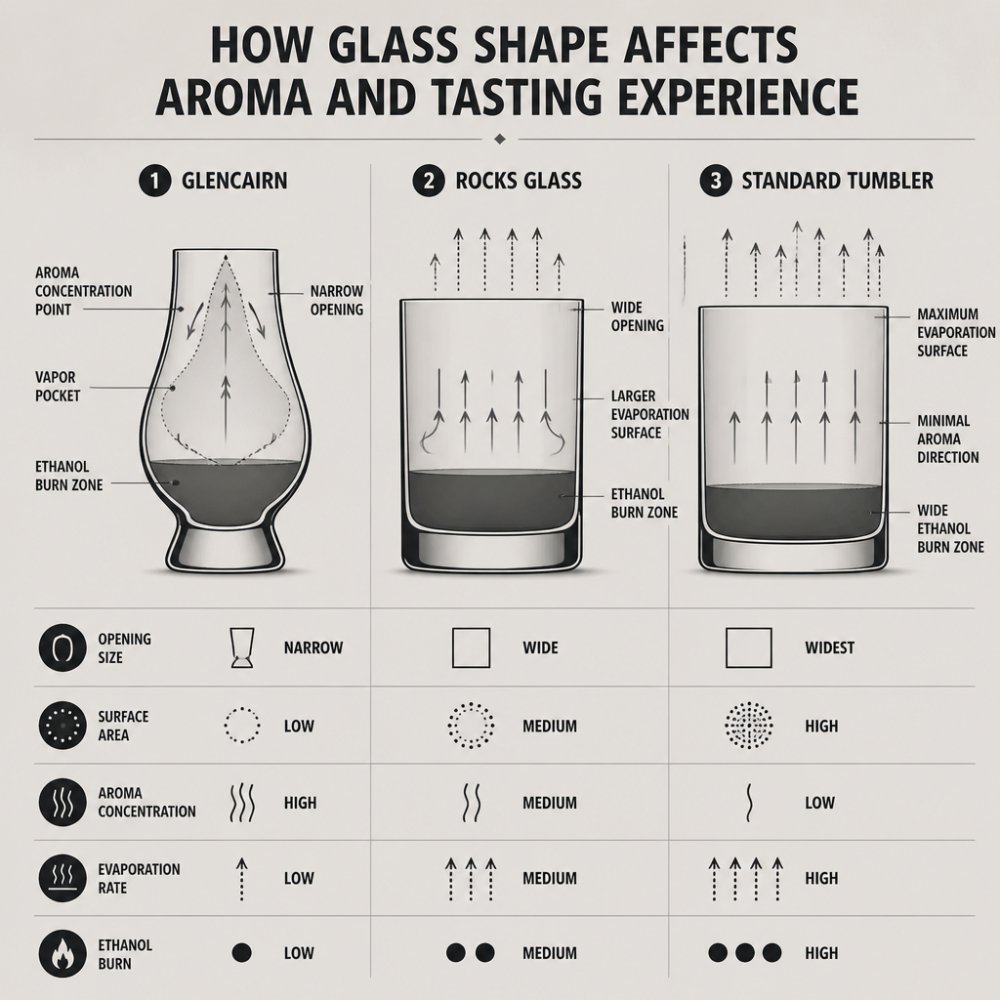
Shape influences mouthfeel: a tapered rim directs liquid toward specific taste receptors, while a wider rim distributes bourbon across a broader area.
Best Whiskey Glasses for Bourbon: Neat vs. On the Rocks
Neat: A Glencairn-style glass concentrates aroma while minimizing ethanol burn, creating a focused sensory experience that encourages you to slow down and pay attention to the spirit's complexity.
On the rocks: Bourbon served over ice demands a wider opening and more volume. A short-wide tumbler or rocks glass accommodates ice without restricting your ability to nose the bourbon. The straight walls and heavier base keep the glass stable as you add ice and bourbon. This is the design Bourbon in the boardroom's Pour collection emphasizes, a weighted, classic old-fashioned glass.
The choice between these styles often comes down to context. In a boardroom setting, the weighted rocks glass becomes a conversation piece. During a tasting or moment of personal reflection, a Glencairn-style glass serves the bourbon's complexity better.
Durability and Real-World Performance
Premium whiskey glasses must withstand regular use, dishwasher cycles, ice, temperature changes, and the occasional bump against other glassware. This is where material and design quality matter.
Lead-free crystal resists thermal shock better than standard glass. When you pour room-temperature bourbon into a chilled glass, the temperature differential can cause standard glass to crack. Premium crystal's composition allows it to handle these changes without fracturing. The thicker walls of premium glasses also provide better protection against chipping at the rim, which is where most drinking glasses fail.
Durability also depends on the base. A weighted, reinforced base reduces the risk of the glass tipping over when ice shifts inside. For business environments where glasses sit on conference tables or desks, this stability matters. A glass that tips over spills bourbon and creates an embarrassing moment. A weighted glass stays put.
Most premium whiskey glasses are dishwasher safe, though hand washing extends their life. The key is avoiding extreme temperature swings, don't move a cold glass directly to hot water. Over time, repeated thermal stress can create micro-fractures that eventually lead to breakage.
The Value Equation: Longevity, Aesthetics, and Purpose
The question of whether premium whiskey glasses are worth the investment depends on how you use them and what you value.
A premium whiskey glass costs more upfront than a standard tumbler. But if you use it regularly, whether for personal enjoyment or as part of your professional environment, the durability and sensory benefits justify the investment. A glass that lasts for years, that feels substantial in your hand, that makes bourbon taste noticeably better, and that serves as a conversation starter has value beyond its material cost.
For leaders and professionals, premium whiskey glasses often serve a dual purpose. They're functional drinking vessels, but they're also symbols of intentionality. When you pour bourbon into a weighted, well-designed glass, you're signaling that this moment matters. You're not grabbing whatever's in the cabinet, you're deliberately choosing an experience. Bourbon in the boardroom's Pour collection embodies this philosophy, with its weighted design and etched tagline.
Aesthetics matter too. A premium glass looks better in your office, on your desk, or in a gift set. Standard glassware fades into the background. Premium glasses command attention. For professionals who host clients, mentor younger colleagues, or lead team discussions over bourbon, the glass becomes part of the environment you're creating.
How Long Does Opened Bourbon Last in Your Glass
Once you pour bourbon into a glass, oxidation begins. Understanding how quickly bourbon changes helps you decide whether to drink it immediately or let it breathe, and reveals why the right glass makes a difference in how you experience that change.
Bourbonin an open glass oxidizes gradually. In the first 10-15 minutes, some of the more volatile compounds begin to evaporate, which can actually enhance certain flavor notes. This is why many tasters recommend letting bourbon sit briefly before drinking; the aroma becomes more pronounced as ethanol vapors dissipate slightly. For a professional in a boardroom setting, this 10-minute window is often the sweet spot, you pour, you settle into conversation, and by the time you take your first sip, the bourbon has opened up without becoming noticeably diluted or stale.
After 30 minutes to an hour, oxidation accelerates. The bourbon's flavor profile can shift noticeably, becoming slightly duller as more volatile compounds escape. If you're serious about tasting the bourbon as the distillery intended, drink it within the first hour of pouring. However, this is where context matters. In a social or professional setting where the glass sits on a desk or conference table, the bourbon's gradual change can actually enhance the experience, it gives you something to notice, a subtle evolution that mirrors the conversation itself.
For bourbon served on the rocks, ice melt becomes a factor. As ice melts, it dilutes the bourbon, which can actually open up certain flavor notes that were masked by the alcohol's intensity. Some professionals prefer this; the dilution softens the bourbon, making it easier to sip during a long conversation.
Is the Investment Right for You
Premium whiskey glasses make sense if any of these conditions apply to you: you drink bourbon regularly, you value the sensory experience of tasting, you use whiskey glasses in professional settings where they're visible to others, you appreciate well-made objects, or you give thoughtful gifts to mentors and colleagues.
Frequently Asked Questions
Does the shape of a whiskey glass actually affect how bourbon tastes?
Yes. Glass shape directly influences how volatile compounds and aroma reach your nose, which accounts for 80% of taste perception. A tapered rim concentrates ethanol vapors and aromatic compounds, while a straight-walled tumbler disperses them. A weighted, short-wide old-fashioned glass slows oxidation and keeps your bourbon at optimal temperature longer, preserving the spirit's profile with each sip.
What's the difference between crystal and standard glass whiskey glasses?
Lead-free crystal has superior clarity and refractive properties, creating a more refined visual experience. It also conducts temperature more efficiently, keeping your bourbon at the ideal drinking temperature. Standard glass is more durable in dishwashers and less prone to chipping, but lacks the weight, clarity, and thermal conductivity that enhance the sensory evaluation of premium spirits.
How long does opened bourbon last once you pour it into a glass?
Bourbon begins oxidizing immediately after pouring. In a standard glass, volatile compounds start dispersing within 15-20 minutes. A weighted glass with proper proportions slows this process significantly, the heavy base maintains cooler temperatures, and limited surface area reduces oxidation. Most premium whiskeys remain optimal for 45-60 minutes in a quality glass, versus 20-30 minutes in a standard tumbler.
Are premium whiskey glasses more durable than cheaper alternatives?
Quality varies. Hand-blown crystal is beautiful but more fragile than machine-made lead-free crystal or standard glass. However, premium glasses designed for leaders, with weighted bases and reinforced rims, are engineered for regular use and dishwasher safety. The investment pays off through longevity: a well-made glass lasts decades with proper care, while cheaper options chip or cloud over years of use.