 blog
Best Weighted Whiskey Glasses 2026: Complete Guide
Table of Contents
- What Makes a Whiskey Glass Weighted?
- Material Matters: Lead-Free Crystal vs. Standard Glass
- The Best Whiskey Glass Shape for Nosing
- How Long Does Opened Bourbon Last?
- Weight, Stability, and Tipping Resistance
- Design Details: Diamond Patterns, Textures, and Hand-Feel
- Choosing the Right Size and Capacity for Your Pour
- Durability and Dishwasher Safety
- Frequently Asked Questions
Last Updated: September 29, 2026
What Makes a Whiskey Glass Weighted?
Weighted whiskey glasses are tumblers with extra mass concentrated in the base, which lowers the center of gravity and keeps them planted on the table. That changes how it feels in your hand, how stable it sits, and how long your drink stays cold.
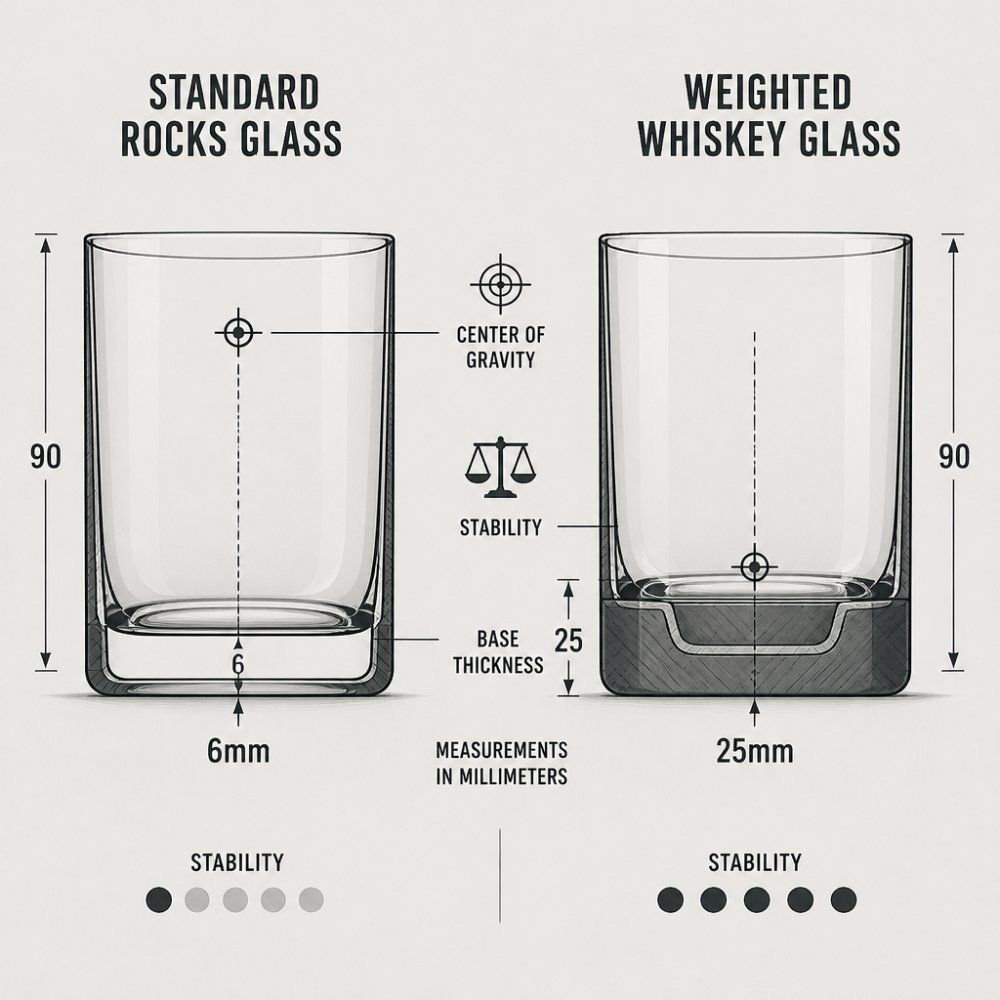
Base Thickness and Center of Gravity
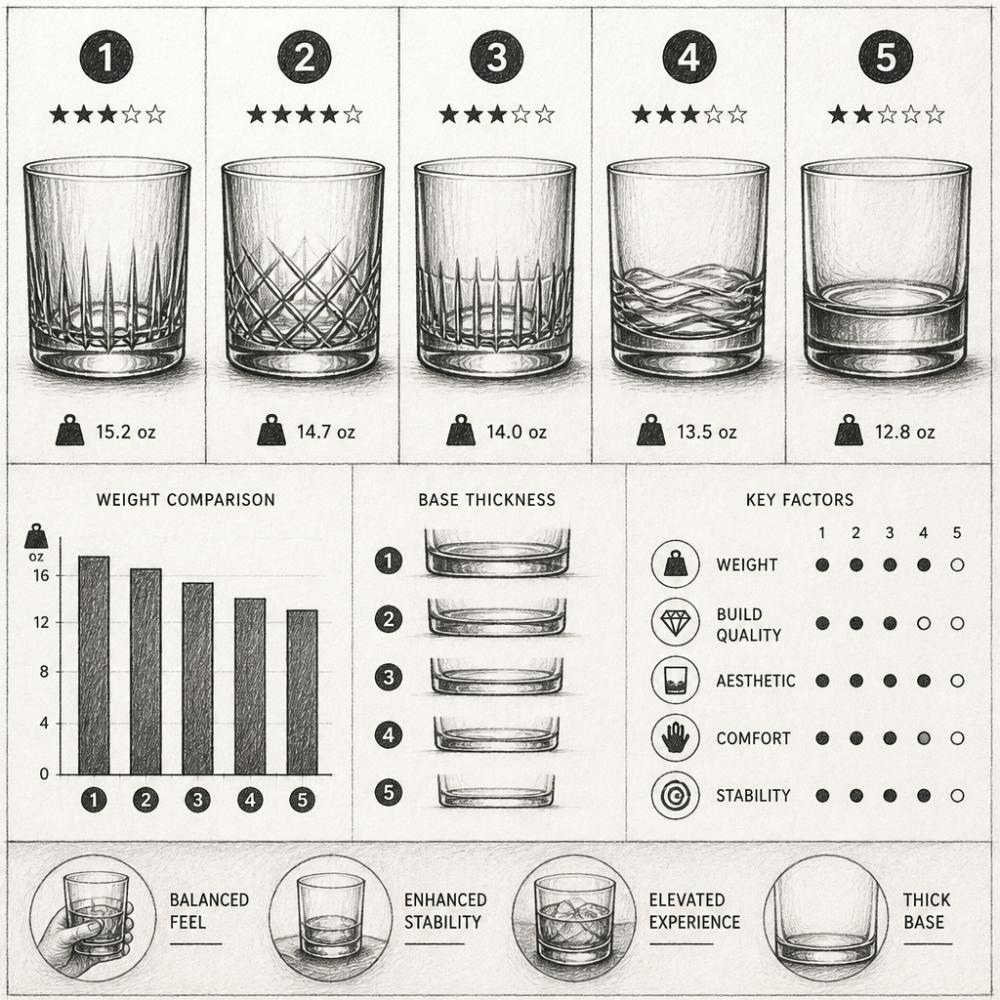
Base thickness is the biggest driver of perceived quality. A thick, heavy-bottomed base pushes the center of gravity downward, so the glass resists tipping even when someone gestures mid-sentence. Thin bases feel fragile and transmit heat quickly; thick bases hold a chill longer and give a satisfying heft when you set them down. The difference between a 6mm and a 25mm base is obvious the moment you pick the glass up.
A Weight Scale You Can Actually Use
Most listings never publish a weight, making comparison nearly impossible. Here is a practical heaviness scale based on the empty weight of a standard 8 to 10 fluid ounce old-fashioned glass, measured on a kitchen scale:
| Tier | Empty Weight | Base Thickness | What It Feels Like |
|---|---|---|---|
| Light | Under 8 oz | 6-10mm | Delicate, tips easily, transmits hand heat fast |
| Mid-weight | 8-12 oz | 10-18mm | Balanced, comfortable for long sipping sessions |
| Heavy | 12-16 oz | 18-25mm | Substantial, very stable, slower to warm |
| Extra-heavy | Over 16 oz | 25mm+ | Statement piece, fatiguing for some drinkers |
Why Center of Gravity Beats Total Weight
Total weight is only half the story, what prevents tipping is how low the mass sits. A 14-ounce glass with all its weight in the base resists a nudge far better than one with a uniform wall. When a glass tips, it rotates around the edge of its base; the lower the center of gravity, the more energy it takes to push that center past the pivot point.
How Base Weight Changes Swirling Dynamics
A heavy base also changes how the whiskey moves when you swirl it. A dense base acts as an anchor, so the liquid rotates in a smoother arc instead of sloshing up the walls, increasing exposure to air without spilling and releasing aroma compounds more evenly. A light glass moves with your hand, so the swirl becomes erratic and you get less useful aeration for the same effort.
Material Matters: Lead-Free Crystal vs. Standard Glass
Lead-free crystal is glass made with minerals like barium or zinc instead of lead oxide, giving it higher clarity and a brighter ring without lead's health concerns. Standard soda-lime glass is cheaper, softer, and slightly cloudier. For whiskey drinkers, the practical difference comes down to three things:
- Clarity and refraction: Lead-free crystal bends light more, so the amber color of bourbon looks richer
- Rim thickness: Crystal can be drawn thinner at the rim, which changes how the liquid hits your tongue
- Durability: Crystal is harder but more brittle; standard glass chips less but scratches more
What Actually Separates the Two Materials
The difference is not just marketing. Lead-free crystal gets its clarity and ring from added metal oxides, barium oxide or zinc oxide, that make the material denser and more refractive, which is why crystal sparkles and standard glass looks slightly flat. That density helps weighted designs: a 20mm crystal base can feel more anchored than a 25mm soda-lime base. The trade-off is brittleness.
The Sustainability Angle Most Guides Skip
Glassware manufacturing has an environmental footprint rarely mentioned in buying guides. Soda-lime glass is made from abundant materials and is infinitely recyclable; lead-free crystal uses rarer additives and runs through hotter furnaces, using more energy per piece. For buyers who care, a few signals matter:
- Recycled content: Some manufacturers now produce crystal and glass tumblers with a meaningful share of post-consumer recycled glass, which reduces raw material demand
- Domestic production: Glass made closer to where it is sold travels fewer miles, though furnace energy usually dominates the footprint
- Longevity as sustainability: The single greenest choice is a glass you keep for a decade. A heavy, well-made tumbler that survives daily use beats a cheap set replaced every two years
Matching Material to Whiskey Type
Material choice interacts with what you pour. A high-proof bourbon, often 100 to 130 proof, benefits from enough mass to buffer hand heat so the spirit does not warm too quickly and push alcohol forward; a dense crystal base helps. A delicate, lower-proof scotch or lightly aged Irish whiskey shows better in a thinner-rimmed crystal glass, where the thin lip delivers liquid precisely and lets floral and honey notes through.
The Best Whiskey Glass Shape for Nosing
The best whiskey glass shape for nosing is a wide bowl that tapers slightly toward the rim, concentrating aroma compounds while still letting in enough air. A straight-walled tumbler works for everyday pours, but a tapered design does more for the nose. When whiskey meets air, volatile compounds like vanillin and esters lift off the surface; a wider surface speeds that up, and a narrower opening traps those compounds so you smell them instead of losing them to the room.
How Glass Shape Affects Aeration
Aeration exposes whiskey to oxygen, releasing aromatic compounds and softening harsh alcohol notes. Glass shape controls how much surface area the liquid exposes and how efficiently aromas reach your nose. A short-wide old-fashioned glass gives a broad surface for aeration, and a tapered rim funnels the aroma upward, which is why the classic rocks glass remains the standard for sipping neat or with a single large cube.
How Long Does Opened Bourbon Last?
Opened bourbon lasts for years if stored properly, but its flavor fades long before it spoils. The alcohol content prevents bacterial growth, so what changes is the taste. Once a bottle drops below roughly a quarter full, more air contacts the liquid, and oxidation gradually dulls the sweeter notes and pushes the spirit toward a flatter profile. Many enthusiasts finish a bottle within a few months, keeping it close to how it tasted on day one.
Storage habits that preserve flavor:
- Keep the bottle upright and sealed tight after each pour
- Store it away from direct light and heat
- Move the remaining whiskey to a smaller bottle once the level gets low
- Avoid leaving the bottle open while you pour
Weight, Stability, and Tipping Resistance
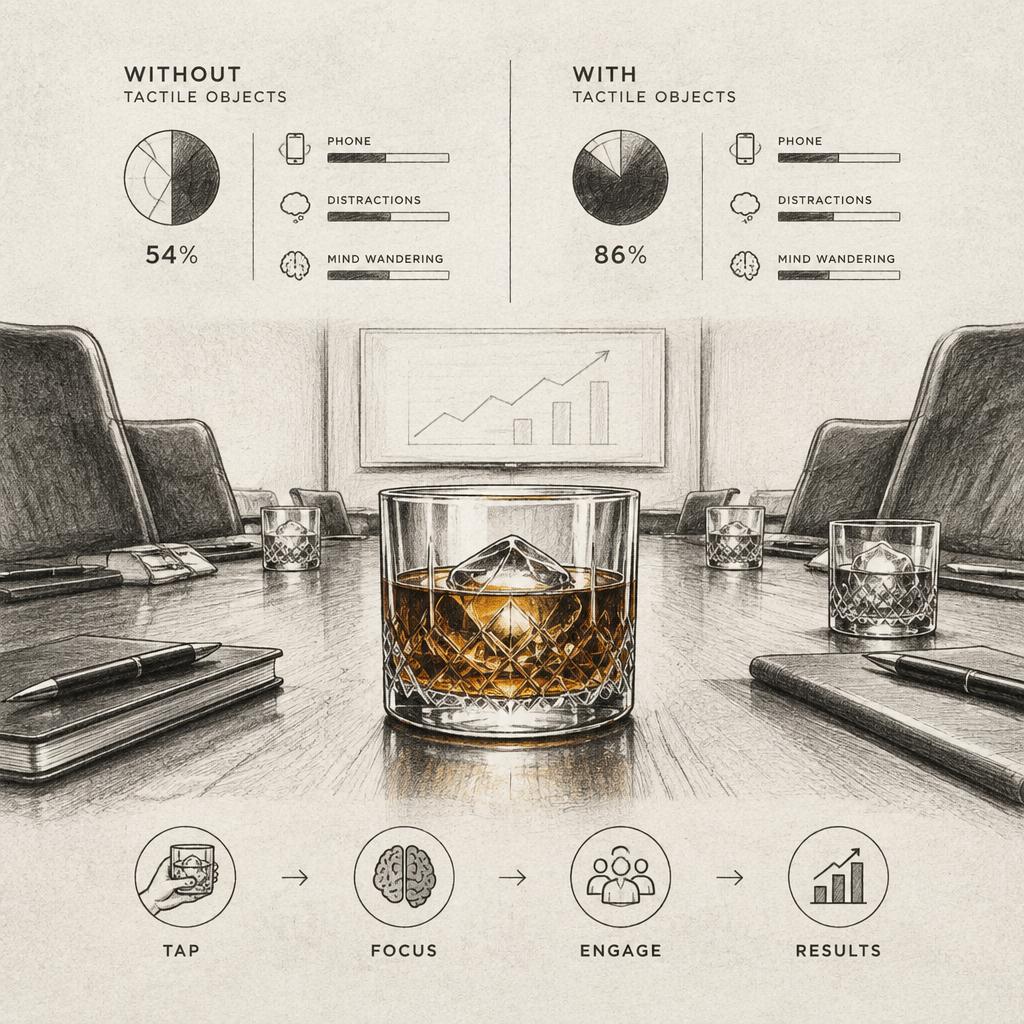
Tipping resistance comes from mass, not width alone. A heavy-bottomed glass with a low center of gravity stays upright when bumped, while a tall, light glass tips with the slightest nudge. Picture a boardroom table, several people reaching for papers, a glass near the edge: a weighted tumbler survives that moment, a thin-walled glass does not. Weight also affects how the glass feels during long conversations, a substantial glass invites you to hold it, swirl it, and slow down, which is why weighted barware has become a staple of serious home bars.
Design Details: Diamond Patterns, Textures, and Hand-Feel
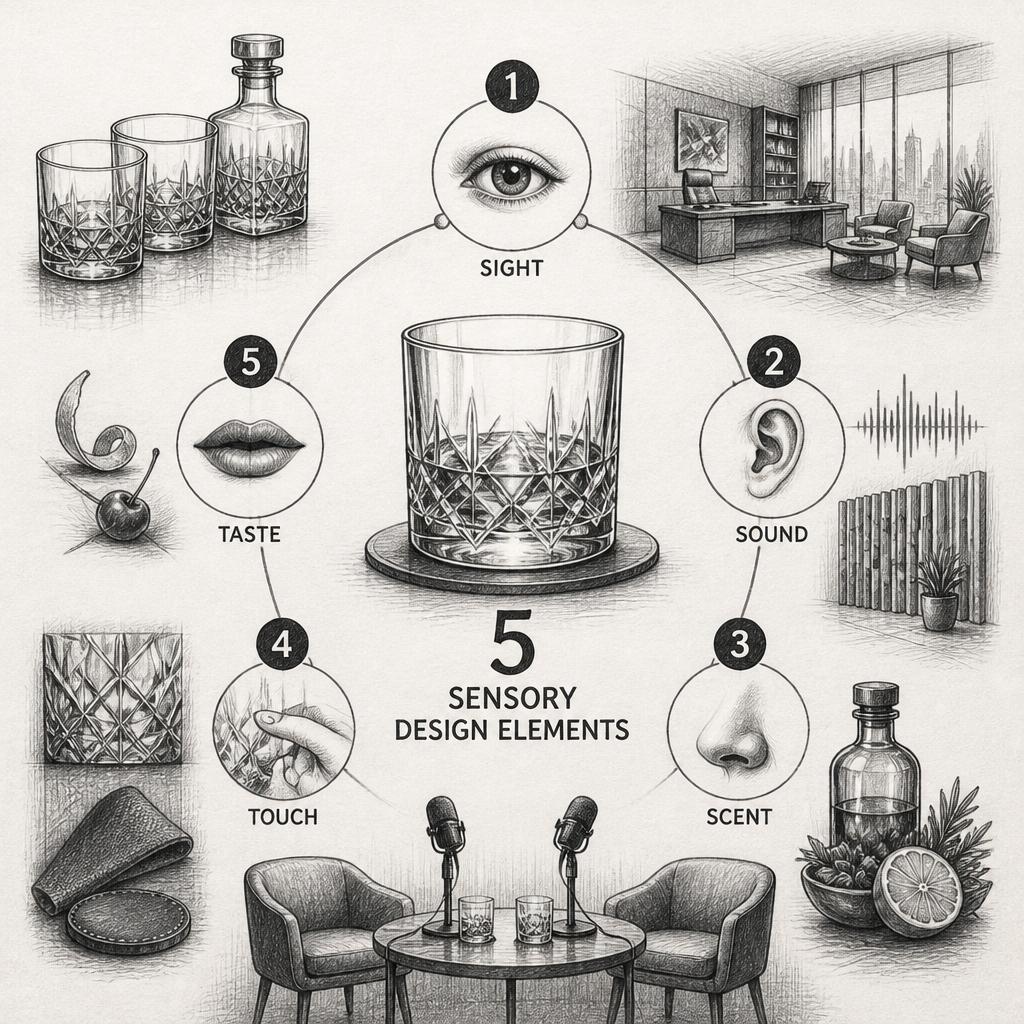
Textured patterns do more than look good. A diamond cut or etched surface gives your fingers something to grip, reducing slipping when condensation forms. Faceted textures catch light; smooth polished surfaces feel more formal; a spinning base adds a memorable tactile quirk. The catch: deep cuts trap residue. Shallow etching cleans easily, deep diamond cuts need a brush, so favor a lighter texture for daily use.
Choosing the Right Size and Capacity for Your Pour
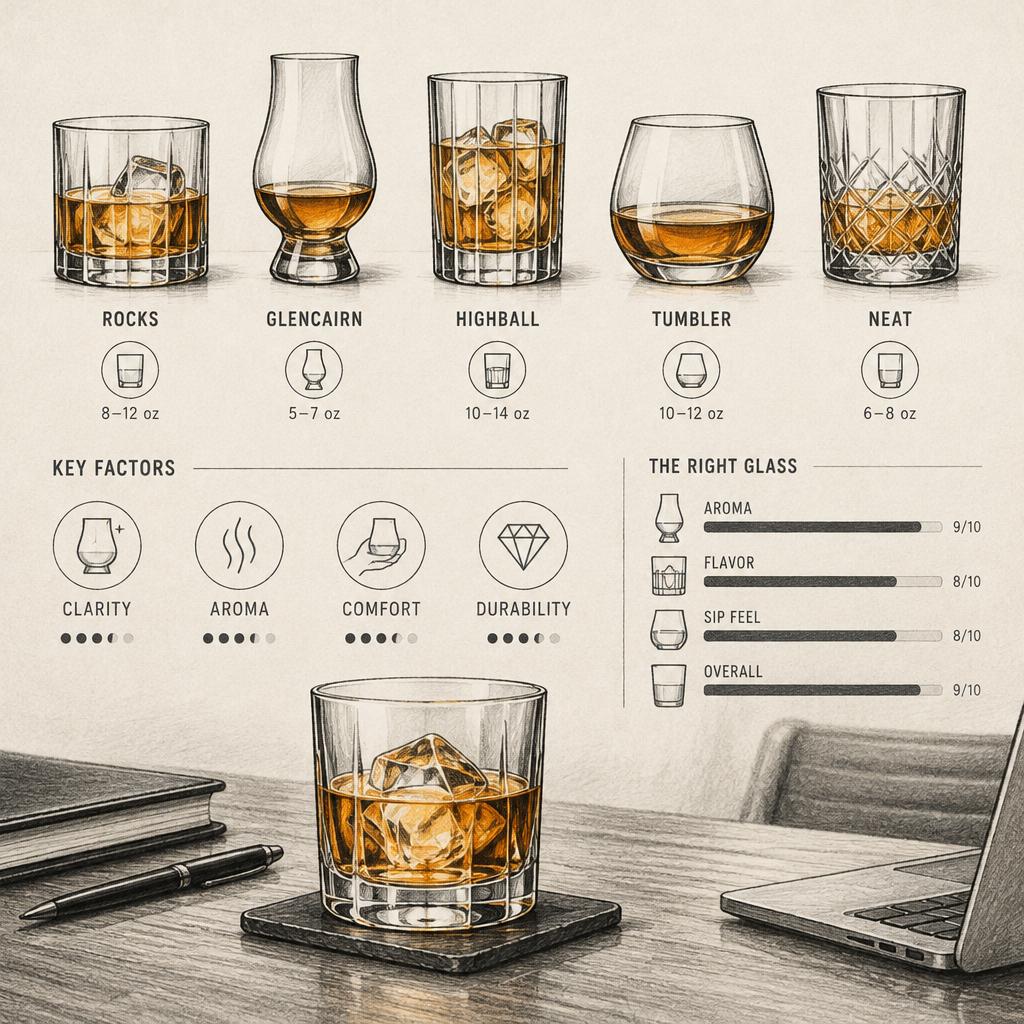
Capacity should match your pour, not your cabinet space. Most neat pours land between 1.5 and 2 fluid ounces, and a standard rocks glass holds 8 to 12 fluid ounces, plenty of room for a large ice cube and headspace for aroma.
Sizing guide by use:
| Pour Style | Recommended Capacity | Why It Works |
|---|---|---|
| Neat | 6-8 fl oz | Concentrates aroma, less dead space |
| Single large cube | 8-10 fl oz | Fits a 2-inch cube with room to spare |
| Cocktails | 10-12 fl oz | Handles ice and dilution |
| Gifting sets | 8-10 fl oz | Versatile for most drinkers |
Durability and Dishwasher Safety
Dishwasher safety depends on the material and the rim, not the price. Most lead-free crystal and heavy glass tumblers are dishwasher safe on a gentle cycle, but high heat and harsh detergents can cloud crystal over time.
For longevity:
- Place glasses on the top rack, away from heating elements
- Use a mild detergent without citrus additives
- Skip the heated dry cycle when possible
- Hand wash any glass with a hand-painted or metallic finish
Frequently Asked Questions
Why do whiskey glasses have a heavy base?
A heavy base lowers the glass's center of gravity, which makes it harder to tip over during conversation or while gesturing. The added weight also creates a more substantial hand-feel that many drinkers find satisfying. Beyond stability, a thick base provides thermal mass that slows temperature changes in your whiskey, keeping it at the right temperature longer. The weighted base also signals quality craftsmanship, as it requires more material and careful manufacturing to produce a balanced, heavy-bottomed glass.
What is the best material for a weighted whiskey glass?
Lead-free crystal offers clarity and refraction compared to standard glass, allowing you to appreciate the color of your bourbon. It also has a denser molecular structure, which contributes to a premium weighted feel without health concerns. Standard glass is more affordable and durable, but it may lack the brilliance and tactile refinement of crystal. Both materials have their benefits, depending on your priorities for elegance, safety, and longevity.
Does the weight of a whiskey glass affect the taste?
The weight itself does not change the chemical composition of your whiskey, but it influences how you experience it. A heavier glass feels more stable in your hand, which encourages slower sipping and more deliberate nosing. The shape of the glass, often paired with a weighted base, affects aeration and how aromas reach your nose. A well-designed weighted glass with a tapered rim directs the whiskey to the right part of your palate, enhancing mouthfeel and flavor perception. Weight supports the ritual; shape does the sensory work.
How do I choose the right whiskey glass for bourbon?
Start with a short, wide rocks glass or old fashioned glass with a weighted base. This shape gives bourbon enough surface area for aeration while the weight provides stability. Look for a capacity between 8 and 12 fluid ounces, which accommodates a standard pour with room for ice if desired. Check that the glass is lead-free crystal or high-quality glass, dishwasher safe, and comfortable in your hand. If you enjoy nosing, a slightly tapered design helps concentrate aromas. For gifting or boardroom use, choose a design with a textured pattern or etched detail that feels substantial and looks sophisticated.