 blog
Professional Drinkware That Elevates Leadership Moments
Table of Contents
- Why Professional Drinkware Matters in Leadership Settings
- Leadership Discussion Questions That Flow Better With the Right Glass
- Leadership Conversation Starters That Create Connection
- Executive Barware as a Reflection of Your Leadership Values
- Podcast Merchandise for Leadership Communities: Building Culture Beyond the Mic
- Selecting Drinkware That Stands the Test of Time
- Frequently Asked Questions
Last Updated: October 17, 2026
Why Professional Drinkware Matters in Leadership Settings
Professional drinkware leadership moments start with the right vessel. A weighted glass in hand signals intention. It says the conversation matters enough to pause, to sit, to think.
Leaders know this instinctively. The best discussions happen when people slow down. When there's something tangible to hold.
This is where professional drinkware becomes more than an object. It becomes a signal. A cue that says: we're doing something intentional here.
The weight matters. The design matters. The craftsmanship matters. These aren't decorative choices. They're functional ones that shape behavior.
Leadership Discussion Questions That Flow Better With the Right Glass
Questions That Build Trust and Openness
The right professional drinkware creates permission for vulnerability. When people hold something intentional, they tend to speak more honestly.
Start with questions that invite reflection rather than performance:
- "What's a decision you made recently that you'd handle differently today?"
- "When have you felt most uncertain in a leadership role?"
- "What's one thing you wish you'd known earlier in your career?"
- "How do you define success for yourself, separate from the company?"
These questions work best when the room itself feels considered. When the glasses on the table suggest this isn't a casual meeting. Professional drinkware creates that container.
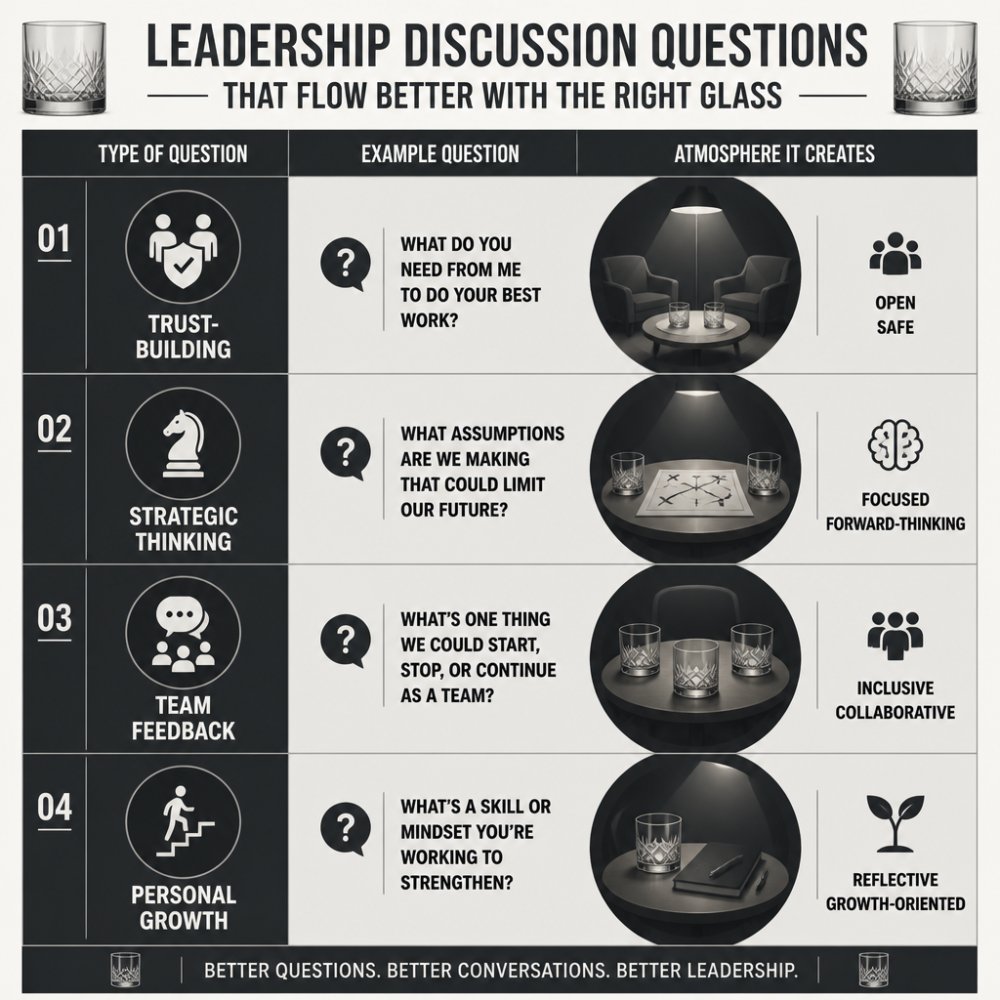
Questions That Drive Strategic Thinking
Different conversations need different energy. Strategic discussions benefit from questions that push toward clarity and decision.
The best professional drinkware for these moments is something that feels grounded and substantial, something that anchors the conversation to what matters most.
Try these framings:
- "If we could only solve one problem this year, which would it be?"
- "What's the assumption we're all making that might be wrong?"
- "What would we attempt if we knew we couldn't fail?"
- "Where are we underestimating our competition?"
- "What are we not talking about that we should be?"
These questions need room to breathe. They need a setting that feels intentional. Professional drinkware leadership moments thrive on this kind of deliberate atmosphere.
Leadership Conversation Starters That Create Connection
Connection happens when people feel seen. Not managed. Not evaluated. Seen.
Conversation starters that work are the ones that invite people to bring their actual selves into the room. The ones that say: your full experience matters here.
Try opening with:
- "What's something you've learned about yourself this year?"
- "Who's someone who changed how you think about leadership?"
- "What energizes you most in your work right now?"
- "When have you felt most proud of your team?"
- "What's a failure that taught you something valuable?"
These work best when the setting reinforces that the conversation is real. When professional drinkware sits on the table as a quiet statement: this matters. We're present for this.
The Pour's weighted glasses serve this exact purpose. They're conversation starters in themselves. People notice them. They ask about them. And suddenly the meeting has already shifted into something more intentional.
Executive Barware as a Reflection of Your Leadership Values
Barware in a leadership space is a signal, but not in the way most articles suggest. The signal isn't the brand on the base, it's whether the setup makes people comfortable enough to contribute. That's the angle almost no drinkware guide covers, and it's the one that matters when the goal is a real discussion rather than a photo op.
What the room actually reads
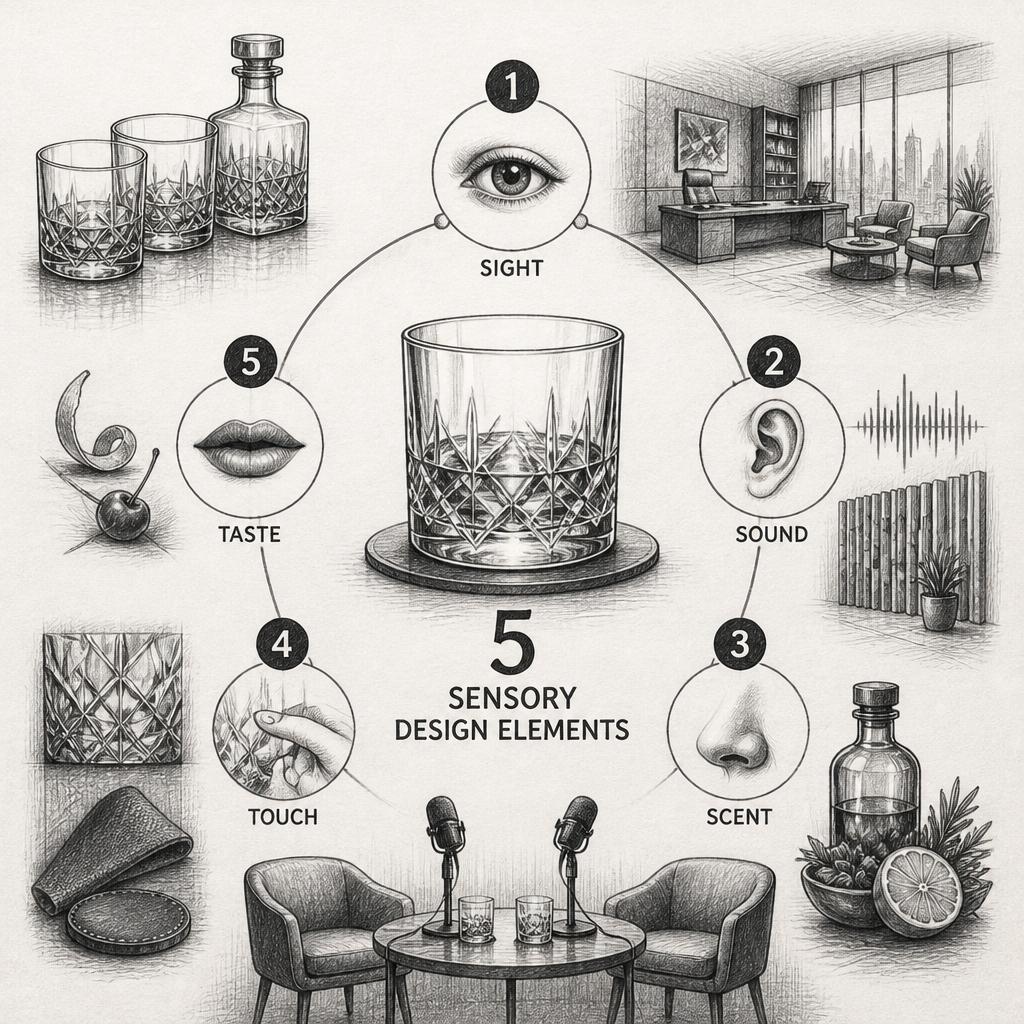
When a team walks into a meeting and sees a mismatched collection of promotional cups, the unspoken message is that the meeting is incidental. When they see a considered set, matched glasses, a pitcher of water, a carafe of coffee, a clear place for used vessels, the message is that someone thought about the hour ahead.
A common pattern among leaders who host recurring discussions: they keep one set for internal conversations and a separate, slightly more formal set for client or mentor meetings. The distinction isn't about expense, it's about matching the vessel to the register of the conversation.
The inclusion test
Executive barware fails as a leadership tool when it assumes everyone drinks the same thing. A useful checklist:
- Non-alcoholic parity. If the barware set includes stemware for wine, include an equally considered glass for water, sparkling water, or a non-alcoholic option. Serving one group from fine glass and another from plastic is a visible hierarchy.
- Accessible handling. Heavy bases and wide bowls are harder to grip for people with limited hand strength. Offer at least one lighter option.
- Allergy and dietary awareness. Shared pitchers and open bowls of garnishes create cross-contact risk. Individually served beverages avoid the problem.
- Spill resistance. In rooms with laptops and documents, a weighted base and a modest fill line reduce accidents. A spill mid-discussion ends the discussion.
- Temperature options. Coffee, tea, and cold water should all be available without someone having to ask. The ask itself is a small barrier to participation.
Values in practice, not on a shelf
The most credible signal a leader can send is consistency: the same considered setup every time, for every level of the team. A set that appears only when senior guests arrive reads as performance. A set that's always out reads as culture.
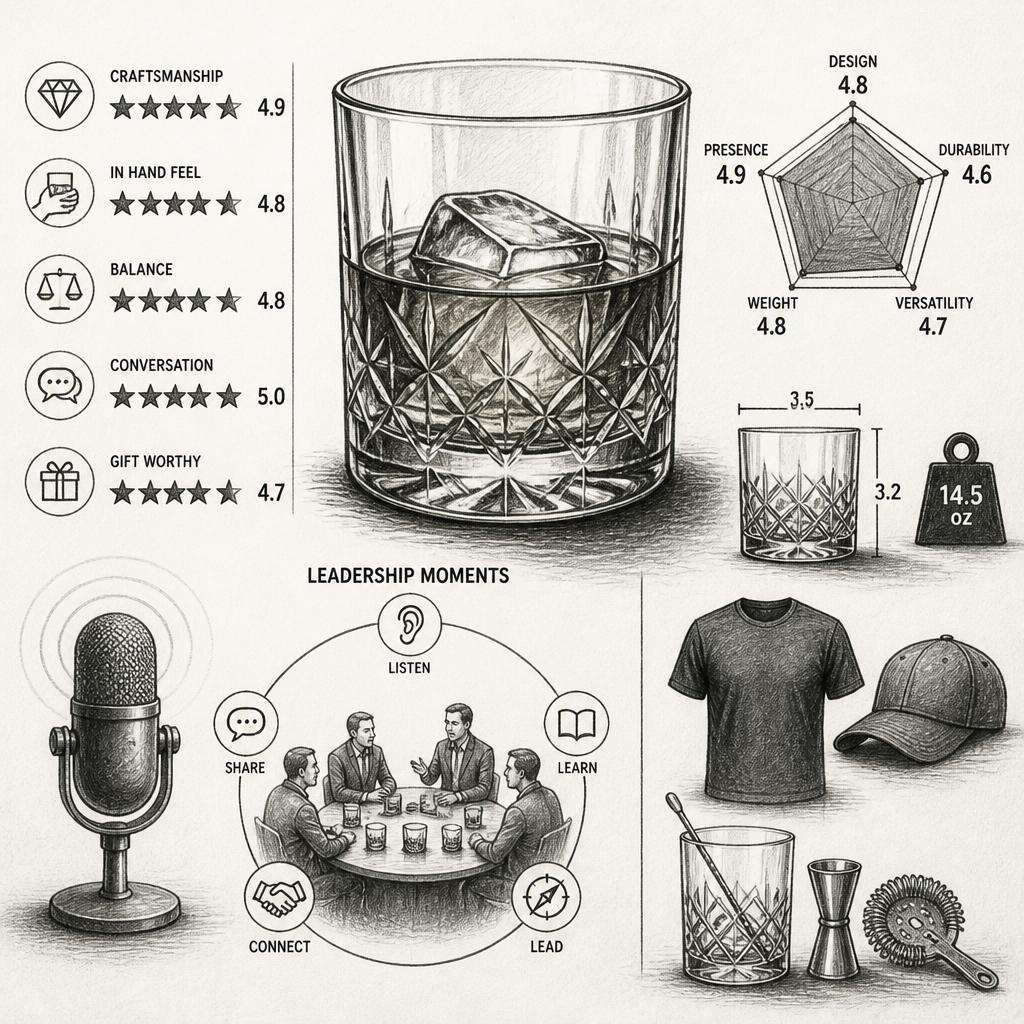
This is also where podcast-linked merchandise fits naturally. When a community of leaders gathers, in person or around a recurring discussion, a shared vessel becomes a small ritual. It marks the hour as different from the rest of the day.
A simple standard to hold yourself to
Before your next leadership discussion, ask three questions: Can everyone in the room serve themselves comfortably? Is there a non-alcoholic option that looks as considered as the rest? Would I be comfortable if a junior team member saw this exact setup? If the answer to all three is yes, the barware is doing its job.
Podcast Merchandise for Leadership Communities: Building Culture Beyond the Mic
The podcast brings leaders together, and the merchandise extends that community beyond the audio.
Professional drinkware leadership merchandise serves a specific purpose. It's not just a branded item. It's a tool for building culture.
When listeners become members of a leadership community, they want tangible ways to connect with that community.
Podcast merchandise for leadership communities works best when it's useful. When it's something people actually want to hold.
A weighted glass on your desk becomes a daily reminder of the conversations that matter. Of the community you're part of.
The apparel and barware serve this exact function. They're not afterthoughts.
Selecting Drinkware That Stands the Test of Time
Most drinkware guides stop at "pick something sturdy." That advice doesn't help when you're choosing a set for a leadership dinner, a recurring one-on-one, or a small team discussion.
The seven criteria that matter for leadership settings
Run each candidate through these in order. The first three are non-negotiable; the last four are where most buyers leave value on the table.
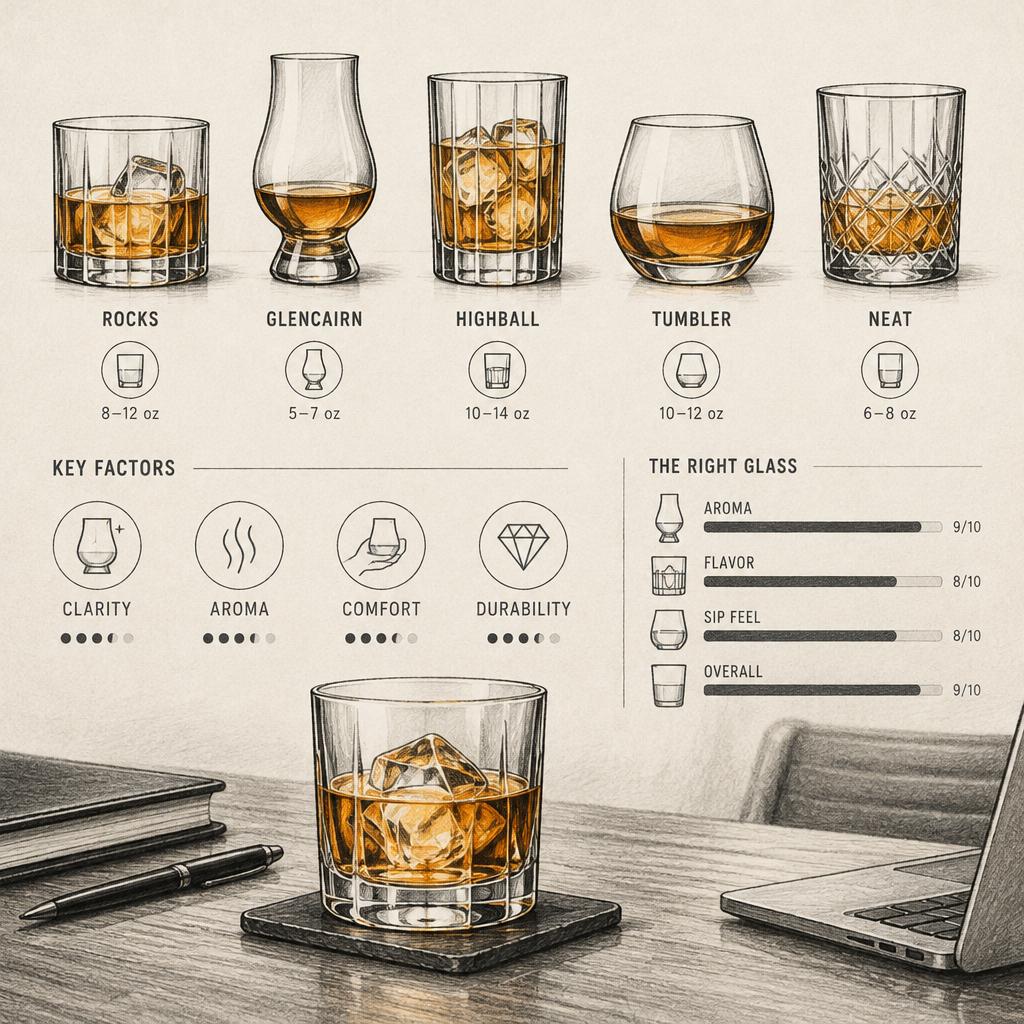
- Capacity. For a seated discussion of 45-90 minutes, an 8-12 oz old-fashioned glass or a 10-14 oz mug is the practical range. Larger vessels encourage sipping less often and refilling more, which fragments the conversation. Smaller vessels run dry mid-thought. Match capacity to session length, not to how impressive the glass looks on a shelf.
- Insulation and temperature control. Double-wall construction slows heat transfer and reduces exterior condensation, which matters if the drinkware sits on paper, wood, or a shared table. Single-wall glass is fine for short sessions but will sweat. For coffee or tea in longer meetings, vacuum insulation keeps the drink palatable past the 30-minute mark, when attention typically dips.
- Material and mouthfeel. Lead-free crystal and soda-lime glass feel different on the lip; crystal is typically thinner and lighter, glass is more chip-resistant. Stainless steel is durable and insulating but changes the taste experience for some beverages. Ceramic holds heat well but is heavier and breakable. There is no universal best, there is a best for the beverage and the room.
- Lid design. For anything carried between rooms, a lid with a positive seal prevents spills on laptops and documents. A push-fit lid is easier to clean; a threaded lid seals better. If the drinkware stays on the table, an open vessel is simpler and easier to clean.
- Cleaning and maintenance. Dishwasher-safe claims vary. Hand-finished etching and painted logos often degrade in high-heat cycles. If the set will be used daily by a team, prioritize dishwasher-safe construction and avoid narrow-neck designs that trap residue.
- Durability and replacement cost. Thick bases resist chipping; tempered glass resists thermal shock. Consider how easily a single broken piece can be replaced, a set that can't be topped up becomes a mismatched set within a year.
- Meeting suitability. Weight and balance affect how a glass feels in hand during a long conversation. A top-heavy tumbler tips; a well-balanced old-fashioned glass sits still. Etched details on the base are more durable than surface printing and survive repeated washing.
A quick comparison of common options
| Option | Best for | Trade-off |
|---|---|---|
| Weighted old-fashioned glass | Seated discussions, evening conversations | Not insulated; condensation in humid rooms |
| Double-wall tumbler | Longer sessions, temperature retention | Can feel light or "floaty" to some users |
| Insulated stainless mug | Coffee-led morning meetings | Alters taste for some beverages; heavier |
| Ceramic mug | Casual team check-ins | Breakable; holds heat unevenly |
| Etched crystal glass | Gifting and recognition moments | Higher care requirements; chip risk |
How to test before you buy
Order a single unit before committing to a set. Hold it for the length of a typical meeting. Fill it with the beverage you'll actually serve. Wash it the way your team will wash it. If it still feels right after a week, it will survive a year of use.
Frequently Asked Questions
Will premium drinkware actually improve how my team communicates, or is it just a nice glass?
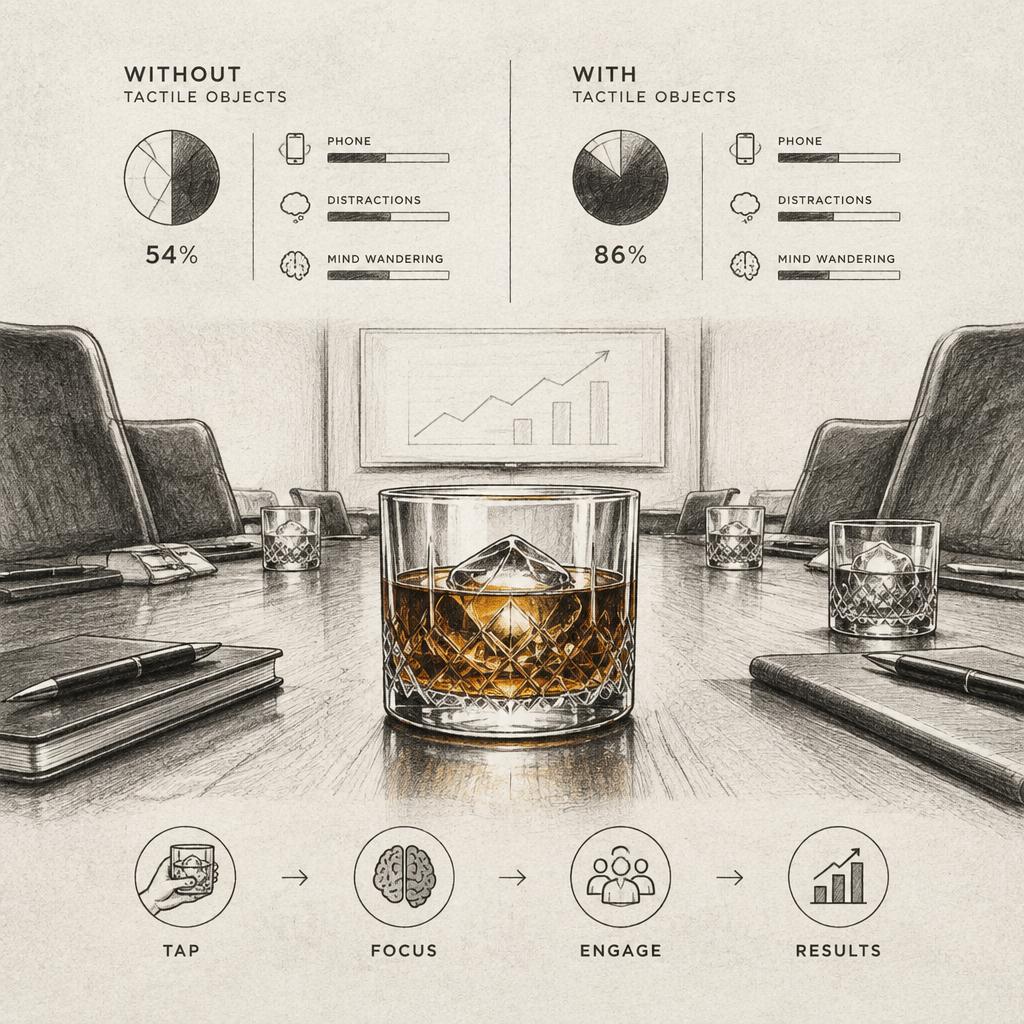
Professional drinkware works by creating a tangible focal point during conversations. The weighted feel and refined design signal that the moment matters, which unconsciously shifts people into more thoughtful communication. It's not magic, it's about removing distractions and creating an environment where meaningful discussion feels intentional. A well-chosen glass removes the casual feel of a regular mug and signals that what's being discussed deserves attention and respect.
What makes executive barware a thoughtful leadership gift?
Executive barware signals that you understand the recipient's values: craftsmanship, intention, and meaningful moments. Unlike generic corporate gifts, quality drinkware is used regularly and becomes part of their routine. Every time they reach for it, they're reminded of the relationship and the conversation it represents. It's a gift that works in a boardroom, a home office, or during quiet reflection, making it versatile enough for any leader's life.
How do I know if professional drinkware will still look sophisticated in five years?
Classic design outlasts trends. Look for timeless shapes like the old-fashioned glass, a style that's been refined for over a century. Avoid anything with heavy branding or dated aesthetics. Quality materials like weighted glass and hand-etched details age beautifully and actually improve with use. The key is choosing drinkware that reflects enduring design principles rather than current fashion, ensuring it remains a boardroom staple for decades.
What should I look for when choosing drinkware for leadership conversations?
Choose glasses that feel intentional in your hand: weighted construction, a comfortable grip, and a size that encourages thoughtful pacing rather than quick consumption. The best professional drinkware has subtle details, like an etched message or logo, that spark conversation without overwhelming the design. Durability matters too; glasses that hold up to regular use signal quality and reliability, qualities you want reflected in your leadership presence.