 blog
Sophisticated Desk Accessories for Leaders: 2026 Guide
Table of Contents
- Why Sophisticated Desk Accessories Matter for Leadership Presence
- Tactile Objects for Meeting Focus: How Weighted Glassware Anchors Attention
- Executive Office Decor Ideas That Signal Authority Without Clutter
- The Psychology of Workspace Design for Leaders
- Sustainability and Ethical Sourcing in Premium Desk Accessories
- Maintenance and Longevity: Keeping Sophisticated Desk Accessories Pristine
- Conclusion: Curating a Workspace That Commands Respect
- Frequently Asked Questions
Last Updated: September 11, 2026
Why Sophisticated Desk Accessories Matter for Leadership Presence
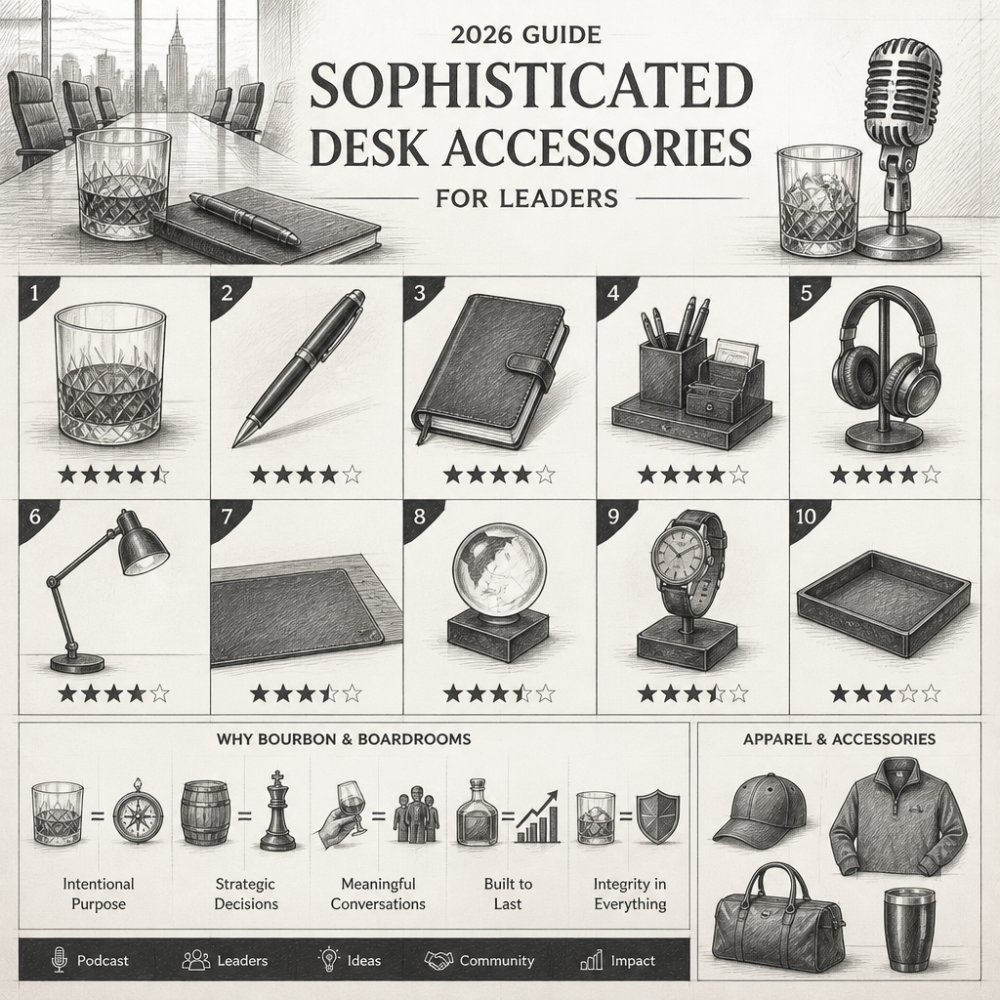
Sophisticated desk accessories are the tactile, functional objects that shape how a leader's workspace reads to everyone who walks into it. This guide explores how those objects, from a leather desk pad to a weighted old-fashioned glass, do quiet work on presence, focus, and the tone of a meeting before anyone speaks.
A desk tells visitors what a leader values before a word is exchanged. A cluttered surface suggests a mind pulled in ten directions. A considered one suggests command. That first impression is not vanity; it is positioning. The leader who wants to stand out in a crowded room starts by controlling the room they already own.
Tactile Objects for Meeting Focus: How Weighted Glassware Anchors Attention
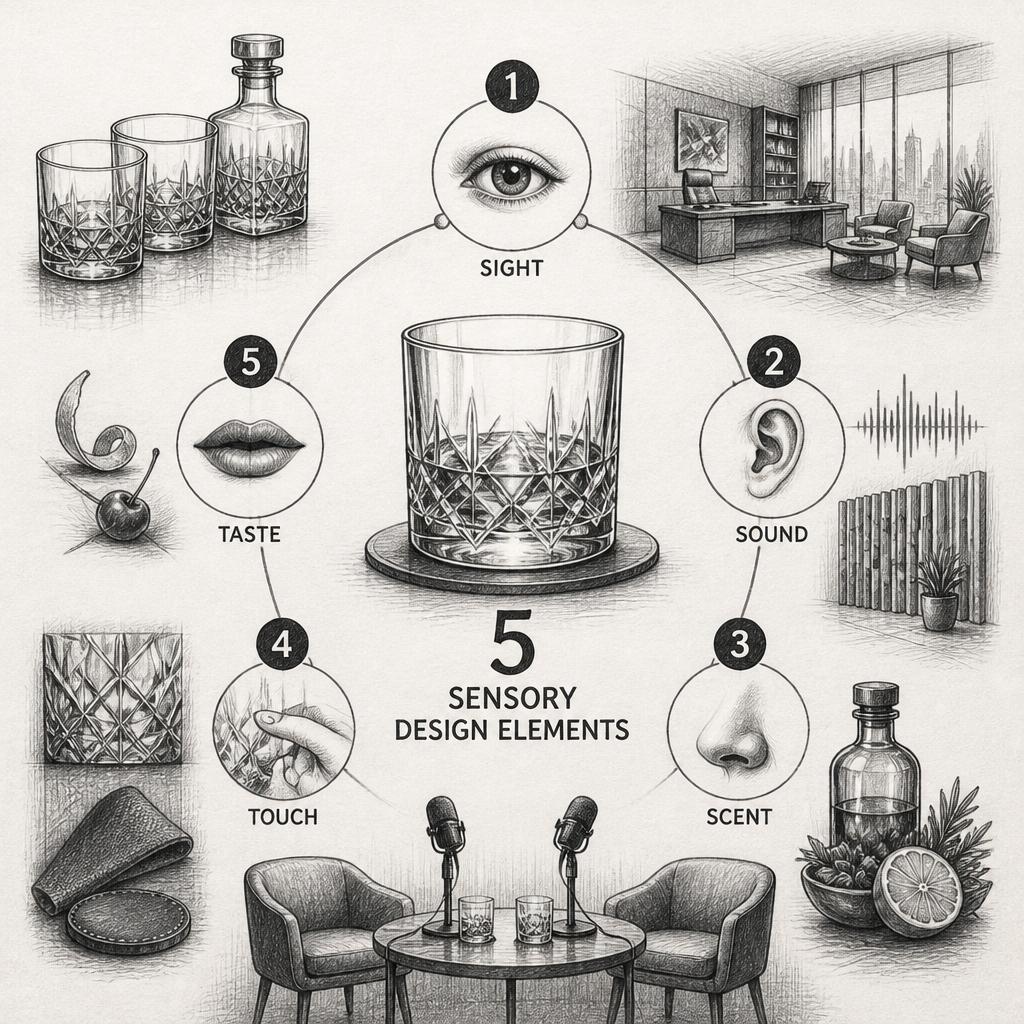
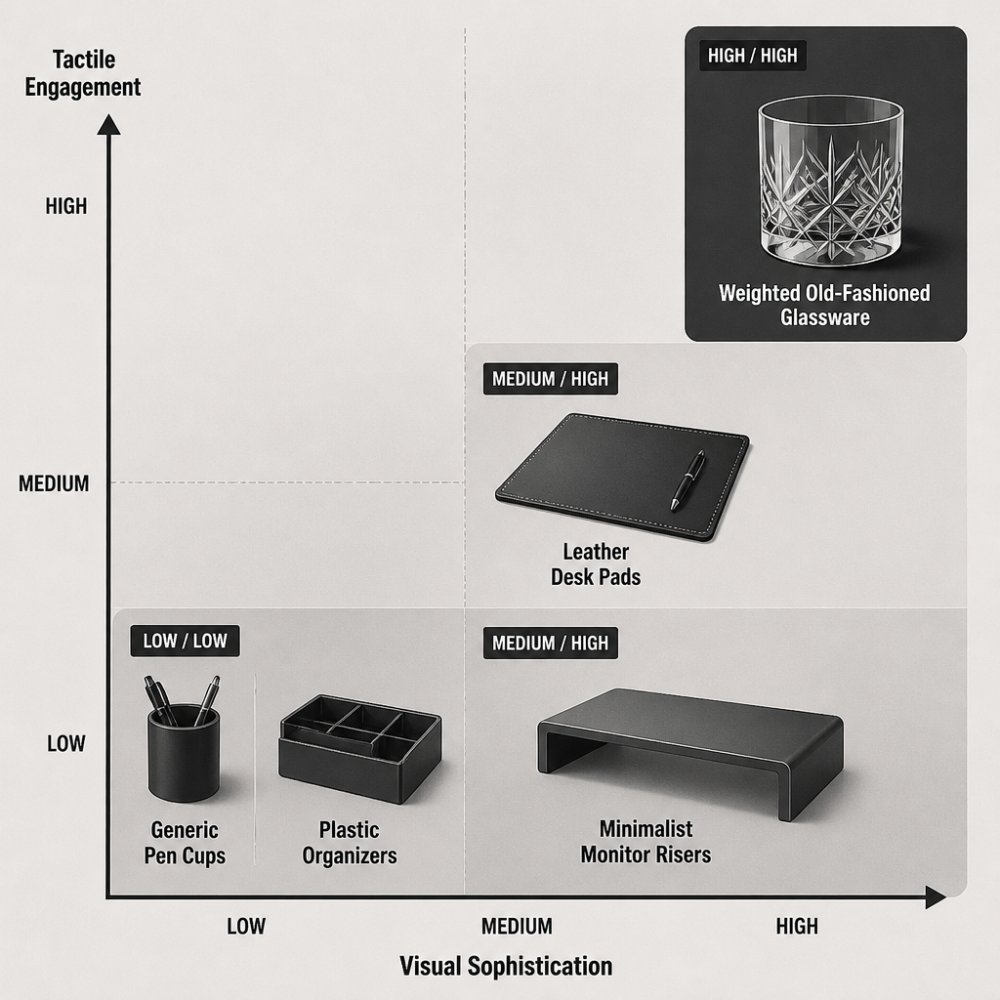
Weighted glassware anchors meeting focus because physical weight gives the hand something real to hold, and that small sensory anchor pulls a wandering mind back to the table. Tactile objects for meeting focus work on the same principle as a stress ball or a well-balanced pen: the body settles, and the attention follows.
The Bourbon and Boardroom Connection
Bourbon and the boardroom share more than a name. Both reward patience over speed. A good pour is measured, unhurried, and meant to be sipped while a decision takes shape. A good meeting runs the same way: deliberate, warm, and built on trust rather than urgency.
That is the thinking behind The Pour collection from Bourbon in the boardroom. Each classic short-wide old-fashioned glass carries a weighted feel, the brand's signature logo, and an etched tagline on the bottom, a small discovery for whoever turns the glass over. It is a conversation starter that does not announce itself as one, which is exactly why it works.
Executive Office Decor Ideas That Signal Authority Without Clutter
Executive office decor ideas that signal authority without clutter follow one rule: every object earns its place. Authority reads as restraint. A surface with three deliberate pieces outranks a surface with thirty, but only if each of those three pieces is doing measurable work.
Leather Desk Pads: The Base Layer
A leather desk pad defines the working zone, protects the surface beneath it, and gives a mouse a consistent glide that a bare wood or glass top never will. The material choice matters more than most buyers realize:
- Full-grain leather keeps the natural grain intact, develops a deep patina over years, and is the most durable option. It also shows marks earliest, which some leaders read as character and others read as damage.
- Top-grain leather is sanded and buffed to remove imperfections, giving a more uniform look with slightly less longevity.
- Bonded leather is reconstituted from scraps and will peel at the edges within a few years, the opposite of a decade-long purchase.
A common pattern among executives is a pad sized to the primary work zone rather than the whole desk: large enough for a keyboard, mouse, and notebook, small enough that the wood grain still frames it. That framing is what makes the pad read as intentional rather than as a cover-up.
Monitor Risers and the Ergonomics of Long Days
A monitor riser lifts the screen so the top of the display sits near eye level, which reduces the forward head posture that accumulates across a long working session. The trade-off is real: a riser frees the space underneath for a keyboard, notebook, or charging tray, but it also raises the monitor's center of gravity, so a heavy display on a lightweight riser can wobble. Look for a riser with a wide, weighted base and hardware that can be re-tightened.
Wood risers in walnut or oak warm a room in a way acrylic and aluminum cannot, and they age rather than scratch. Acrylic disappears visually and suits a cooler, more minimal aesthetic. Neither is better, the choice signals what kind of room the leader wants to run.
Wireless Charging and Cable Management
Wireless charging pads remove the tangle of cords that quietly signals disorder, but the mechanism matters. A pad that requires precise placement frustrates the user; a pad with a wider coil tolerance lets a phone land anywhere on the surface and still charge. Leaders who host often should look for a pad that can charge a phone and earbuds simultaneously, so the desk does not sprout a second cable the moment a guest arrives.
Cable management is the least glamorous and most visible upgrade. A tray, clip, or channel built into the riser keeps remaining lines out of sight. The goal is a surface where nothing competes for attention except the work, and where a guest never has to move a cord to set down a glass.
| Accessory | Function | Material Trade-off | Best For |
|---|---|---|---|
| Leather desk pad | Defines work zone, protects surface | Full-grain ages; bonded peels | Any executive desk |
| Monitor riser | Lifts screen to eye level | Walnut warms; acrylic disappears | Long working sessions |
| Wireless charging pad | Removes cord clutter | Wide coil tolerance beats precision | Leaders who host often |
| Cable tray or clips | Hides remaining wires | Under-desk hides more than on-desk | Cable-heavy setups |
| Weighted glassware | Anchors attention, starts talk | Weight and etch signal permanence | Boardroom and office bar |
The Psychology of Workspace Design for Leaders
Workspace design shapes behavior, and leaders feel that effect more sharply than most because their environment is also their stage. A clean, warm, deliberate space lowers the guard of everyone who enters it. A cold or chaotic one raises it.
Most guides stop there. They treat desk styling as a shopping exercise when it is really a leadership exercise, and the mechanism is worth naming.
Cognitive Load and the Cost of Visual Noise
The human brain has a limited budget for attention, and every object in the peripheral field competes for a slice of it. A stack of unfiled papers, a tangle of cords, a half-empty mug from yesterday, none of these is a crisis, but each one is a small unresolved question the brain keeps re-asking. Researchers who study attention describe this as cognitive load: the mental cost of holding unfinished business in view.
For a leader, that cost compounds. A meeting requires holding the thread of a conversation, reading the room, and deciding in real time. Every unit of attention spent suppressing visual noise is a unit not spent on the decision. A curated surface is not vanity, it is load reduction. The leader who clears the desk is buying back attention for the work that actually matters.
The Bourbon and Boardroom Parallel
This is where bourbon and the boardroom share more than a name. A good pour is measured, unhurried, and meant to be sipped while a decision takes shape. The glass is heavy enough to register in the hand, the ice is deliberate, and nothing about the ritual is rushed. A good meeting runs the same way: deliberate, warm, and built on trust rather than urgency.
Both reward patience over speed. Both punish the leader who treats them as transactions. And both use a small physical anchor, a glass, a pen, a well-weighted object, to pull a wandering mind back to the table. That is not mysticism; it is the same principle behind a stress ball or a balanced pen. The body settles, and the attention follows.
What the Surface Says Before You Do
A desk tells visitors what a leader values before a word is exchanged. A cluttered surface suggests a mind pulled in ten directions. A considered one suggests command. That first impression is not vanity; it is positioning, and it is doing work no memo can.
A weighted glass set out for a difficult discussion says this room is for candor, not combat. A single leather pad and a clean riser say the leader prepared for the conversation. A surface with nothing personal on it says the leader is passing through. The leader who wants to stand out in a crowded room starts by controlling the room they already own, and the objects on that surface are the first sentence of a conversation that happens before anyone sits down.
Sustainability and Ethical Sourcing in Premium Desk Accessories
Sustainability in premium desk accessories comes down to longevity. A leather desk pad that lasts a decade beats three synthetic mats that crack and peel. A glass built to be used, not shelved, is the opposite of disposable.
Buyers should ask where materials come from and how the object is made. Leather goods should trace to responsible tanneries, and glass should be durable enough for daily handling. The most sustainable accessory is the one a leader never needs to replace.
Maintenance and Longevity: Keeping Sophisticated Desk Accessories Pristine
Maintenance is what separates a collection from a pile of objects. Leather desk pads need occasional conditioning and should stay out of direct sun. Glassware should be washed by hand with mild soap and dried promptly to keep the etch and logo crisp.
- Wipe leather weekly with a dry, soft cloth
- Condition leather every few months
- Hand-wash glassware, never in a hot dishwasher cycle
- Keep charging pads free of dust and metal objects
- Re-tighten monitor riser hardware twice a year
Conclusion: Curating a Workspace That Commands Respect
The challenge for any leader is that presence is built in small, repeatable choices, not grand gestures. A desk that commands respect is assembled one deliberate object at a time, and the objects that carry weight, literally and otherwise, do the most.
The Pour collection offers classic short-wide old-fashioned glasses with a weighted feel, a signature logo, and an etched tagline on the bottom, turning an ordinary surface into a focal point for real conversation. Add to cart and give the next meeting something worth gathering around.
Frequently Asked Questions
What makes a desk accessory look sophisticated rather than cluttered?
Sophistication comes from restraint and material quality. A leather desk pad, a single weighted glass, and a minimalist monitor riser do more for executive presence than a dozen plastic organizers. The rule: every object should serve a purpose or spark conversation. If it does neither, it adds visual noise. Choose fewer pieces with premium materials like full-grain leather, brushed metal, or weighted glass, and let negative space do the rest.
How do tactile objects for meeting focus actually improve leadership discussions?
Tactile objects give your hands something to do during high-stakes conversations, which reduces nervous energy and keeps your attention on the speaker rather than on fidgeting. A weighted old-fashioned glass, for example, has enough heft that you notice it, but not so much that it distracts. That physical anchor helps slow the pace of discussion, encouraging more deliberate responses. Leaders who use tactile objects often find meetings feel less rushed and more substantive.
Are there specific desk items that help facilitate better leadership meetings?
Yes. Weighted glassware, a leather desk pad, and a clean cable management system top the list. Weighted glassware signals a pause in the agenda and invites reflection. A leather desk pad defines your workspace and protects the surface. Cable management removes visual distractions that pull focus. Together, these items create an environment where conversations feel intentional rather than transactional. The goal is not decoration but a subtle nudge toward deeper engagement.
How can I tell if a premium desk accessory will last, or if it is just a display piece?
Look for weight, material, and construction details. A weighted glass should feel balanced in your hand and resist tipping. Leather should have a tight grain and even stitching. Metal components should be solid, not hollow. Ask about care instructions: if a piece requires special handling, it is likely display-only. If it can handle daily use and still look refined after years, it is built for leadership.
A workspace that commands respect starts with one object that earns its place. The Pour collection from Bourbon in the boardroom offers weighted, classic old-fashioned glassware with the brand's signature logo and an etched tagline on the bottom, made for leaders who want their environment to work as hard as they do. Explore the collection and add to cart to bring that presence to the boardroom.