 blog
Tips for Choosing Corporate Gifts That Land
Table of Contents
- Start With the Recipient, Not the Catalog
- Corporate Gift Giving Etiquette: Rules That Still Apply
- How to Write a Corporate Gift Note That Sounds Human
- Luxury Corporate Gift Ideas for Executives (and Why Barware Works)
- Budget, Tax, and Compliance: The Business Side of Corporate Gifts
- Bulk Orders, Shipping, and Remote Teams
- Sustainable Sourcing and Post-Gifting Feedback
- Frequently Asked Questions
Last Updated: September 16, 2026
Start With the Recipient, Not the Catalog
Most corporate gifting fails before a single box ships, and it fails for the same reason every year: the sender starts with a catalog instead of a person. Tips for choosing corporate gifts only work when the gift reflects something true about the recipient. This guide from Bourbon in the boardroom is built around that idea.
A corporate gift is a tangible or experiential token given by a business to an employee, client, or partner to mark a relationship milestone, and its value comes from fit rather than price. The recipient's role, taste, and workspace decide whether a gift reads as thoughtful or transactional.
Ask three questions before browsing anything:
- What does this person actually use on a normal Tuesday?
- What does their role signal to peers when the gift sits on their desk?
- Would they keep this if their name were not attached to it?
That last question is the honest one. A gift worth keeping without the label is a gift worth sending with it.
Corporate Gift Giving Etiquette: Rules That Still Apply
Corporate gift giving etiquette is the unwritten code that keeps a generous gesture from becoming an awkward one. The core rules have not changed: know the recipient's policy, keep value proportionate to the relationship, and never put someone in a position where they feel obligated.
Proportionality does most of the work. A gift to a new contact should be modest; a work anniversary gift for a ten-year partner can be more substantial. When the value climbs, the relationship should justify it on its own. Recipient segmentation helps here: group your list by relationship depth, then set a different ceiling for each group before you shop.
Timeliness matters as much as taste. A gift that arrives three weeks after the milestone reads as an afterthought, no matter what it cost. Build delivery dates backward from the occasion, not forward from your procurement calendar.
What to Avoid Sending
Some gifts create problems the sender never sees. Skip anything that implies a lifestyle, a political leaning, or a personal judgment. Alcohol, when included, should never be the only option, since some recipients do not drink for reasons you will not know. Avoid logo-heavy items that turn a person into a billboard, and avoid anything that requires upkeep the recipient did not ask for.
The safest rule: if you would hesitate to explain the gift to the recipient's manager, do not send it.
How to Write a Corporate Gift Note That Sounds Human
A corporate gift note should sound like one person speaking to another, not like a press release with a ribbon on it. Three sentences is usually enough: name the occasion, say something specific about the recipient, and close without asking for anything.
Here is a template that works for most situations:
[First name], Congratulations on [specific milestone]. Watching you [specific contribution] has been a genuine pleasure, and this felt like the right way to mark it. With respect, [Your name]
The middle sentence is the one people remember. "Congratulations on ten years" is forgettable. "Watching you rebuild the client team after the merger" is not.
Luxury Corporate Gift Ideas for Executives (and Why Barware Works)
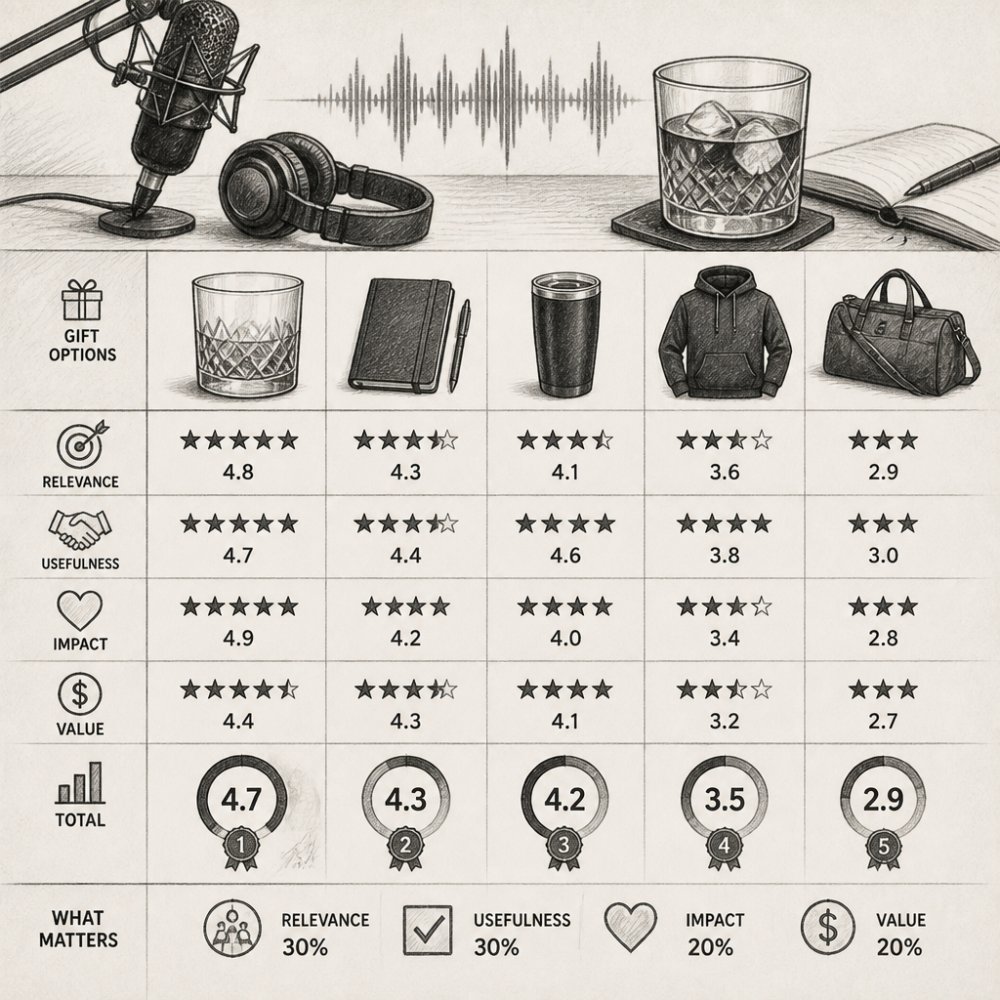
Luxury corporate gift ideas for executives tend to fall into two camps: objects that sit on a desk, and experiences that fill a calendar. Both can work, but they behave differently. An experience creates a memory; an object creates a daily reminder of who sent it. For a mentor or a long-standing client, the daily reminder usually earns more.
Budget, Tax, and Compliance: The Business Side of Corporate Gifts
Budget allocation, tax treatment, and internal policy approval are where most gifting programs quietly stall. Set the budget per recipient before you shop, get the compliance check done early, and keep a single record of who received what. Procurement teams handle vendor selection, shipping, and fulfillment far better when those records exist from the start.
What Counts as Tax-Deductible
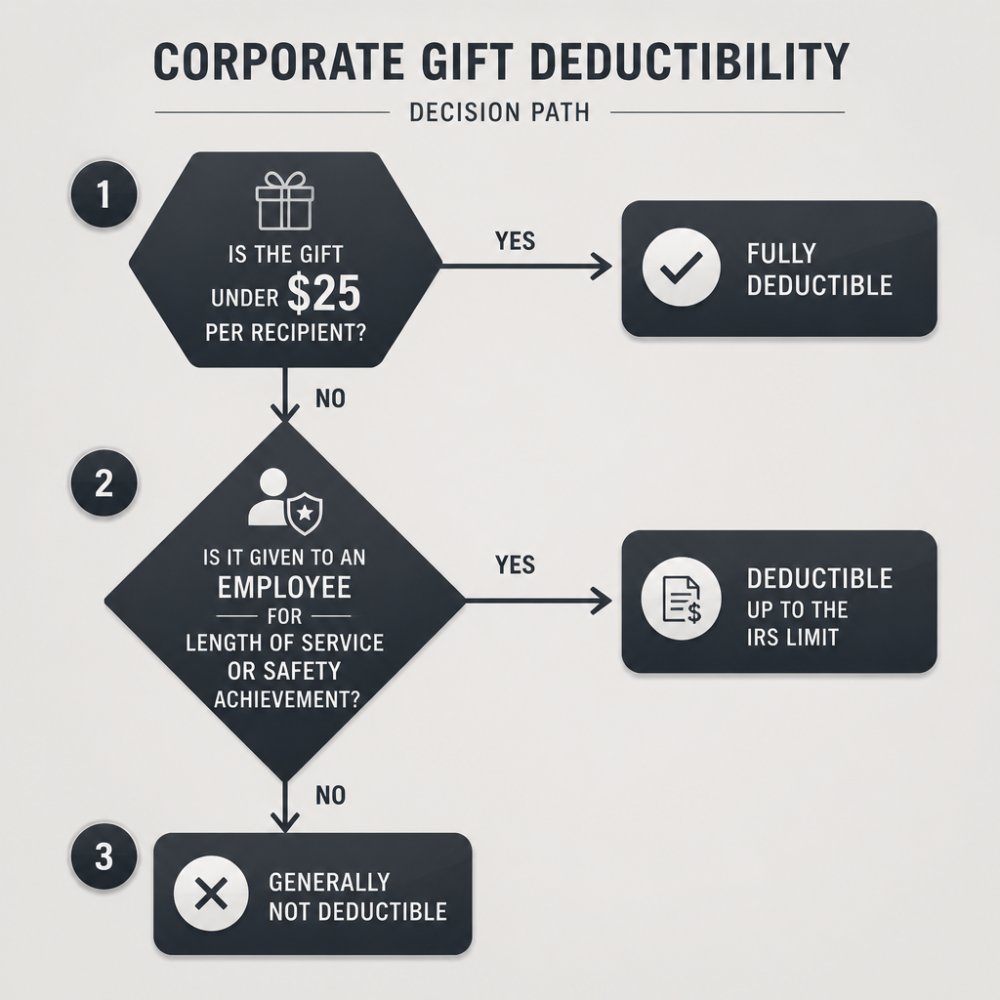
In broad terms, the Internal Revenue Service treats business gifts as deductible up to a per-recipient annual limit, with exceptions for certain employee awards. The rules are specific and the limits change, so confirm current figures with the IRS guidance on business gift deductions or a qualified tax professional before you build a budget around them.
The Documentation File That Survives an Audit
Substantiation is the difference between a deduction and a disallowance. A defensible record for each gift usually includes the recipient's name and title, the company they work for, the date and amount, the business relationship, and the business purpose. If a gift is part of a larger promotional or marketing effort, note that too, because the treatment can differ.
Acceptance Limits and Regulated Industries
Many organizations, particularly in financial services, healthcare, government contracting, and legal, publish internal limits on what employees may accept from vendors or partners. These limits are often lower than the sender expects, and they exist for a reason: a gift that exceeds them puts the recipient in the position of having to disclose, decline, or return it.
Build the compliance check into the calendar, not the checkout. Confirm policy, set the ceiling, log the purpose, file the receipt, in that order, every cycle.
Bulk Orders, Shipping, and Remote Teams
Bulk customization and logistics management are where good intentions meet reality. A single gift is easy; forty gifts across nine time zones is an operations problem. Start by segmenting the list by location and delivery method, then confirm addresses before anything is ordered.
| Situation | Best Approach | Watch Out For |
|---|---|---|
| Local team, single office | Hand delivery or in-person presentation | Timing around hybrid schedules |
| Remote employees, many regions | Direct shipping with tracking | Address accuracy and delivery windows |
| Client gifts, regulated industry | Check policy, then ship to office | Value limits and disclosure rules |
| Large bulk order | Confirm quantities and lead times early | Breakage and replacement policy |
Sustainable Sourcing and Post-Gifting Feedback
Sustainable sourcing and post-gifting feedback are the two parts of a gifting program most companies skip, and both are cheap to fix. On sourcing, ask vendors where materials come from and how items are packaged. Executives notice excessive packaging, and so do the people who handle the recycling.
Vetting a Vendor on Sustainability Without a Checklist Overload
You do not need a full ESG audit to make a better sourcing decision. Four questions cover most of the ground:
- Materials: What is the item made from, and is that material recyclable, recycled, or neither?
- Packaging: How is it shipped, and how much of that packaging is single-use plastic?
- Durability: Will this item still be in use in five years, or is it designed to be replaced?
- End of life: Can the recipient repair, refill, or recycle it?
The Post-Gifting Feedback Loop
A short follow-up a few weeks after delivery tells you more than any internal review. The trick is to ask in a way that produces usable answers rather than polite ones. Three questions work well:
- Did the gift arrive in good condition?
- Have you had a chance to use it?
- Is there anything we could have done differently?
Remote-First and Digital Gifting Done Well
When a physical item is impractical, a distributed team, a short timeline, a recipient in a region where shipping is unreliable, a digital gift or a scheduled experience still counts as a meaningful gesture, provided it is personal rather than generic. A gift card with no note is a transaction. A gift card with a specific reference to a shared project is a gesture.
Frequently Asked Questions
What is the etiquette for giving corporate gifts?
Keep it professional and modest. Avoid gifts that could look like an attempt to influence a business decision, and check your company's policy before sending anything of significant value. Give in the open rather than privately, especially with clients, so there is no appearance of impropriety. A short handwritten note matters as much as the item itself. When in doubt, choose something useful and understated over something flashy.
How do you choose a corporate gift that feels personal but professional?
Start with what you know about the recipient's role and interests, then pick a category that fits, not a specific item with their name on it in a way that feels presumptuous. Shared experiences, like a quality glass for an executive who hosts dinners, tend to land better than generic branded merchandise. Pair the gift with a note that references a real conversation or milestone. Personal does not mean intimate; it means specific to them.
How much should a company spend on a corporate gift?
There is no universal number, and pricing depends on quantity, the relationship, and your company's own gifting policy. Many organizations set internal caps by recipient tier, such as clients, direct reports, and executives. Spending more does not guarantee a better outcome; a well-chosen item that fits the recipient's habits outperforms an expensive one that sits in a drawer. Check with your finance or legal team before setting a budget.
When is the most appropriate time to send a corporate gift?
Timeliness matters more than the occasion itself. Work anniversaries, project completions, promotions, and closed deals are all natural moments. Holiday gifting is common but crowded, so a gift that arrives at an unexpected but relevant time often stands out more. Avoid sending during a pending contract negotiation or right before a decision you are hoping to influence, since that can create the appearance of a quid pro quo.