 how-to
Is Alcohol Appropriate as a Corporate Gift?
Table of Contents
- When Alcohol Is Appropriate as a Corporate Gift
- Corporate Gift Etiquette: The Fundamentals
- Understanding Workplace Gift-Giving Policy
- Crafting Business Gift Message Examples
- Non-Alcoholic Corporate Gifts for Inclusive Teams
- Pros and Cons of Alcohol as a Corporate Gift
- Making Your Decision: A Practical Checklist
- Frequently Asked Questions
Last Updated: October 18, 2026
When Alcohol Is Appropriate as a Corporate Gift
Is alcohol appropriate as a corporate gift? It depends on context. An alcohol corporate gift makes sense when three factors align: the occasion, your relationship with the recipient, and their preferences.
Workplace norms have shifted toward personalization and inclusivity, so knowing your recipient matters more than ever.
Occasions That Warrant an Alcohol Gift
Certain moments call for an alcohol corporate gift more naturally: end-of-year celebrations, client appreciation events, and milestone achievements carry enough formality to make a premium bottle feel appropriate.
Holiday seasons present the clearest case: winter gifting traditions embrace alcohol as a token of gratitude, making it feel seasonal and intentional.
Closing a major deal or completing a successful project also works: shared success creates a celebratory tone where alcohol gifts land well.
Relationship Context Matters
Your relationship with the recipient shapes whether an alcohol gift is appropriate. A mentor who has guided your career over years?
Client relationships demand careful judgment. Long-term clients with established rapport can receive alcohol gifts. New clients warrant something safer.
Direct reports present complications. Gifting alcohol to people who report to you can blur professional lines and feel like favoritism.
Peer relationships work best. Colleagues at your level often appreciate alcohol gifts. The dynamic feels more equal.
Corporate Gift Etiquette: The Fundamentals
Corporate gift etiquette protects both giver and receiver, preventing missteps that could damage professional relationships.
Know Your Recipient
Before selecting any alcohol corporate gift, research your recipient. Asking directly is acceptable: "I'm thinking of sending a gift. Do you have any preferences or restrictions?" This single question eliminates guesswork.
Some people don't drink for religious reasons, health, personal choice, or recovery. Giving alcohol to any of them, even with good intentions, causes discomfort and signals you didn't bother to learn about them.
Cultural background influences preferences. Certain cultures have specific traditions around alcohol gifting. Learning these nuances demonstrates genuine consideration.
Presentation and Personalization
How you present an alcohol corporate gift matters as much as what you choose, elevating the gesture from transactional to thoughtful.
Include a handwritten, personalized note referencing something specific about your relationship or a recent accomplishment.
Quality packaging makes a difference. A bottle wrapped in tissue and placed in a nice box signals care. Bare bottles feel impersonal.
Match the gift to the recipient's habits: a collector might appreciate a rare find, while a casual drinker prefers something approachable.
Understanding Workplace Gift-Giving Policy
Many organizations have specific gift rules, and ignoring them creates problems for both you and the recipient. The rules rarely live in one place: they're split across your employee handbook, your client's procurement policy, industry regulations, and sometimes state law, so a gift that clears one layer can still fail another.
Company Guidelines and Compliance
Start with the employee handbook. Look for a dollar threshold for accepting gifts, an outright ban on alcohol, and a rule about gifts from vendors or clients.
Then check the recipient's side. Their employer may impose a stricter limit than yours.
A practical pattern many compliance teams use: if the gift must be reported, it is probably too generous. A modest, consumable gift under the reporting threshold is easier to accept gracefully.
Industry-Specific Restrictions
Certain professions face unique constraints, and these are where alcohol gifts most often go wrong.
Financial services. Banks, broker-dealers, and investment firms operate under conduct rules that require avoiding even the appearance of impropriety.
Legal. Law firms and in-house legal departments tend to be conservative.
Defense and aerospace. Contractors working with the Department of Defense face procurement integrity rules that restrict gifts to government personnel.
A Quick Policy Check Before You Buy
Run this sequence before any alcohol purchase:
- Confirm your own company's gift limit and whether alcohol is permitted.
- Confirm the recipient's company policy, ideally in writing.
- Identify whether either party is in a regulated industry with gift restrictions.
- Check whether the gift would need to be reported or disclosed.
- If any answer is unclear, default to a non-alcoholic alternative.
This takes a few minutes and prevents the most common and most avoidable gifting mistake.
Crafting Business Gift Message Examples
The right message transforms a gift into a meaningful gesture. Poor messages undermine even excellent bottles.
Messages for Different Relationships
For a valued client: "Thank you for the partnership this year. Your insights have been invaluable.
For a retiring colleague: "Congratulations on an incredible career. Your mentorship shaped how I approach this work. Enjoy this well-deserved next chapter."
For a team milestone: "We couldn't have hit this goal without your contribution. Thanks for pushing us forward. Here's to celebrating the win."
For a business mentor: "I'm grateful for the guidance you've shared.
Tone and Authenticity
Keep messages brief. Two to three sentences work best. Long messages feel forced.
Be specific. Reference something real about your relationship or their accomplishment. Generic praise sounds hollow.
Avoid overstating the gift's significance. "This bottle cost a fortune" or "I had to search everywhere for this" puts pressure on the recipient. Let the gift speak for itself.
Match your tone to your relationship. Formal with senior clients. Warm with close colleagues. Professional always, but not stiff.
Non-Alcoholic Corporate Gifts for Inclusive Teams
The smartest approach to workplace gifting acknowledges that not everyone drinks, without forcing anyone to explain why. The goal is inclusion that feels natural, not a spotlight on difference.
When to Choose Alternatives
If you are unsure about someone's preferences, choose something else. An alcohol corporate gift assumes too much.
Group gifting situations demand alternatives. When you are buying for a team or department, some people will not drink.
If company policy discourages alcohol, respect it. Giving alcohol as a workaround signals you do not respect the rules.
Younger employees sometimes prefer experiences or items over alcohol. Understanding generational preferences prevents missteps.
Quality Alternatives That Impress
Premium coffee or tea sets work well. They are sophisticated, useful, and inclusive.
Experience gifts, concert tickets, restaurant certificates, or wellness services appeal to most people. They create memories rather than clutter.
Luxury office accessories signal respect. High-quality notebooks, desk organizers, or writing instruments work across industries and preferences.
Charitable donations in someone's name demonstrate thoughtfulness. Choose organizations aligned with their known values.
For business professionals who value meaningful conversations, consider items that facilitate connection.
Offering Alternatives Discreetly
The inclusive move is to build choice into the gift itself rather than singling anyone out.
Use a menu, not a substitute. When gifting a team, present two or three options of equal quality.
Skip the reason request. Never ask why someone declined alcohol.
Default to inclusive at group events. For holiday parties and team milestones, make the non-alcoholic option visible and well-made.
Keep the message neutral. In gift notes, avoid language that assumes drinking.
If You Receive an Alcohol Gift You Do Not Want
This happens, and it is worth having a graceful response ready. You do not owe anyone an explanation.
- Accept and redirect. "Thank you, that is very thoughtful." You can regift it, share it at a gathering, or pass it to someone who will enjoy it.
- Decline briefly if you must. "I appreciate the thought, but I will pass this along to someone who will enjoy it." Keep it short and warm.
- Do not over-explain. A long explanation about recovery, religion, or health puts the giver in an uncomfortable position. A simple thank-you and a change of subject is enough.
- Tell the giver privately if you have an ongoing relationship. If a colleague gifts alcohol every year, a quiet note before the next cycle helps: "I love working with you. Just so you know, I do not drink, so please do not feel you need to include alcohol for me." This protects the relationship without public awkwardness.
Pros and Cons of Alcohol as a Corporate Gift
Weighing these factors helps you decide whether alcohol is the right choice.
Advantages
Alcohol signals sophistication and respect. It's a premium gesture that feels more thoughtful than generic corporate gifts. Recipients often appreciate the choice.
It works across many industries and occasions. Few gifts carry this flexibility.
Personal connection is easy to establish. Knowing someone's preferred spirit or wine style shows you listen and remember details. This builds stronger professional relationships.
Memorable experiences happen around alcohol. Business deals close over drinks. Relationships deepen through shared toasts. The gift becomes part of a positive memory.
Disadvantages
Inclusion challenges are real. A percentage of any group doesn't drink.
Assumptions about preferences can backfire. You might gift expensive wine to someone who prefers spirits.
Company policies create complications. Some organizations prohibit alcohol gifts. Giving one puts the recipient in an awkward position.
Shipping restrictions apply in some states. Sending alcohol across state lines involves specific regulations. Violations carry legal consequences.
Storage and consumption create practical issues. Not everyone has space for a bottle. Some people won't drink it.
Making Your Decision: A Practical Checklist
Use this framework to determine whether an alcohol corporate gift is appropriate in your situation.
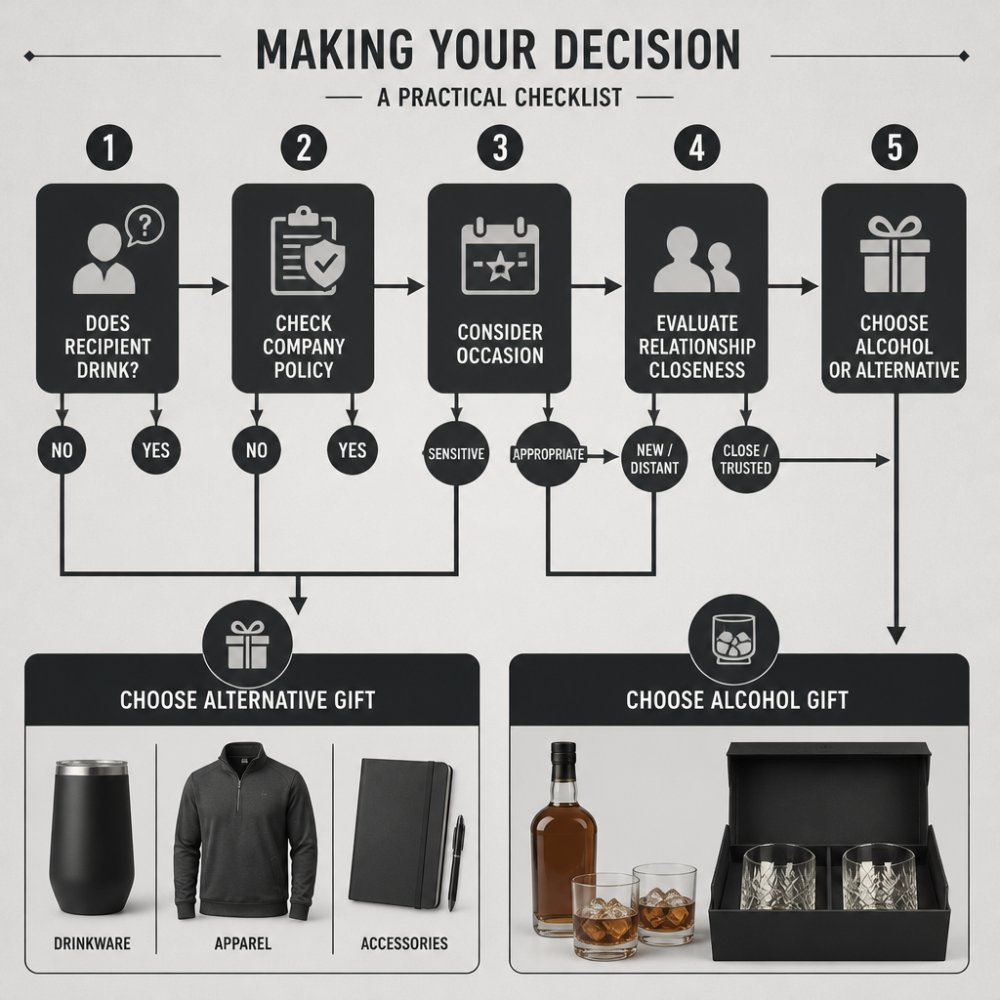
Step 1: Confirm the Recipient Drinks
- Have you asked directly or learned through conversation?
- Do you know their preference (wine, spirits, beer)?
- Are there religious or health reasons they don't drink?
Step 2: Check Company Policies
- Does your company allow alcohol gifts?
- Does their company restrict alcohol gifts?
- Are there value limits you need to respect?
Step 3: Evaluate the Occasion
- Is this a celebration or milestone moment?
- Does the occasion warrant a premium gift?
- Would an alternative feel more appropriate?
Step 4: Assess Your Relationship
- How well do you know this person?
- Is the relationship close enough for a personal gift?
- Would alcohol feel natural in your dynamic?
Step 5: Consider Industry Restrictions
- Does their industry have specific gift rules?
- Are they in a field where alcohol gifts create conflicts?
- Can you verify their company allows this?
Step 6: Plan Presentation
- Can you deliver it professionally?
- Will you include a personalized message?
- Is packaging appropriate and thoughtful?
If you answer "yes" to all these questions, an alcohol corporate gift is likely appropriate. If any answer raises doubt, choose an alternative.
Giving a meaningful corporate gift strengthens professional relationships. Alcohol can be the right choice, when you've done the groundwork.
The best corporate gifts reflect genuine consideration. Whether you choose alcohol or an alternative, the thought behind the decision matters most.
Frequently Asked Questions
Can you give alcohol as a gift at work?
Yes, alcohol can be an appropriate corporate gift in many situations, but context matters. Consider your company's policies, the recipient's preferences, and your professional relationship. Some industries and organizations restrict alcohol gifts due to compliance requirements. Always verify company guidelines before selecting an alcohol gift. If unsure, ask HR or check your employee handbook for specific rules.
How do you know if someone drinks before giving them an alcohol corporate gift?
The most direct approach is to ask casually during conversation or through a trusted colleague who knows them well. Listen for clues in workplace discussions about social events or weekend activities. You can also observe whether they drink at company functions. If you're uncertain and the relationship permits it, a brief, low-pressure question works: 'Do you have a preference for wine, spirits, or something else?' This shows thoughtfulness while respecting their choice.
What are thoughtful non-alcoholic alternatives for a business gift?
Premium coffee or tea sets, high-quality writing instruments, leather desk accessories, gourmet food baskets, or craft beverages like specialty sodas work well. Consider barware designed for non-alcoholic drinks, which signals inclusivity while maintaining sophistication. Personalized items like engraved desk organizers or custom notebooks add thoughtfulness. Experience gifts like event tickets or restaurant gift cards are also excellent choices. The key is selecting something that reflects the recipient's interests and your professional relationship.
What should you include in a business gift message when giving an alcohol gift?
Keep the message brief, professional, and genuine. Reference a specific reason for the gift: 'In appreciation of your mentorship this year' or 'Celebrating the successful project completion.' Avoid overly casual language or inside jokes unless your relationship warrants it. A simple format works best: acknowledge the relationship, explain why you chose this gift, and express your appreciation. For example: 'Thank you for your partnership on the campaign. I hope you enjoy this, cheers to our continued success.'