 how-to
7 Steps to Host a High-Stakes Meeting With Whiskey
Last Updated: November 1, 2026
Quick Summary
Host a high-stakes meeting with whiskey by naming the one decision the session must produce before you pick a bottle, then protecting that decision with a timed agenda and a hard stop on service. Keep the pour a tool for honest dialogue, not the entertainment, and close with owners and due dates.
- Write down the single decision the meeting must produce before choosing any whiskey.
- Use a 90-minute agenda with a 30-minute decision block and share it a day ahead.
- Keep the opening toast under sixty seconds and focused on the meeting's purpose.
- Set a one-ounce pour standard and close the bar when the decision block opens.
- Restate each decision with one owner and a due date, then send the recap within a day.
Table of Contents
- Why a High-Stakes Meeting With Whiskey Needs a Plan
- Step 1: Set the Business Objective Before the Bottle
- Step 2: Build the Executive Meeting Agenda Template
- Step 3: Learn How to Open a Business Meeting With a Toast
- Step 4: Choose Whiskey, Glassware, and Nonalcoholic Options
- Step 5: Apply Meeting Facilitation Best Practices to the Pour
- Step 6: How to Close a Meeting With Action Items
- Step 7: Set Up Your Boardroom for the Next Conversation
- Frequently Asked Questions
Why a High-Stakes Meeting With Whiskey Needs a Plan
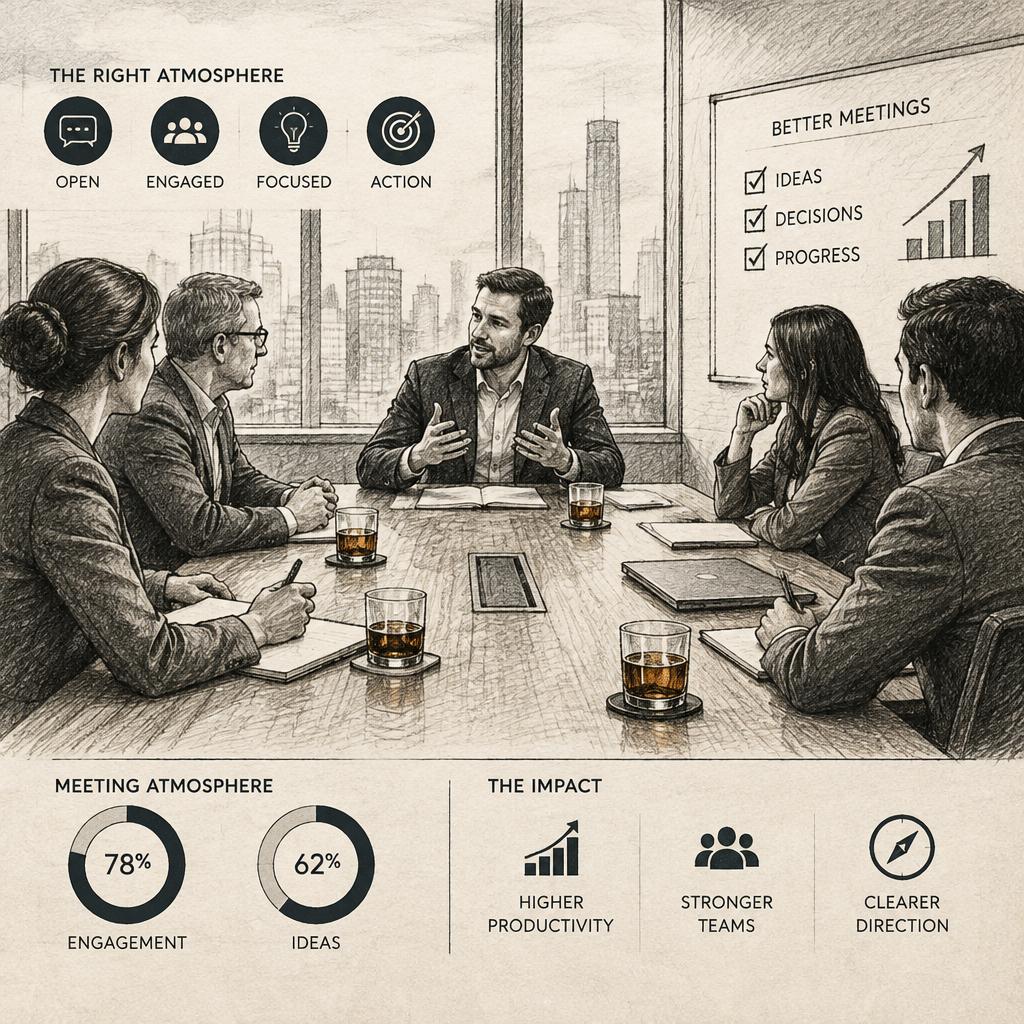
A high-stakes meeting with whiskey works when the whiskey serves the conversation, not the other way around. The pour is a tool for lowering defenses and opening honest dialogue. It is not the point of the gathering. That single distinction separates a memorable boardroom session from an awkward one.
Bourbon in the Boardroom is a podcast first, built around this idea. It gathers small and mid-sized company leaders to learn from each other.
Most hosts get this backwards. They spend weeks picking a bottle and five minutes thinking about the agenda. Then the meeting drifts, the whiskey does the talking, and nothing gets decided.
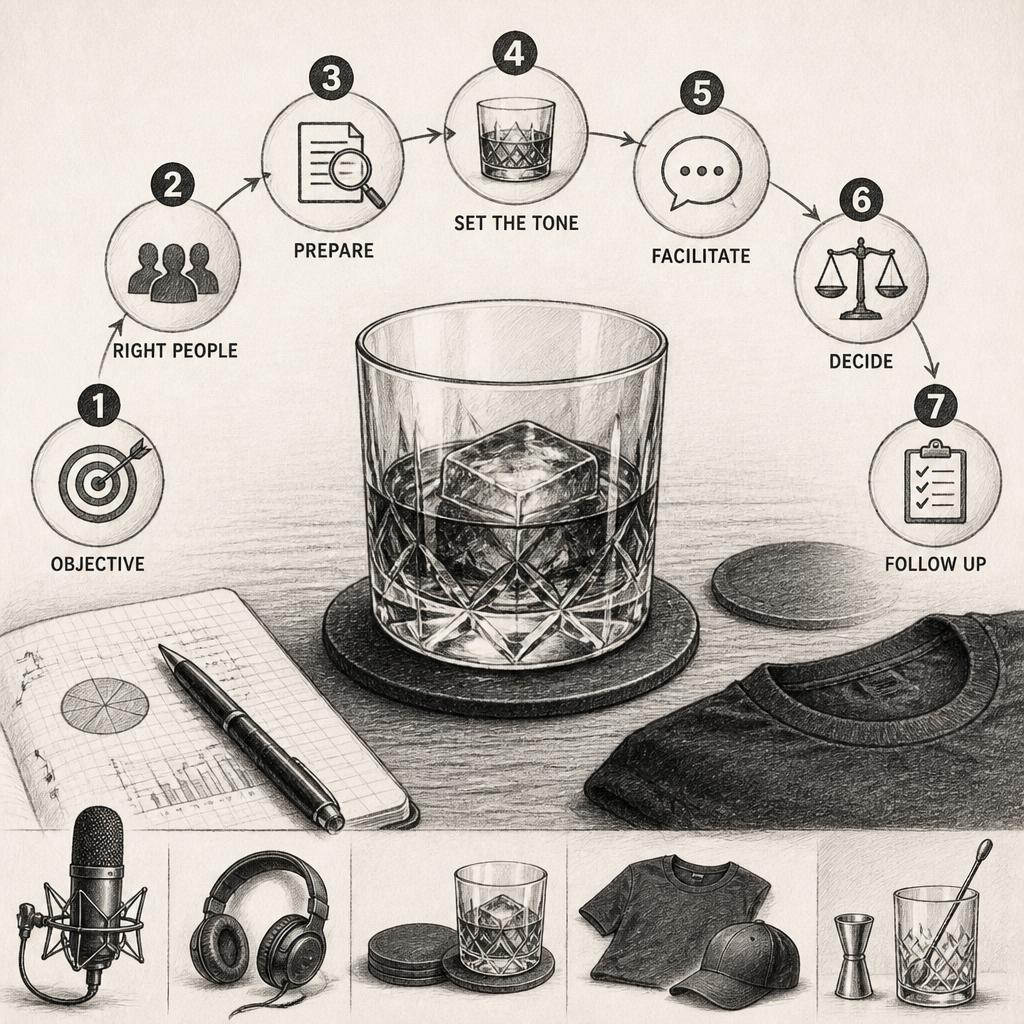
Below is the seven-step process for getting it right, from the business objective to the final action item.
Step 1: Set the Business Objective Before the Bottle
Write down the one decision this meeting must produce before you think about whiskey at all. A high-stakes meeting earns its name from the outcome, not the bar cart. If you cannot state the decision in a single sentence, the meeting is not ready to schedule.
Ask three questions first:
- What decision must be made in this room?
- Who has to say yes for it to stick?
- What happens if we leave without an answer?
A common mistake is inviting people to "talk strategy" over drinks. That produces warm feelings and zero commitments. Name the decision, then build everything else around it.
Step 2: Build the Executive Meeting Agenda Template
An executive meeting agenda template is a timed outline that assigns every minute of the session to a specific purpose. It protects the decision from the whiskey, the small talk, and the one person who loves to hear themselves talk.
Here is a 90-minute structure that holds up:
- Open and toast: 10 minutes
- Context and framing: 20 minutes
- Decision block: 30 minutes
- Structured debate: 20 minutes
- Action items and close: 10 minutes
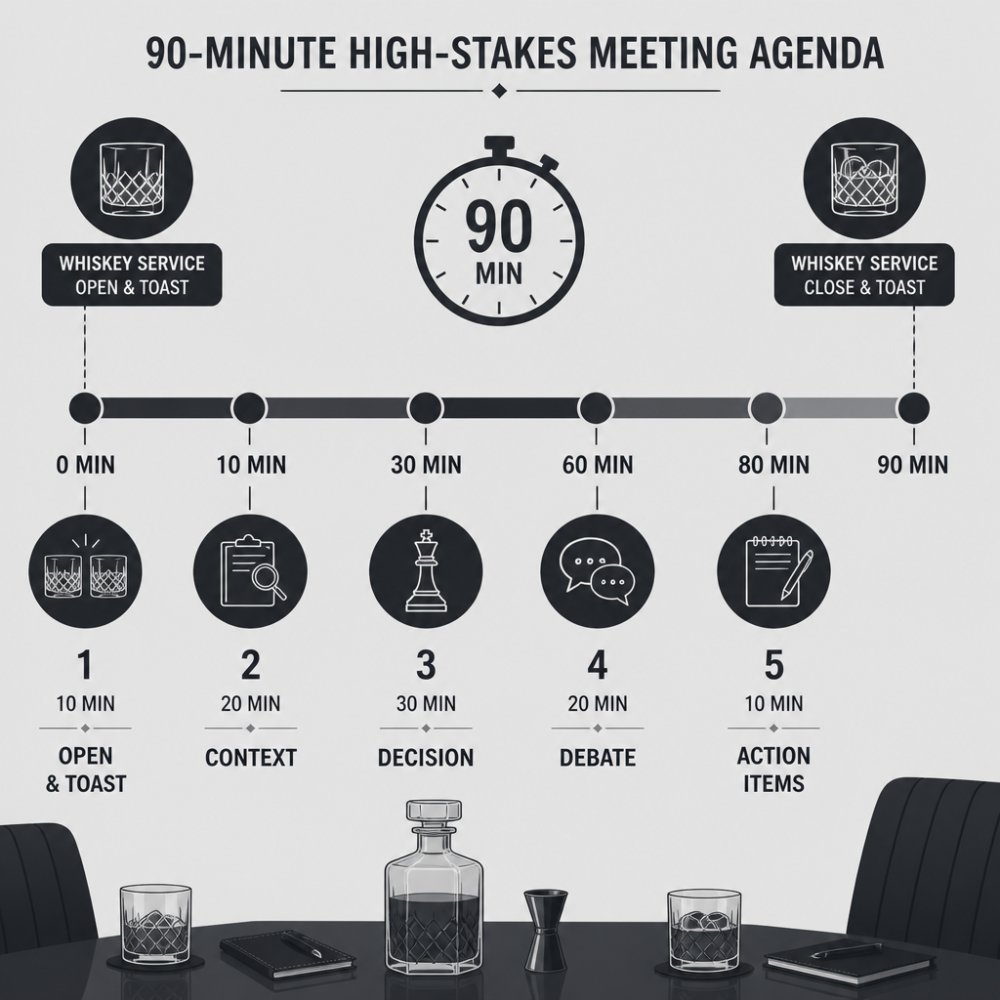
Share the agenda a day ahead. People arrive ready to decide instead of ready to warm up.
The article lays out a 90-minute agenda that assigns every minute to a specific purpose.
| Segment | Time |
|---|---|
| Open and toast | 10 minutes |
| Context and framing | 20 minutes |
| Decision block | 30 minutes |
| Structured debate | 20 minutes |
| Action items and close | 10 minutes |
Step 3: Learn How to Open a Business Meeting With a Toast
To open a business meeting with a toast, keep it under sixty seconds, name the purpose of the gathering, and invite everyone to the same starting line. The toast is a transition, not a speech.
A workable formula:
- One sentence on why everyone is in the room
- One sentence of genuine appreciation for the people present
- A short invitation to the work ahead
Then raise the glass and sit down.
Watch out: a long, rambling toast signals that the meeting will ramble too. Guests take their cue from the host. Keep it tight and the room follows.
Step 4: Choose Whiskey, Glassware, and Nonalcoholic Options
Pick two or three bottles, never a full bar. A focused lineup keeps attention on the conversation and gives everyone something to compare and discuss.
Build the lineup with range in mind:
- One approachable bourbon for people new to whiskey
- One richer or higher-proof pour for experienced drinkers
- One nonalcoholic option that feels considered, not like an afterthought
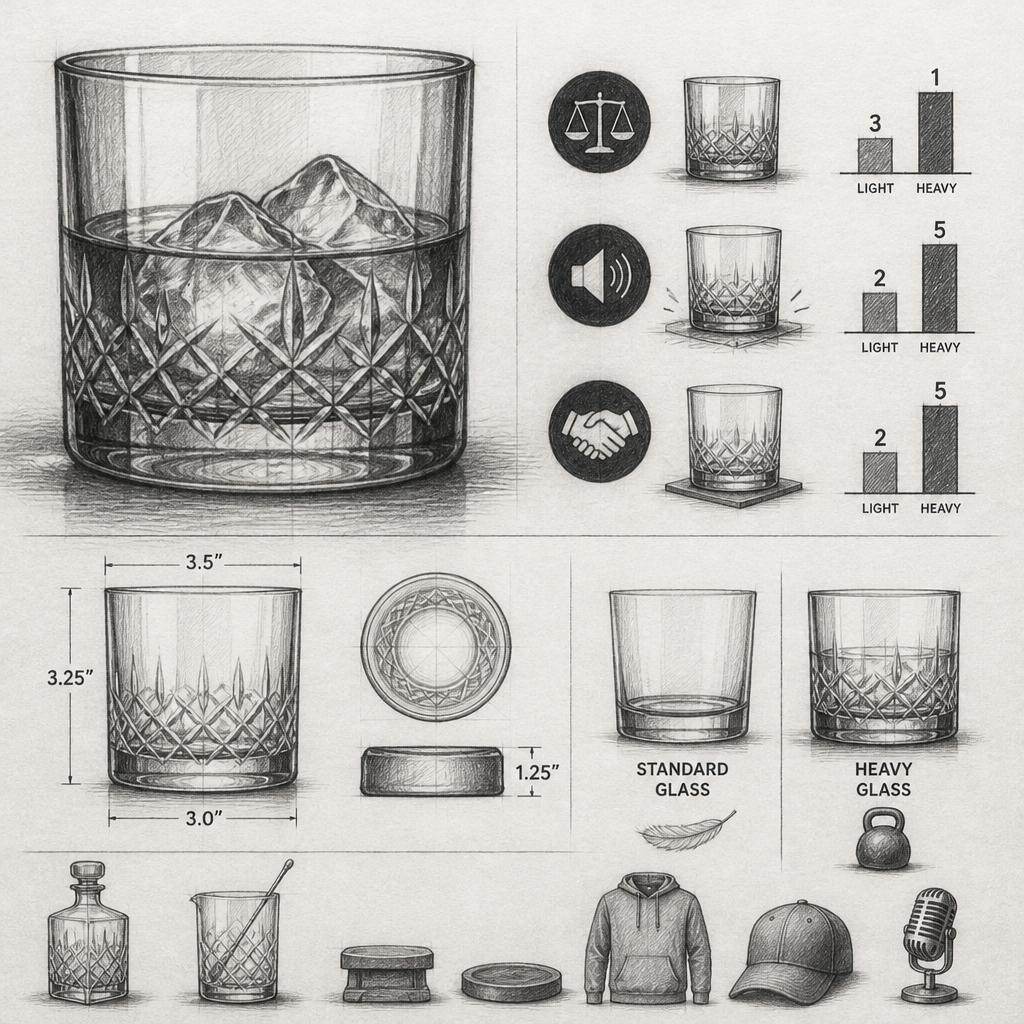
Glassware matters more than most hosts expect. If you want to understand what defines a premium glassware shop before choosing, that distinction is worth a look. Browse the full glassware collection to pick the right vessels for the meeting. A weighted, short-wide old-fashioned glass sits comfortably in the hand and gives the pour a sense of occasion. Bourbon in the Boardroom's Old-Fashioned Glass is built for exactly this setting, with a classic profile and an etched tagline on the bottom that rewards a closer look. Visit the store to see the barware and apparel that support the podcast.
Serve neat or with a splash of water, and always offer water alongside.
Step 5: Apply Meeting Facilitation Best Practices to the Pour
Meeting facilitation best practices matter more once whiskey is on the table, not less. The host's job is to keep the conversation moving toward the decision while the room relaxes. That means managing the pour with the same discipline you manage the clock.
Set a pour standard before anyone arrives. A one-ounce pour is enough to taste and talk about; a second pour is optional and offered only after the decision block closes. Announce the standard in the same breath as the agenda so no one has to guess. Most practitioners find that naming the limit out loud removes the social pressure to keep up and gives abstainers an easy cover.
Make nonalcoholic participation first-class. Offer a zero-proof pour that looks and is served the same way, a good bottled nonalcoholic spirit, a strong tea, or a bitters-and-soda, in the same glassware. Never single anyone out, never ask why someone is not drinking, and never toast in a way that requires a raised glass of alcohol. Guests who abstain, are in recovery, are pregnant, or simply have a morning after should be able to participate fully without explanation.
Run the room, not the bottle. Four habits carry the session:
- Ask the quietest person first, before the whiskey loosens the loudest one
- Park side topics on a visible list instead of chasing them
- Summarize each point back in one sentence before moving on
- Watch the clock and protect the decision block
Build in a hard stop for service. Close the bar when the decision block opens. Water and coffee stay out; whiskey does not return until action items are assigned. This is the single most effective safeguard against a meeting that drifts into a happy hour.
Plan the exit before the first pour. Confirm transportation for anyone who has been drinking, rideshare, a driver, or a colleague, and have a quiet word with anyone who seems past their limit. Stopping service is the host's call, not a debate. Keep a written note of who drove and who did not.
If your company has an alcohol policy, read it before you buy a bottle. Many workplaces require approval for alcohol at business gatherings, restrict service to licensed caterers, or prohibit it entirely at decision-making meetings. When in doubt, run the session alcohol-free and keep the whiskey for a separate, optional social hour.
A common mistake is letting the pour become the entertainment. Refill once, then return the room to the agenda. The glass is a prop for the discussion, not a substitute for it.
Step 6: How to Close a Meeting With Action Items
To close a meeting with action items, restate each decision out loud, name one owner per task, and set a date for each one. Nothing gets decided until someone owns it.
Close with a short recap:
- The decision that was made
- Who owns each next step
- The date each step is due
- The date the group reconvenes
Send the recap within a day while the conversation is still fresh. A written record turns a good meeting into a finished one.
Step 7: Set Up Your Boardroom for the Next Conversation
The best high-stakes meetings leave the room wanting the next one, and leave a clean record of what happened in this one. Set up for both before people arrive.
Design the room for the decision, not the tasting. Seat the decision-maker where they can see everyone, put the agenda and a clock in every sightline, and keep the whiskey service at the edge of the room rather than the center.
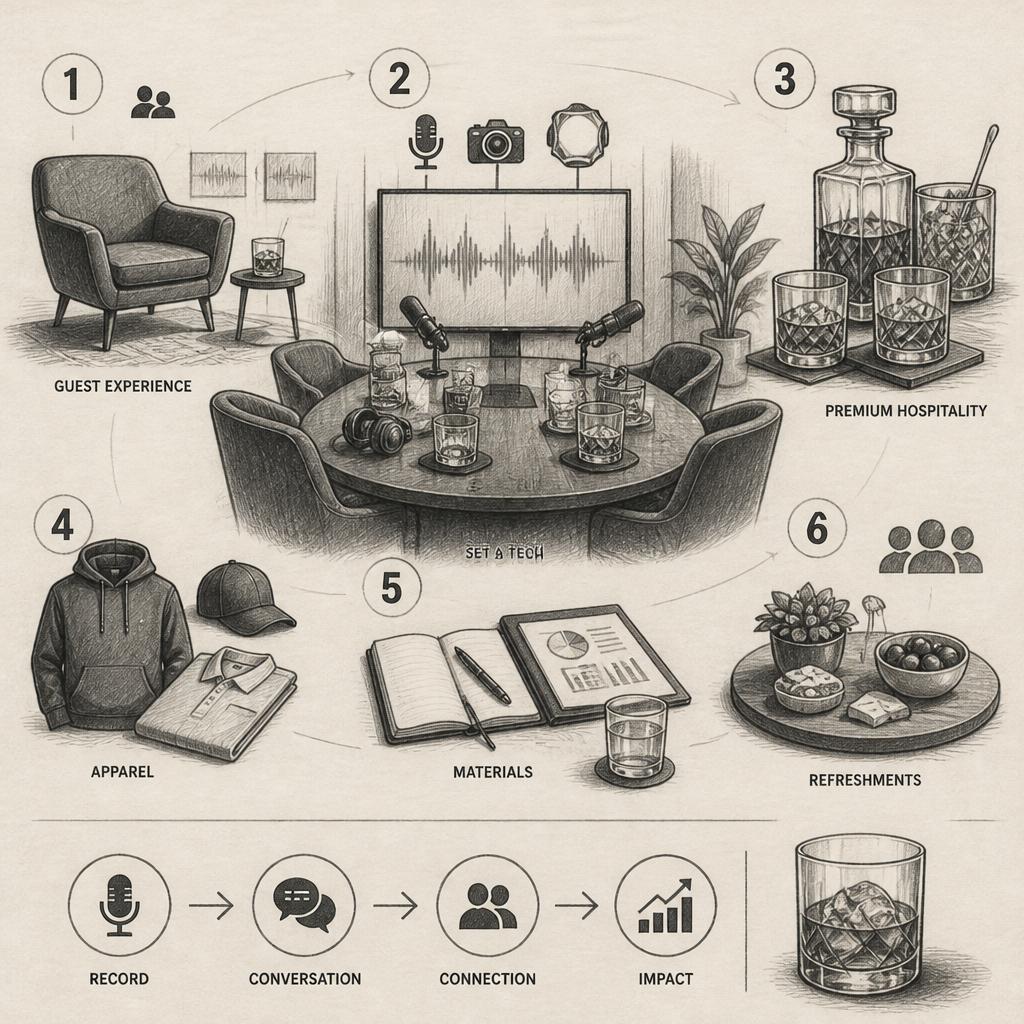
Plan for remote and hybrid attendees. A camera at eye level, a shared agenda document, and a designated facilitator for the remote side keep off-site participants from becoming spectators. Ship a small tasting kit, a sample bottle or a nonalcoholic alternative, the same glassware, and a tasting card, so remote guests can participate on equal terms.
Account for cultural, religious, and personal differences. Alcohol is not neutral for every guest. Offer the nonalcoholic pour by default alongside the whiskey, avoid pressure toasts, and never make drinking part of the job.
Protect confidentiality. High-stakes conversations often involve sensitive information. Agree on what can be repeated outside the room, keep notes in a single shared document, and avoid photographing whiteboards or tasting setups that reveal attendees or topics. If the session is recorded, say so at the open.
Close the loop in writing. Send the recap within a day: the decision, the owner of each next step, the due date, and the date the group reconvenes. A written record turns a good meeting into a finished one and gives the next conversation a running start.
Keep the glassware where the team can see it. A weighted old-fashioned glass on the shelf is a quiet reminder of the standard the room holds itself to. It also makes a meaningful gift for a mentor or colleague who was part of the conversation.
If the goal is ongoing dialogue rather than a single session, join the community for bourbon content and events built around leaders learning from each other. To browse apparel and barware that support the podcast, visit the shop.
Frequently Asked Questions
Is it appropriate to serve whiskey at a business meeting?
It can be, if the meeting is small, the guest list is confirmed in advance, and alcohol is optional rather than expected. Ask attendees about preferences and any restrictions before you buy anything, and always offer a nonalcoholic pour of equal quality. Keep service light, one modest pour rather than an open bar, and treat the whiskey as a conversation tool, not the point of the meeting. In a high-stakes meeting, the business objective still has to lead every decision you make.
How do you keep a high-stakes meeting focused while serving alcohol?
Put the agenda in writing before anyone arrives, name the decision you need by the end, and time the pour so it opens the conversation rather than interrupting it. Serve one round, keep water and food on the table, and hand the floor to a facilitator who can pull the discussion back to the decision. Close with action items written down and read aloud. A high-stakes meeting with whiskey works when the whiskey supports the agenda instead of replacing it.
What should a host provide for a whiskey tasting during a meeting?
Provide two or three bottles across different styles, a matched set of short, wide old-fashioned glasses, water, ice, and a simple palate cleanser. Add printed tasting notes so guests can compare what they smell and taste, and a nonalcoholic option for anyone who is not drinking. Weighted glassware matters more than bottle count: a solid glass in the hand signals that the host thought about the room, not just the label.
How do you close a meeting with clear next steps?
Reserve the last ten minutes for closure. Read the action items aloud, name an owner and a due date for each one, and confirm the group agrees before anyone leaves. Send the written summary within a day while the discussion is still fresh. If whiskey was served, close the bar before this segment so the final minutes are sharp and the commitments are recorded accurately.
Hosting a high-stakes meeting with whiskey takes more planning than most leaders expect. The pour is easy. The decision is the work. Bourbon in the Boardroom makes the setting simpler with weighted old-fashioned glasses, an etched tagline on every base, and a collection built for leaders who take their conversations seriously. Get started with Bourbon in the Boardroom and give your next boardroom session a focal point worth raising.