 listicle
Executive Etiquette in High-Stakes Meetings
Table of Contents
- Why Executive Etiquette Matters in High-Stakes Meetings
- Executive Presence in High-Stakes Meetings: The Foundation of Influence
- 5 Best Practices for Boardroom Communication 2026
- Non-Verbal Communication and Composure Under Pressure
- Building Trust Through Professional Conduct
- Digital Etiquette in Hybrid and Remote High-Stakes Meetings
- Recovery Etiquette: Handling Missteps with Grace
- Frequently Asked Questions
Last Updated: September 26, 2026
Why Executive Etiquette Matters in High-Stakes Meetings
Mastering executive etiquette high-stakes meetings is the foundation of trust, influence, and deal-making. When executives master these dynamics, they transform conversations into strategic advantages.
Leaders gather to build relationships that outlast any single negotiation. The difference between closing a deal and building lasting partnership often comes down to navigating the unspoken rules of engagement.
According to research from Harvard Business Review's leadership studies, executives who demonstrate strong interpersonal discipline report higher success rates in complex negotiations. The stakes are simple: in high-stakes meetings, missteps damage credibility instantly. Recovery is possible, but prevention is infinitely easier.
Executive Presence in High-Stakes Meetings: The Foundation of Influence
Executive presence, commanding respect through composure, clarity, and authentic confidence, separates executives who influence outcomes from those who simply attend meetings.
Executive presence operates on three levels: it establishes credibility before speaking, creates psychological safety by lowering defensive barriers, and shapes decisions because people trust calm authority.
Consistency is foundational. Executives who remain composed under pressure signal experience. This means channeling emotion productively, acknowledging tension while staying focused on solutions demonstrates emotional intelligence others respect.
Arrival discipline matters: arriving early allows time to test technology, arrange seating, and mentally prepare, translating into visible calm during the meeting.
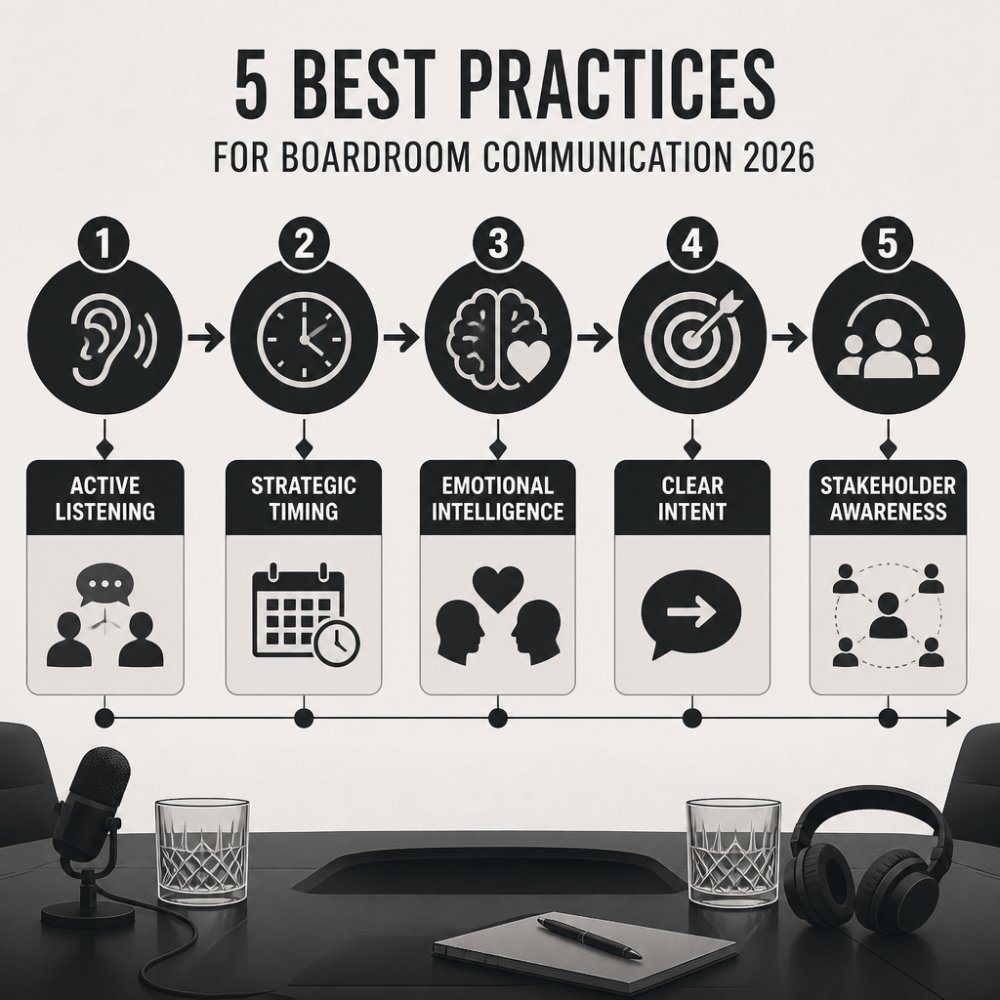
5 Best Practices for Boardroom Communication 2026
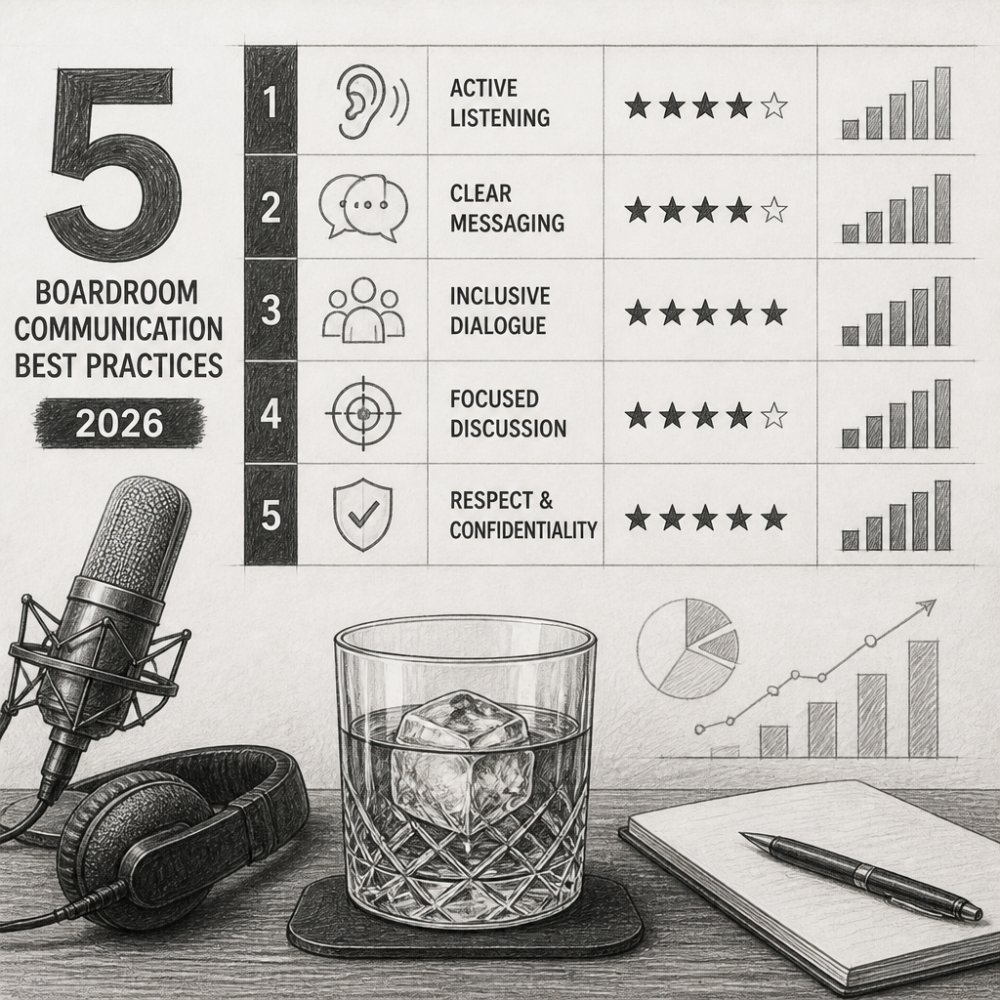
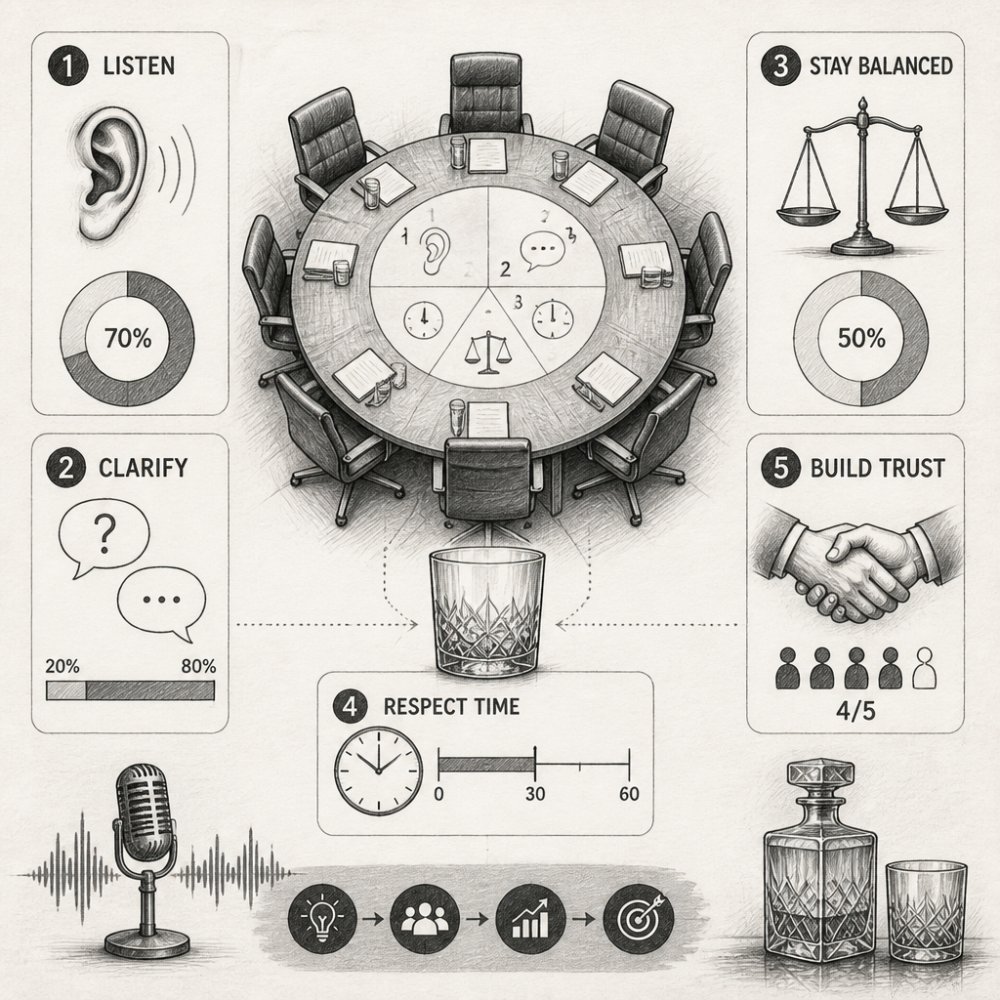
Modern boardroom communication demands practices that balance tradition with the realities of hybrid work, generational diversity, and accelerated decision timelines, core elements of executive etiquette high-stakes meetings. These five practices form the core of effective executive etiquette in high-stakes meetings.
1. Active Listening as Strategic Tool Active listening means demonstrating genuine engagement through sustained eye contact, minimal interruption, and thoughtful follow-up questions. When participants feel heard, they become more open to influence and decisions reflect more complete information.
2. Strategic Timing of Contributions Executives who understand meeting rhythm, when to speak, pause, and build on others' ideas, shape outcomes more effectively. Strategic timing respects conversational flow while ensuring your perspective lands with force.
3. Emotional Intelligence in Pressure Executives who recognize tension and respond with calm reassurance shift group dynamics. Naming tension directly, "I sense this is complex with valid perspectives on both sides", often defuses escalation.
4. Clear Intent and Transparent Reasoning Executives who state positions clearly, explain reasoning, and invite challenge build trust faster than those who hedge. Transparency means confidence paired with openness to better information.
5. Stakeholder Awareness and Inclusive Framing Executives who acknowledge different stakes, what matters to finance versus operations, board versus frontline teams, demonstrate sophisticated understanding that shapes how recommendations address multiple constituencies.
Non-Verbal Communication and Composure Under Pressure
Non-verbal communication carries roughly 65% of message impact in high-stakes meetings, especially when stakes trigger defensive reactions.
Body language communicates openness or protection. Crossed arms and avoided eye contact signal defensiveness; open posture and steady gaze communicate confidence. These reflect genuine presence, not manipulation.
Deliberate hand gestures reinforce key points. Nervous fidgeting undermines credibility. The goal is intentionality, not rigidity.
Microexpressions leak emotional truth. The most effective approach is alignment: if you disagree, say so. If concerned, acknowledge it. Congruence between words and expression builds trust.
Strategic silence, a brief pause after asking a question, gives others space to think and demonstrates confidence in your idea.
Building Trust Through Professional Conduct
Trust is built through cumulative small, consistent choices that signal reliability, respect, and psychological safety.
The Trust Mechanism: Predictability and Reduced Cognitive Load
Trust emerges when people can predict behavior. Unpredictable conduct, arriving late, changing positions without explanation, increases cognitive load and diverts attention from decisions. Consistent professionalism reduces cognitive load and shifts participants from threat-detection mode into collaborative problem-solving. Professional conduct enables better group cognition.
Preparation as a Trust Signal
Preparation signals respect for the group's time and builds credibility. Unprepared executives asking basic questions erode trust rapidly in high-stakes contexts.
Follow-Through as the Trust Multiplier
Follow-through on commitments builds a reputation for reliability that becomes currency in high-stakes meetings. Each follow-through reinforces trust, shifting participants from skepticism to openness and collaborative problem-solving.
Discretion and Confidentiality as Trust Anchors
Executives who keep confidences become trusted advisors. Discretion operates at two levels: not repeating confidential information and not using it as leverage in other meetings. This demonstrates trustworthiness and encourages openness in future conversations.
Acknowledging Mistakes: The Trust Rebuilding Mechanism
Acknowledging mistakes quickly builds trust faster than pretending they didn't happen. Immediate correction signals that accuracy matters more than ego. Defensive reactions damage credibility further. Correct mid-meeting if possible; waiting creates the impression you're hiding something. Follow-up after the meeting reinforces recovery and signals that accuracy matters.
The Cumulative Effect: Building a Reputation That Precedes You
These individual behaviors, preparation, follow-through, discretion, mistake acknowledgment, don't build trust in isolation. They accumulate. After multiple high-stakes meetings where an executive demonstrates consistent professionalism, a reputation emerges. This reputation becomes an asset that shapes how future meetings unfold. Participants enter the room predisposed to trust this executive's judgment because past behavior has proven reliable. This predisposition changes everything: proposals are taken more seriously, concerns are raised more openly, and collaboration is deeper because the foundation of trust is already established before the meeting starts.
Digital Etiquette in Hybrid and Remote High-Stakes Meetings
Hybrid and remote high-stakes meetings fundamentally alter the power dynamics that traditional in-person etiquette was designed to navigate. The unspoken rules are still forming, but the stakes are higher: executives who don't adapt their etiquette to digital environments inadvertently signal either disengagement or technological incompetence, both of which erode influence in critical moments.
The Visibility Paradox in Hybrid Settings
When participants are split between in-room and remote, the remote attendees face an asymmetric disadvantage: they cannot read the full body language of in-room participants, cannot easily interject without interrupting, and are often visually marginalized on a single screen. Executives who understand this dynamic adjust their etiquette accordingly. This means explicitly directing questions to remote participants by name, pausing after asking for input to give remote attendees time to unmute and respond, and repeating key points so remote participants don't miss critical context. More subtly, it means in-room executives occasionally glancing at the camera to include remote participants in eye contact, a small gesture that signals they're part of the conversation, not an afterthought.
The most sophisticated executives go further: they occasionally position themselves on camera during hybrid meetings, even when in-room, to equalize the visual presence. This small shift in positioning acknowledges that remote participants deserve the same quality of engagement as those physically present.
Camera Presence as a Trust Signal
Camera-on versus camera-off has become a subtle but powerful etiquette signal. In high-stakes meetings, executives who keep cameras on signal full commitment and psychological availability. Those who keep cameras off create distance that undermines relationship-building, particularly when trust is still being established. However, the etiquette here is contextual: if an executive has genuine technical limitations (poor lighting, unstable connection, inadequate setup), the professional move is transparency about the constraint rather than silence. Stating "My connection is unstable this morning, so I'm going to keep video off to ensure I don't drop" demonstrates respect for the group's time and prevents the assumption of disengagement.
Background and lighting carry outsized weight in digital settings because they're the only environmental cues remote participants receive. Poor lighting makes executives appear tired or disengaged. A cluttered or unprofessional background signals that the meeting wasn't important enough to prepare for. Conversely, a clean, intentional background (whether a home office or corporate setting) communicates that the executive takes the meeting seriously. This isn't about theatrical perfection; it's about demonstrating that the environment reflects the meeting's importance.
Notification Management and Divided Attention
In physical boardrooms, a phone buzzing is noticeable but contained. In digital meetings, notification badges, email pop-ups, and Slack message indicators are visible on screen to all participants. This visibility transforms a personal distraction into a public signal of divided attention. The etiquette standard that's emerging: silence everything except the meeting platform itself. This discipline demonstrates respect for participants' time and the meeting's weight. Executives who visibly manage their notifications, closing email, silencing Slack, putting phones face-down, signal that this conversation has their full cognitive resources.
Timing and Pacing in Asynchronous Hybrid Workflows
Many high-stakes decisions now unfold across multiple formats: synchronous video meetings, asynchronous Slack threads, email exchanges, and follow-up calls. The etiquette challenge is maintaining clarity and respect across these formats.
Recovery Etiquette: Handling Missteps with Grace
Every executive makes mistakes in high-stakes meetings. How they recover defines their professional reputation more than the initial misstep.
Frequently Asked Questions
Why is executive etiquette important in high-stakes business meetings?
Executive etiquette establishes credibility and builds trust with stakeholders. In high-stakes meetings, professional conduct signals competence and respect, which directly influences decision-making and negotiation outcomes. Leaders who demonstrate composure, active listening, and emotional intelligence create psychological safety, encouraging honest dialogue and stronger partnerships. Etiquette is not about rigid formality, it's about creating an environment where critical decisions can be made with confidence.
What are the 5 best practices for boardroom communication in 2026?
The five core practices are: (1) Active listening before responding, (2) Strategic timing of key points, (3) Emotional intelligence in reading the room, (4) Clear communication of intent and expectations, and (5) Stakeholder awareness of differing perspectives. These practices work together to create clarity, reduce conflict, and accelerate decision-making. Leaders who master these five areas command respect and influence outcomes in high-pressure environments.
How do non-verbal cues affect executive presence in high-stakes meetings?
Non-verbal communication, posture, eye contact, pacing, and hand gestures, accounts for a significant portion of how leaders are perceived. Confident body language signals authority and composure, while poor posture or fidgeting undermines credibility even when your words are sound. In high-stakes meetings, your non-verbal cues either reinforce your message or contradict it. Leaders who are aware of their physical presence and maintain steady composure earn greater influence and trust from peers and subordinates.
What should I do if I make an etiquette mistake in a high-stakes meeting?
Recovery etiquette is about acknowledging the mistake briefly, without over-apologizing, and moving forward with confidence. A simple, direct acknowledgment, 'I misspoke on that point' or 'Let me clarify what I meant', demonstrates self-awareness and professionalism. Avoid lengthy explanations or defensiveness, which can signal insecurity. Leaders who handle missteps gracefully actually strengthen their credibility because they show composure under pressure and willingness to be corrected. The goal is to address it and refocus the conversation on the business at hand.