 listicle
Why Office Decor Impacts Meetings: A Leader's Guide
Table of Contents
- How Office Decor Shapes Meeting Outcomes
- Color Psychology and Cognitive Performance in Meetings
- Tactile Objects for Focus and Engagement
- Lighting, Acoustics, and the Meeting Environment
- Executive Office Styling Tips for Better Discussions
- The Hybrid Meeting Challenge: Decor That Works Both Ways
- Cost-Benefit Reality: What Decor Changes Actually Deliver
- Frequently Asked Questions
Last Updated: September 19, 2026
How Office Decor Shapes Meeting Outcomes
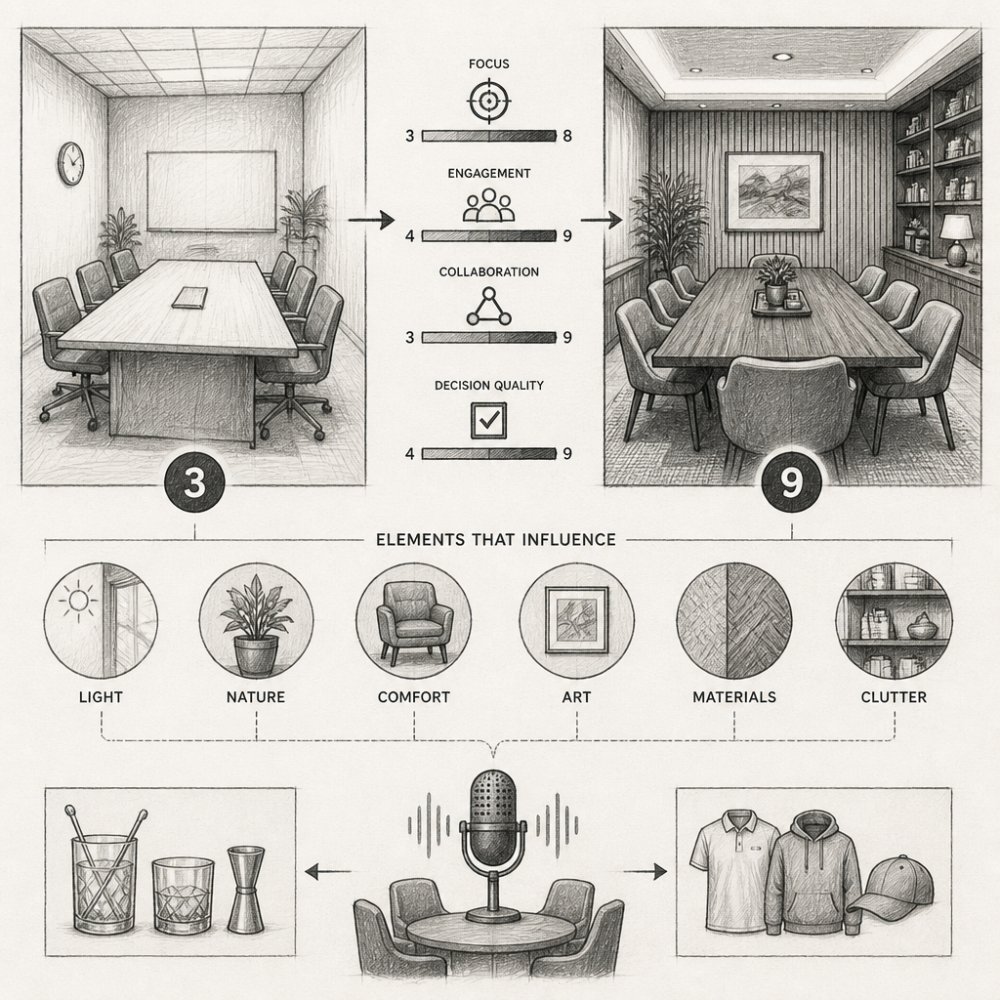
The physical environment where decisions happen matters more than most leaders realize. A meeting in a sterile, cluttered conference room feels different from one in a thoughtfully designed space. That difference isn't just aesthetic, it changes how people think, listen, and engage. Office decor impacts meetings by influencing cognitive performance, emotional state, and the quality of dialogue. When leaders understand this connection, they can design spaces that actually improve outcomes rather than simply look professional.
The relationship between workspace environment and meeting effectiveness has become increasingly relevant as hybrid work blurs the line between formal and informal settings. Leaders who invest in their office environment, from color choices to tactile elements, report more productive discussions and better decision-making. This guide explores how specific design choices translate into measurable improvements in meeting quality, team engagement, and the psychological factors that drive better conversations.
Color Psychology and Cognitive Performance in Meetings
Color shapes how people think during meetings. Blue promotes focus and calm, making it ideal for strategic planning sessions where concentration matters. Green reduces mental fatigue and encourages creative thinking, useful when brainstorming or problem-solving. Warm neutrals like beige and soft gray create approachability without distraction. Red, while attention-grabbing, can increase stress levels and should be used sparingly as an accent rather than a dominant wall color.
The key is matching color choice to the meeting's purpose. A quarterly budget review benefits from blue's focus-enhancing properties. A creative workshop thrives under green's cognitive stimulation. The mistake most offices make is painting all conference rooms the same neutral shade, assuming one color serves every purpose.
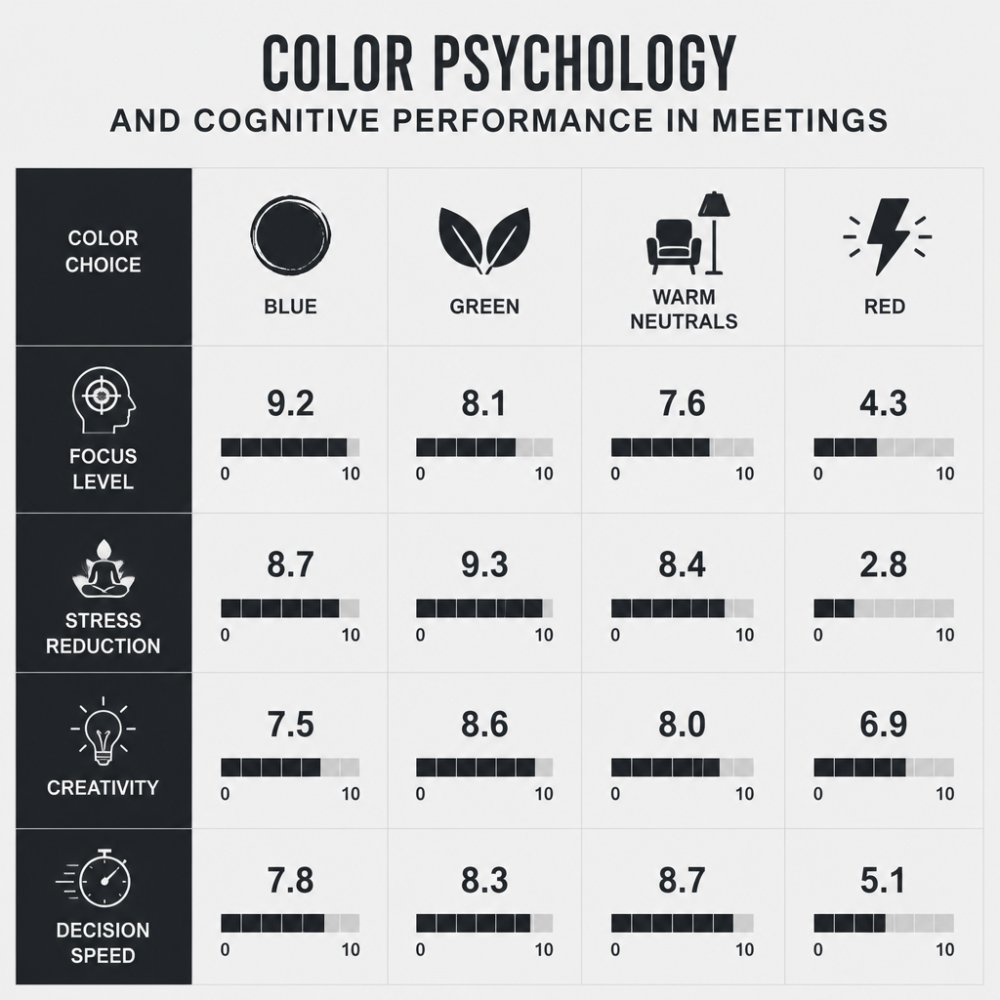
Consider the psychological impact of color on decision-making speed. Leaders in blue environments tend to deliberate longer before concluding, useful for avoiding hasty calls but potentially problematic for time-sensitive decisions. Green environments encourage broader thinking but can extend discussions. The psychosocial factors at play mean that even small color adjustments shift how conversations unfold.
One practical approach: designate different conference rooms for different meeting types. Reserve the blue room for financial reviews and risk assessments. Use the green space for innovation sessions. This simple strategy acknowledges that office decor impacts meetings differently depending on context, not just aesthetics.
Tactile Objects for Focus and Engagement
Tactile engagement during meetings activates the sensorimotor cortex, a neural pathway that reduces cognitive load on anxiety and distraction. When participants have a weighted object to manipulate, a smooth stone, a quality glass, a textured pen, their hands occupy the motor system in a low-stakes way, freeing mental resources for listening and processing. This is not fidgeting; it is directed sensory input that calms the nervous system.
The mechanism matters. Light, flimsy objects create frustration and increase distraction because they feel insubstantial and require constant repositioning. Weighted objects, those with real mass and density, anchor attention because they feel intentional and require minimal adjustment. A well-crafted glass with a substantial base, for example, sits stably and invites repeated tactile contact without demanding conscious attention. This subtle feedback loop reduces what neuroscientists call "cognitive restlessness," the mental agitation that emerges during long or high-stakes discussions.
Different meeting types benefit from different tactile objects. Strategic planning sessions, where deliberation is the goal, benefit from objects that encourage slow, deliberate touch, smooth stones, weighted glasses, leather-bound notebooks. Fast-paced decision meetings, where energy and momentum matter, benefit from objects with more texture or slight resistance, which maintain alertness without inducing calm. Brainstorming sessions, where idea flow is paramount, benefit from objects that are visually interesting as well as tactile, creating a dual sensory anchor.
The psychological signal of tactile objects is equally important. A conference room with nothing but a table and chairs signals that the space is temporary and transactional. One with carefully chosen, high-quality tactile objects signals intentionality and respect for the conversation. Participants unconsciously register this cue and show up more mentally present. Research in environmental psychology shows that spaces with curated, substantial objects elicit higher engagement and longer attention spans than minimalist spaces, even when the only difference is the presence of these objects.
For hybrid meetings, tactile objects create an additional benefit: they humanize the in-person experience for remote participants. When an in-person attendee is visibly engaged with a quality object, handling it thoughtfully, using it as a conversation anchor, remote participants perceive the meeting as more substantive and intentional. This perception, though subtle, shifts how remote attendees engage with the discussion. They are less likely to multitask and more likely to contribute actively.
The mistake most organizations make is either ignoring tactile elements entirely or choosing objects that are decorative but not functional. A decorative sculpture that no one touches serves no neurological purpose. A cheap pen that breaks easily creates frustration. The sweet spot is objects that are both beautiful and substantial, that invite touch without demanding it, and that reflect the organization's values around quality and intentional conversation.
Lighting, Acoustics, and the Meeting Environment
Lighting determines whether people feel alert or drained. Harsh fluorescent light creates fatigue and mental fog. Natural light or warm LED lighting keeps people engaged and thinking clearly. Dim lighting suggests informality but undermines focus. The ideal is bright, warm light that mimics natural conditions without the glare.
Acoustics matter equally. A room with poor sound absorption becomes exhausting. Voices echo, cross-talk becomes chaotic, and people strain to hear. Hard surfaces like glass and concrete amplify noise. Soft surfaces, carpet, fabric panels, acoustic tiles, absorb sound and create clarity. A meeting environment where people can hear each other without effort is a meeting where better listening happens.
The combination of good lighting and sound management creates what researchers call "ambient comfort." When participants aren't fighting poor lighting or struggling to hear, cognitive resources stay focused on the actual discussion rather than environmental frustration. This is where office decor impacts meetings most directly: by removing friction.
Hybrid meeting dynamics add complexity. A video call from a poorly lit room with bad acoustics disadvantages remote participants. Leaders managing hybrid teams should treat in-person meeting spaces as broadcast studios, lit and acoustically optimized so remote attendees experience the same quality conversation as those in the room. This often means upgrading lighting and adding acoustic treatments that benefit everyone.
Executive Office Styling Tips for Better Discussions
An executive office sets the tone for one-on-one meetings and smaller discussions. The styling choices here are more personal than a conference room but equally strategic. A well-appointed office communicates confidence, intentionality, and respect for the person visiting.
Start with furniture that supports good posture. A visitor sitting in an uncomfortable chair will be mentally distracted and physically tense. Invest in quality seating that allows people to relax while staying engaged. The same principle applies to the executive's chair, comfort enables longer, more focused conversations.
Add one or two meaningful objects. A quality glass, a book that reflects your thinking, an artifact with a story, these items become conversation starters and humanize the space. They signal that you're a person with interests and depth, not just a role. When weighted glasses sit on an executive's desk, they serve this exact function: they're conversation anchors that reflect the leader's values around meaningful dialogue.
Lighting in an executive office should be layered. Overhead lighting for visibility, desk lighting for focus, and ambient side lighting for warmth. Avoid harsh shadows that make the space feel interrogative. The goal is a space where visitors feel comfortable but also respect the environment's intentionality.
Keep the space uncluttered. Visual clutter creates cognitive load. A clean desk with only essentials, plus those few meaningful objects, communicates control and clarity. Executive office styling isn't about filling space; it's about curating it.
The Hybrid Meeting Challenge: Decor That Works Both Ways
Hybrid work has created a new problem: the in-person and remote experience of the same meeting are wildly different. Someone in the conference room benefits from color psychology, tactile objects, and ambient comfort. Someone on a video call sees only what the camera captures, usually a flat, poorly lit view of the room.
This asymmetry degrades meeting quality. Remote participants feel excluded. In-person attendees unconsciously favor people they can see and hear clearly. The psychosocial factors that make a well-designed office space work for focus and engagement disappear for half the group.
The solution requires treating the physical room as a broadcast environment. Position cameras to show the room's best features.
Cost-Benefit Reality: What Decor Changes Actually Deliver
Improving office decor requires investment, and leaders rightly demand evidence that the return justifies the cost. The challenge is that meeting quality improvements are often measured subjectively. However, several concrete mechanisms link decor choices to measurable outcomes.
Frequently Asked Questions
How does office decor actually impact meeting productivity?
Office decor influences meeting productivity through multiple pathways: color choices affect cognitive focus and stress levels, lighting shapes alertness and decision-making speed, and acoustic design reduces distractions that derail discussion. Cluttered or poorly lit spaces increase cognitive load, your brain works harder to filter noise and visual chaos, leaving less mental energy for the conversation itself. A thoughtfully designed meeting space reduces this friction, allowing participants to concentrate on dialogue rather than discomfort.
What role do tactile objects for focus play in boardroom meetings?
Tactile objects, weighted glasses, textured surfaces, quality writing instruments, give participants a physical anchor during high-stakes discussions. When someone holds a substantial, well-crafted object, it can reduce fidgeting, ground attention, and create a subtle ritual that signals the meeting's importance. The tactile experience also makes the moment memorable; people retain more from conversations where they engaged multiple senses. This is why executive office styling often includes carefully chosen objects that feel substantial and intentional.
Will office decor changes actually make my team communicate better?
Decor alone won't fix communication breakdowns, but it removes barriers that prevent better communication. A well-designed space eliminates distractions, reduces stress responses, and creates a professional atmosphere that encourages focused dialogue. The real impact comes when decor supports your meeting culture, quality furnishings signal that you value the time spent together, and thoughtful design removes friction so people can concentrate on what matters. Think of it as removing obstacles rather than creating magic.
How do I know if my office decor will still feel professional in five years?
Choose timeless elements over trend-driven choices: neutral color palettes, quality materials, and classic proportions age well. Avoid heavily themed decor or trendy color combinations that date quickly. Invest in objects with substance and craftsmanship, weighted glassware, solid wood furniture, and refined finishes look sophisticated across decades. The key is sophistication over novelty; a well-made old-fashioned glass or quality leather chair feels as appropriate in 2031 as it does today.