 how-to
How to Choose Executive Office Glassware: 2026 Guide
Table of Contents
- Start With the Room, Not the Glass
- The Four Shapes That Cover Every Executive Office Glassware Need
- How Bowl Shape, Weight, and Rim Thickness Change the Experience
- Choosing Premium Whiskey Glasses for Office Use
- Etched Glassware for Leadership: Branding Without Looking Gimmicky
- Professional Office Hosting Etiquette: Serving, Placement, and Pace
- Care, Durability, and Sustainable Procurement
- Frequently Asked Questions
Last Updated: September 14, 2026
Start With the Room, Not the Glass
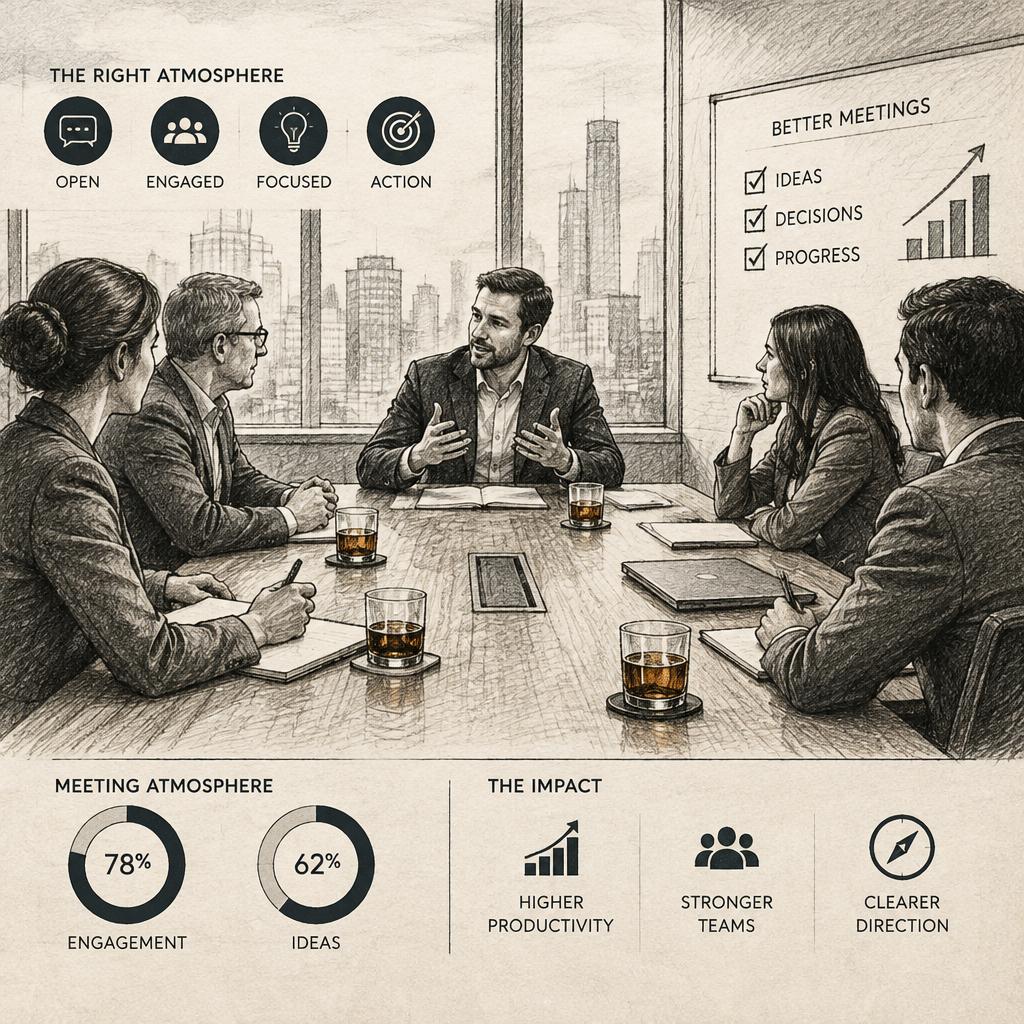
Choosing executive office glassware begins with the room it will live in, not the catalog. A boardroom with a long conference table, recessed lighting, and leather chairs calls for different glassware than a corner office with a single visitor chair and a credenza. This guide from Bourbon in the boardroom treats glassware as part of the room's architecture, because that is how guests actually read it.
The room dictates three things immediately: how many glasses you need on hand, how much visible storage you have, and how formal the service moment will be. A room built for four-person conversations needs a tighter, more deliberate set than a room that hosts twenty people for quarterly reviews. Get this wrong and even excellent glassware feels misplaced.
Think of executive office glassware as a small, permanent collection rather than a rotating assortment. A short list of durable, well-proportioned pieces used consistently will always outperform a large, mismatched cabinet. The goal is a set that looks intentional every time it comes out.
The Four Shapes That Cover Every Executive Office Glassware Need
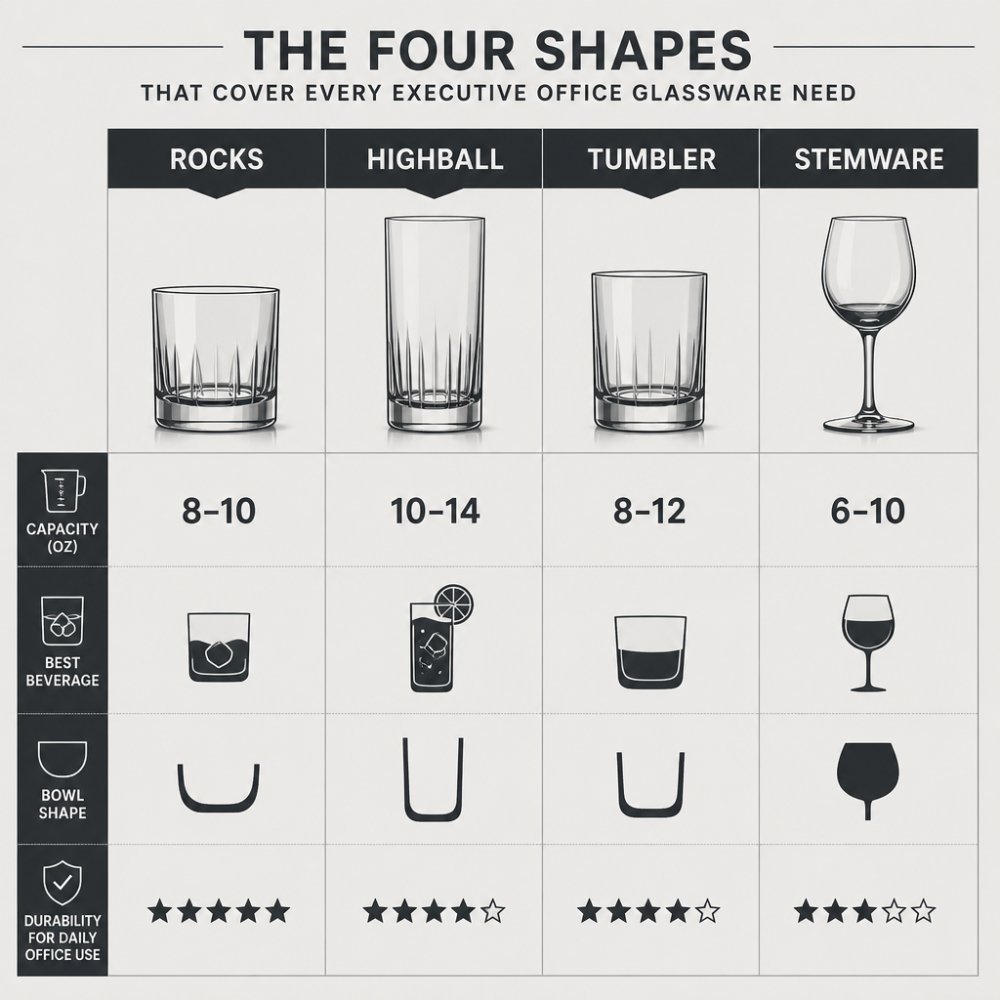
Four shapes handle nearly every professional serving scenario: the rocks glass, the highball, the tumbler, and stemware. Each earns its place for a specific reason, and most offices only need two or three of them in quantity.
| Shape | Typical Capacity | Best For | Bowl Profile | Daily Office Durability |
|---|---|---|---|---|
| Rocks / Old-Fashioned | 8-10 oz | Spirits, short pours, water | Short, wide | High |
| Highball | 10-14 oz | Mixed drinks, sparkling water | Tall, narrow | High |
| Tumbler | 8-12 oz | Water, coffee service, general use | Straight or tapered | Very high |
| Stemware | 6-10 oz | Wine, formal toasts | Curved bowl, stemmed base | Moderate |
Rocks and Old-Fashioned Glasses
The rocks glass is the workhorse of executive office glassware. Its short, wide bowl gives spirits room to breathe, and its low center of gravity makes it hard to knock over during a working conversation. A weighted base adds to that stability and signals quality the moment someone picks it up. This is the shape most leaders reach for first, and for good reason: it works for a pour of whiskey, a glass of water, or a short cocktail without looking out of place.
Highballs, Tumblers, and Stemware
Highballs and tumblers handle volume. A highball's tall, narrow profile suits mixed drinks and sparkling water, while a straight tumbler is the most flexible glass in the cabinet, equally at home holding water, coffee, or a casual pour. Stemware is the specialist. It belongs in the room only if the office hosts toasts, wine service, or formal dinners, and it demands more careful handling than the other three.
How Bowl Shape, Weight, and Rim Thickness Change the Experience
Bowl shape, weight, and rim thickness shape how a glass feels in the hand and how a drink tastes, which is why they matter more than decoration. A wide, tapered bowl directs aromatics upward and concentrates them near the nose. A narrow, straight-sided glass spreads them out and dulls the effect. In an executive office, though, these three variables also decide whether a glass survives a standing presentation, a boardroom pass, or a one-handed pour while someone is mid-sentence.
Bowl shape. Wide and tapered bowls suit aromatic spirits and short pours; straight and narrow profiles suit mixed drinks, sparkling water, and iced tea. The practical office test is whether the bowl lets a guest sip without tilting their head back. A bowl that forces a full head tilt reads as a bar glass, not a meeting-room glass.
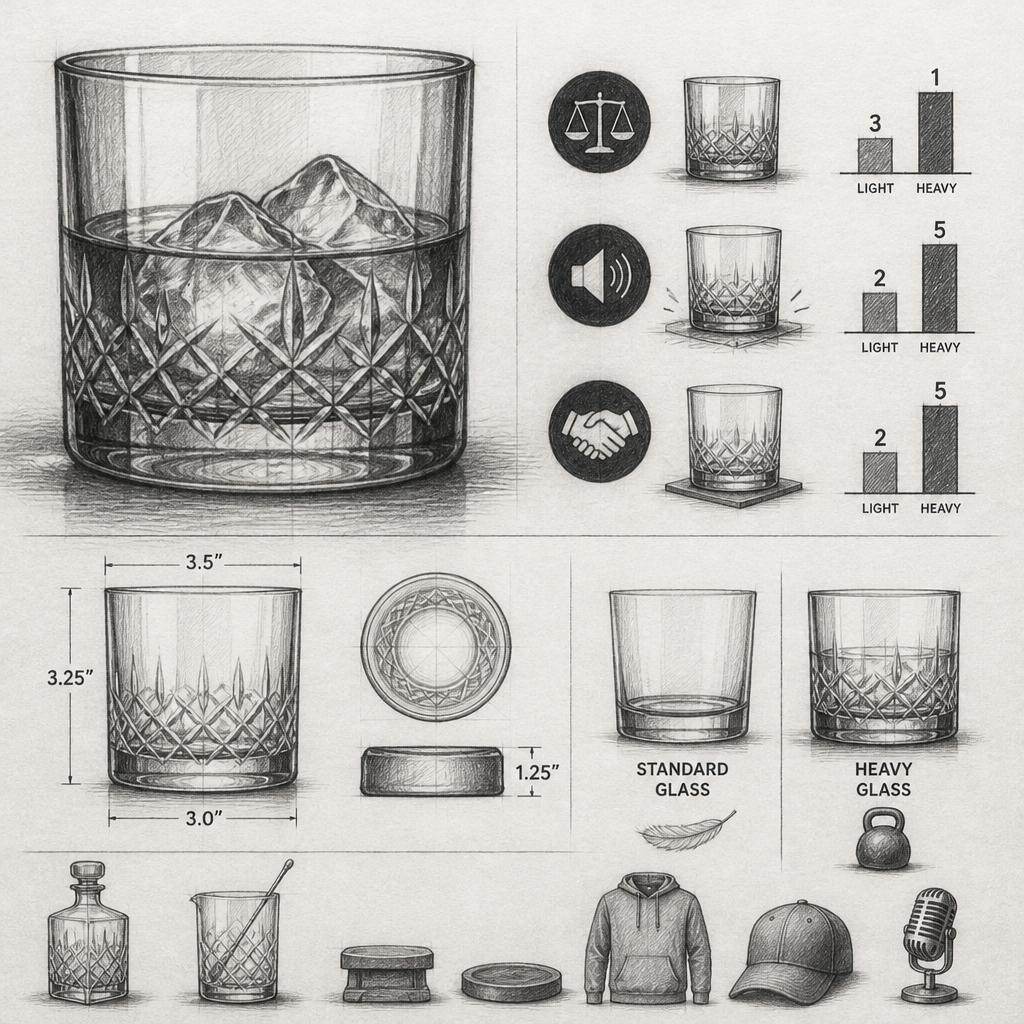
Weight and balance. Weight is a signal, but balance matters more than total mass. A glass with a heavy base and a light upper wall feels planted on the table and stable in the hand. A glass that is uniformly heavy feels clumsy; one that is uniformly light feels disposable. Most practitioners find that a rocks glass in the 10-14 oz range with a base thick enough to sit flat without a coaster wobble hits the sweet spot for professional settings.
Rim thickness. This is the detail most buyers overlook. A thin, polished rim delivers liquid cleanly, while a thick, rounded rim feels clumsy against the mouth and makes even good whiskey taste flat. Run a finger around the rim before buying a set. If you can feel a rolled edge or a seam, the glass will feel cheap against the mouth no matter how it looks on the shelf.
Ergonomics for Standing Presentations and Boardroom Passes
Ergonomics decide whether a glass works in a room where people are standing, gesturing, and moving between seats. Three variables matter most:
- Grip circumference. A glass that forces a tight pinch or an awkward cradle reads as fussy. The best executive office glassware disappears into the hand so the conversation stays on the table, not on the drinkware.
- Center of gravity. A low center of gravity resists a stray elbow during a working meeting. Tall, narrow glasses with light bases are the ones that tip.
- One-handed stability. A guest holding a glass in one hand and a notebook or phone in the other needs a shape that stays level without a firm grip. Short, wide bases win here every time.
Meeting-Room Water Service and Desk Carafes
Water service is the most-used glassware in most executive offices, and it is the piece competitors ignore entirely. A meeting-room water setup usually pairs a straight-sided tumbler with a glass carafe or a covered pitcher. The tumbler should be heavy enough to feel intentional when set down quietly during a presentation, and narrow enough that a full pour does not slosh when the table is bumped.
A desk carafe changes the calculus. A carafe that sits on a credenza or side table for an hour needs a glass that looks composed when half-full, not just when freshly poured. Straight or gently tapered tumblers handle this better than wide bowls, which show every fingerprint and water spot under recessed lighting.
- Bowl shape: Wide and tapered for aromatic spirits; straight and narrow for water, mixed drinks, and carafe service
- Weight and balance: Heavy base, lighter upper wall for a planted feel; avoid extremes in either direction
- Rim thickness: Thin and smooth for clean delivery; thick rims undercut the experience
- Ergonomics: Low center of gravity and a relaxed grip for standing presentations and boardroom passes
Choosing Premium Whiskey Glasses for Office Use
Premium whiskey glasses for office use should prioritize stability, a comfortable grip, and a bowl that releases aroma without dominating the desk. The classic old-fashioned shape remains the most practical choice for professional settings because it balances all three.
Aeration matters here. The wide bowl of a rocks glass lets a pour open up as it sits, which is why the shape has outlasted every trend in barware. A covered or overly narrow glass traps the experience and makes a good pour feel closed off.
Base Stability and Ergonomics at the Table
Base stability and ergonomics decide whether a glass survives a working meeting. A weighted, short-wide base sits flat on the table, resists a stray elbow, and gives the hand a natural resting point between sips. Tall, narrow glasses with light bases are the ones that tip.
Ergonomics extend to how the glass is held. A shape that forces a tight pinch or an awkward grip reads as fussy. The best executive office glassware disappears into the hand, so the conversation stays on the table and not on the drinkware.
Etched Glassware for Leadership: Branding Without Looking Gimmicky
Etched glassware for leadership works when the mark is subtle, permanent, and placed where it is discovered rather than announced. A logo blasted into the front of a glass turns a serving piece into a billboard. The same mark etched into the base or the underside feels considered.
Permanence is the point. Etching is cut into the glass, so it does not peel, fade, or wash off the way a printed decal does. That durability is what separates a piece that still looks right in five years from one that looks dated in five months.
Placement does the heavy lifting. A tagline etched on the bottom of a glass is only seen by the person holding it, which turns a small detail into a private moment rather than a public pitch. That restraint is what keeps branded glassware sophisticated instead of gimmicky.
Professional Office Hosting Etiquette: Serving, Placement, and Pace
Professional office hosting etiquette comes down to three things: serve from the guest's right, place glassware consistently, and pace the pour so no one feels rushed or neglected. Consistency is what separates a polished room from a casual one.
Placement follows a simple rule. Set the glass at the guest's right hand, an inch or two from the edge, with the base aligned to the others around the table. A row of aligned bases reads as intentional; a scattered arrangement reads as an afterthought.
Pace the service to the conversation. Offer a refill when a glass is roughly a third full, not when it is empty, and never interrupt a speaker mid-point to top up. A quiet, well-timed pour supports the meeting. A loud, frequent one disrupts it.
- Serve and clear from the guest's right
- Align bases for a consistent table line
- Refill at roughly one-third full, never mid-sentence
- Keep water glasses filled without being asked
Care, Durability, and Sustainable Procurement
Care and durability decide whether a set lasts years or months, and in an executive office they also decide whether the glassware looks presentable the next time a guest walks in. Most quality glassware is dishwasher safe on a low-heat, no-rinse cycle, but hand washing with warm water and a mild detergent extends the life of any set, especially stemware. The practical rule for offices: wash the pieces guests actually touch by hand, and reserve the dishwasher for high-volume tumblers and water glasses.
Cleaning Routines That Protect Guest-Facing Glassware
- Rinse immediately after use. Residual sugar and citrus etch glass surfaces over time and leave a cloudy film that no amount of polishing removes.
- Skip the rinse aid on stemware. Rinse agents can leave a film that shows under recessed lighting.
- Air dry upside down on a lint-free mat. Towel-drying pushes fibers into the bowl and leaves streaks.
- Polish with a microfiber cloth before service. A quick polish removes water spots and fingerprints that show up under boardroom lighting.
- Store stemware upright, not inverted. Long-term inverted storage stresses the rim and traps odors.
Thermal Shock and Breakage Prevention
Thermal shock is the most common cause of breakage. Moving a glass straight from a hot dishwasher to a cold rinse, or pouring hot liquid into a cold glass, can crack it. Let glassware reach room temperature before extreme temperature changes. Two other patterns cause most office breakage:
- Stacking. Glasses stacked rim-to-base chip at the rim. Use a cabinet with enough shelf height to store them upright.
- Sink impact. Most hand-wash breakage happens when a glass knocks against the faucet or another glass. A rubber sink mat eliminates most of it.
Sustainability in Corporate Procurement
Sustainability in corporate procurement is now a real factor in buying decisions, and glassware is one of the easier categories to get right. Durable, long-life glassware beats disposable alternatives on both cost and waste over time, and buying fewer, better pieces reduces replacement churn. When sourcing, ask suppliers about recycled content, packaging, and end-of-life options, and check current guidance from the U.S. Environmental Protection Agency on sustainable purchasing before writing procurement policy.
For offices with ESG reporting obligations, the useful framing is total cost of ownership rather than unit price. A set that lasts five years and stays presentable replaces three or four cheaper sets over the same period, and the disposal waste drops accordingly. That argument tends to carry more weight with procurement than an environmental claim on its own.
Frequently Asked Questions
What makes glassware appropriate for a professional executive office?
Three things decide it: shape, weight, and finish. A short, wide bowl with a weighted base sits stable on a conference table and feels substantial in the hand. Rim thickness should be thin enough to feel refined but not fragile. Lead-free crystal or quality soda-lime glass keeps clarity high through repeated washing. Anything that looks like a novelty item, or that chips within a month of daily use, fails the standard.
How does the weight of a glass affect the drinking experience?
Weight signals quality before the first sip. A weighted base keeps the center of gravity low, so the glass resists tipping when someone gestures mid-sentence. It also changes how the glass feels in the hand during a long conversation, which is exactly when a cheap, top-heavy tumbler becomes noticeable. Weight should come from the base, not from thick walls that make the rim clumsy.
Should executive office glassware be branded or minimalist?
Both work if the branding is restrained. A logo on the side reads as a corporate gift; an etched mark or tagline on the bottom reads as craftsmanship. Etched glassware for leadership works best when the mark is discovered rather than announced, because a guest who turns the glass over and finds a phrase is more likely to comment on it than one who sees a logo from across the table.
How do you maintain high-quality glassware in a corporate environment?
Wash by hand with warm water and a mild detergent if the glass is hand-blown, and confirm dishwasher safety before running a full load. Avoid sudden temperature changes, since thermal shock cracks glass faster than drops do. Store glasses upright with a little space between them, and keep a small reserve set aside so a single chip never leaves the boardroom short.
The hard part of choosing executive office glassware is not finding options; it is committing to a small, coherent set that fits the room and the way it is actually used. Bourbon in the boardroom builds weighted, short-wide old-fashioned glasses with a classic profile, an etched tagline on the bottom, and a feel designed to anchor real conversations rather than decorate a shelf. Start with the room, pick the shapes that fit it, and add to cart when the set feels like it belongs.