 how-to
How to Choose Luxury Gifts for Mentors
Table of Contents
- Understanding the Mentor-Mentee Gift Dynamic
- Professional Gift Etiquette for Mentors
- Six Steps to Selecting a Meaningful Luxury Gift
- Best Whiskey Glass Sets for Gifting to Mentors
- How to Write a Thank You Note for a Mentor
- Cultural Nuances and Professional Boundaries
- Common Mistakes to Avoid When Gifting Mentors
- Post-Gift Follow-Up Etiquette
- Frequently Asked Questions
Last Updated: October 4, 2026
Understanding the Mentor-Mentee Gift Dynamic
The relationship between a mentor and mentee is built on trust, guidance, and mutual respect. A thoughtful gift acknowledges this bond without crossing professional boundaries.
Luxury gifts for mentors serve a specific purpose: they commemorate meaningful career guidance while signaling appreciation for time invested in your growth. Unlike casual gifts, luxury items carry weight. They suggest intentionality. They say, "This relationship matters to me."
The best gifts strike a balance. They're sophisticated enough to reflect the mentee's gratitude, yet grounded enough to feel genuine rather than transactional.
Professional Gift Etiquette for Mentors
Corporate Boundaries and Policy Compliance
Before selecting any gift, understand your organization's policies. Many companies have clear guidelines about gift-giving to prevent conflicts of interest or the appearance of impropriety.
Check your employee handbook or ask HR directly. Some organizations prohibit gifts above a certain value. Others restrict gifts from direct reports to supervisors. A few industries, finance, government, healthcare, have stricter rules than most.
The intent matters less than compliance. Even a thoughtful gift can create problems if it violates company policy. Knowing the rules protects both you and your mentor.
Timing and Occasion
The timing of a gift shapes how it's received. A gift given at the right moment feels natural. The same gift at the wrong time can feel awkward or presumptuous.
Natural occasions for mentor gifts include:
- End of a formal mentorship program or structured relationship
- Retirement or major career transition
- Significant work anniversary
- Completion of a major project where their guidance was crucial
- Holiday season (if your workplace culture supports it)
Avoid giving gifts during moments of conflict, right after a difficult conversation, or when your mentor is visibly stressed. The gift should enhance the relationship, not feel like an apology or a bribe.
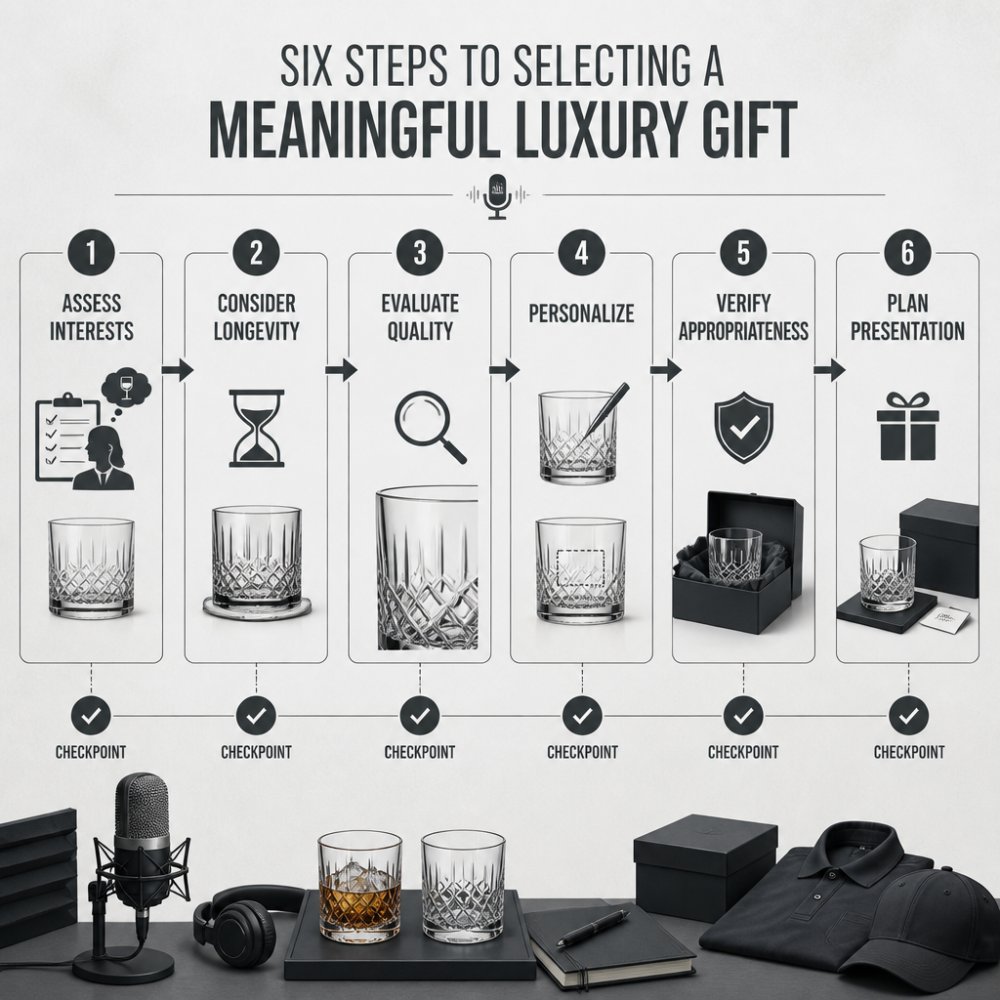
Six Steps to Selecting a Meaningful Luxury Gift
Choosing the right luxury gift requires a deliberate process. This framework helps you move from idea to decision with confidence.
Step 1: Assess Your Mentor's Personal Interests
Start by observing what your mentor actually enjoys. Listen to their conversations. Notice what they mention more than once.
Do they talk about:
- Their home office or workspace setup?
- Hobbies or activities outside work?
- Books, podcasts, or ideas they follow?
- Travel or experiences they value?
- How they spend their downtime?
A luxury gift that aligns with their genuine interests feels personal without being intrusive. If your mentor frequently mentions hosting meaningful conversations over drinks, a premium glass set signals that you've been paying attention.
Step 2: Consider Longevity and Timelessness
Luxury gifts should age well. Avoid anything trendy that will feel dated in three years.
Quality items have staying power. A classic glass set remains elegant a decade from now. A branded item with this year's logo might feel stale in 2028.
Ask yourself: Will this still look sophisticated in five years? Can my mentor use this regularly without it feeling gimmicky? Does the design transcend current trends?
Timeless design often means:
- Simple, clean lines
- Neutral colors or classic patterns
- Materials that improve with age (wood, glass, metal)
- Minimal branding or logos
Step 3: Evaluate Quality Over Trend
The difference between a gift that impresses and one that disappoints often comes down to build quality.
Luxury doesn't mean expensive. It means thoughtful construction. A weighted glass feels better in your hand than a lightweight one. Premium materials outlast cheap alternatives. Craftsmanship shows in the details.
When evaluating options, examine:
- How it feels in your hands
- The weight and balance
- Visible construction quality
- Whether it's designed to last decades
- If it improves with use rather than degrades
A gift that holds up to regular use proves your respect for your mentor's time and taste.
Step 4: Personalize With Care
Personalization adds meaning without compromising sophistication. The key is restraint.
Engraving initials or a meaningful date works well. A custom message etched on the bottom of a glass adds a private touch, something only your mentor will see when they use it. This feels intimate without being ostentatious.
Avoid:
- Overly sentimental messages
- Inside jokes that might confuse later
- Anything that dates the gift ("Class of 2026")
- Excessive branding or logos
The personalization should enhance the gift, not define it. Your mentor should love the item itself, with personalization as a bonus.
Step 5: Verify Professional Appropriateness
Before finalizing, run a simple test: Would this gift work if your mentor mentioned it in a meeting with their boss?
Some gifts feel too intimate for a professional relationship. Others might seem like you're trying too hard to impress. The right gift is something your mentor would proudly display or use without hesitation.
Ask yourself:
- Could this be misinterpreted as inappropriate?
- Does it respect professional boundaries?
- Would my mentor feel comfortable using this at work?
- Does it align with their professional image?
A high-quality glass set designed for meaningful conversations fits naturally into a mentor's professional life. It's something they'd use during client dinners, boardroom discussions, or quiet reflection.
Step 6: Plan Your Presentation
How you present the gift matters as much as the gift itself. The presentation frames the entire gesture.
Choose a private moment. Don't give the gift in front of a large group or during a busy workday. A brief, one-on-one conversation works best.
Keep your words simple and genuine:
- "I wanted to thank you for your mentorship. This is something I hope you'll enjoy."
- "Your guidance has meant a lot to me. I picked this because I thought of the conversations we've had."
- "I appreciate the time you've invested in my growth. I hope this is something you'll use and think of our work together."
Avoid over-explaining. Let the gift speak for itself.
Best Whiskey Glass Sets for Gifting to Mentors
What Makes a Glass Gift-Worthy
Not all glasses are created equal. A gift-worthy glass has presence. It feels substantial in your hand. It's designed for meaningful moments, not casual use.
The best glasses for gifting share common qualities. They're built to last. They look elegant on a desk or in a home office. They invite use rather than sitting on a shelf as decoration.
A quality glass set becomes a ritual. Your mentor reaches for it before important calls, during moments of reflection, or when hosting meaningful conversations.
Weighted Design and Craftsmanship
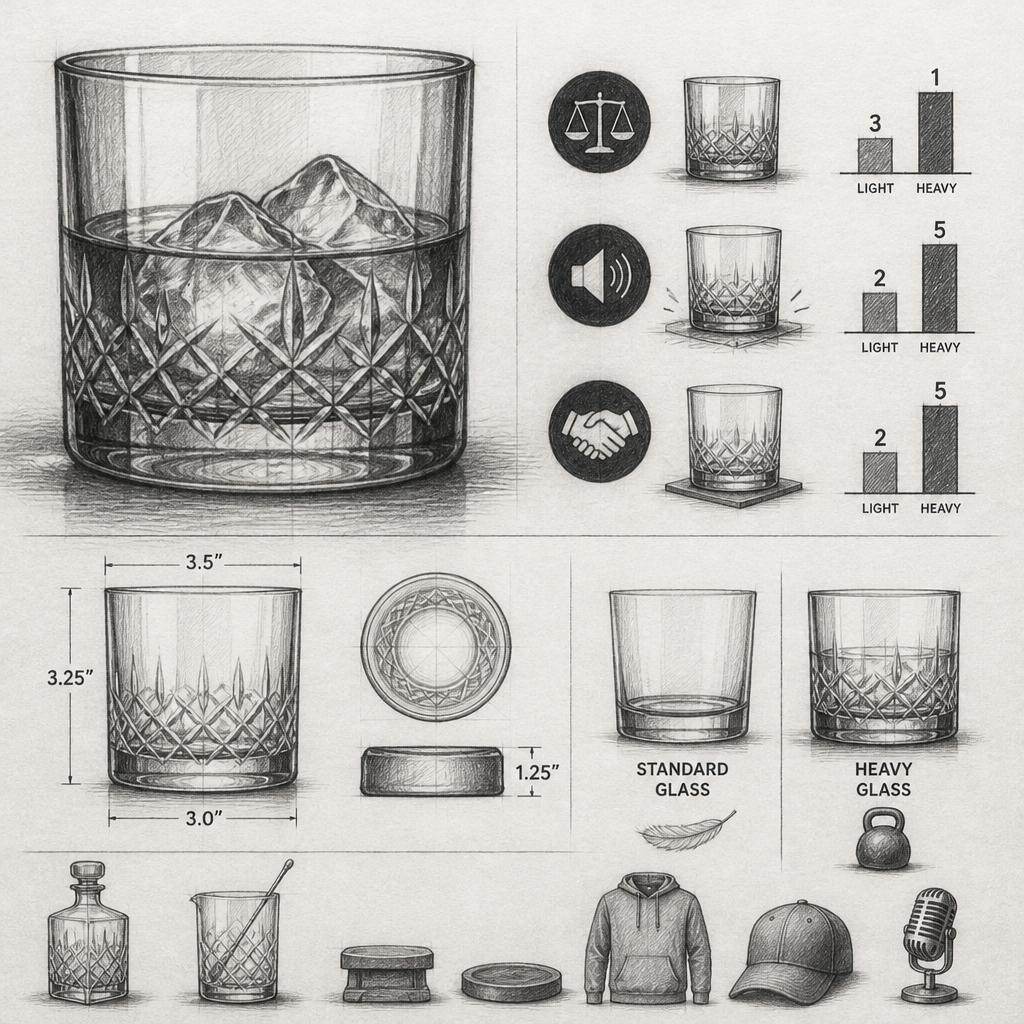
The weight of a glass signals quality. A weighted base feels premium. It sits firmly on a desk. It doesn't tip or feel flimsy.
Craftsmanship shows in details most people overlook. The thickness of the glass. The balance point. How light refracts through it.
At Bourbon in the boardroom, the Pour collection exemplifies this approach. Each glass is weighted for a premium experience.
This level of attention transforms a glass from functional to memorable. Your mentor doesn't just use it. They notice it. They appreciate it.
How to Write a Thank You Note for a Mentor
Handwritten Sentiment and Authenticity
A handwritten note elevates the entire gift. It proves you took time. It shows intention. In a world of digital communication, handwriting stands out.
The note doesn't need to be long. A few genuine sentences outperform a lengthy, generic message. Write on quality paper. Use a pen that feels good. Take your time with the words.
The handwriting itself communicates care. Messy but sincere beats perfect but rushed.
Expressing Gratitude Meaningfully
The note should acknowledge specific ways your mentor has helped you. Generic thanks feel hollow. Specific gratitude feels real.
Instead of: "Thank you for being a great mentor." Try: "Your advice about approaching that client differently changed how I think about relationship-building. I've applied it to three situations already, and it's made a real difference."
Name the impact. Show what changed because of their guidance. This transforms a thank-you note from polite to powerful.
A strong note structure:
- Open with a specific moment or lesson
- Explain how it affected your thinking or work
- Acknowledge the time they invested
- Close with genuine appreciation
Keep it to 4-6 sentences. Let the handwriting and specificity do the heavy lifting.
Cultural Nuances and Professional Boundaries
Gift-giving carries different weight across cultures and industries. What feels appropriate in one context might feel uncomfortable in another.
In some cultures, refusing a gift is polite and expected. In others, it's offensive. Some industries view gifts as normal appreciation. Others treat them with suspicion.
Before giving, consider:
- Your mentor's cultural background and what gifts mean in their tradition
- Industry norms and what's typical in your field
- Your mentor's personal values and comfort level with receiving gifts
- The power dynamic and whether the gift could be misinterpreted
When in doubt, ask. A simple question, "Would it be appropriate if I brought you a small gift to say thank you?", clarifies expectations and prevents awkwardness.
Common Mistakes to Avoid When Gifting Mentors
Giving something too personal. Gifts like cologne, clothing, or jewelry can feel intimate for a professional relationship.
Choosing something expensive without context. An extremely costly gift can make your mentor uncomfortable.
Timing the gift poorly. Giving a gift during a moment of tension, right after criticism, or when your mentor is stressed undermines the gesture.
Ignoring company policy. Even if you disagree with restrictions, violating them creates problems. Follow the rules, even if they seem overly cautious.
Making it about you. A gift that's really about impressing your mentor or creating obligation feels hollow.
Post-Gift Follow-Up Etiquette
The gift-giving moment doesn't end when you hand over the present.
Don't ask repeatedly if your mentor likes the gift. Avoid fishing for compliments or reassurance.
Maintain the mentorship as it was. A gift doesn't fundamentally change the relationship.
If the mentorship was formal and ending, the gift marks closure respectfully.
Choosing the right luxury gift for a mentor requires thoughtfulness, not just budget.
At Bourbon in the boardroom, we believe the best gifts facilitate meaningful conversations.
Frequently Asked Questions
What is the best gift for a mentor?
The best gift reflects your mentor's personality and professional legacy. Choose something that demonstrates thoughtfulness rather than expense: a sophisticated office accessory, a premium writing instrument, or a weighted glass designed for meaningful conversation. The gift should feel like a keepsake they'll use or display, not an obligation. Quality and personalization matter far more than price tag.
What are the etiquette rules for gifting a mentor?
Follow these professional gift etiquette guidelines: check your company's corporate policy on gift limits, avoid gifts that could be perceived as influencing professional decisions, present the gift privately rather than publicly, include a handwritten note explaining your gratitude, and time the gift appropriately (end of year, after major milestones, or when concluding the mentorship). Never exceed your company's stated gift guidelines, and avoid gifts that are too personal or intimate.
Is it appropriate to give expensive gifts to a mentor?
Expensive gifts can be appropriate if they align with your company's policies and the nature of your relationship. Focus on quality and craftsmanship rather than raw cost. A well-designed, timeless piece that reflects your mentor's professional interests demonstrates respect and appreciation. However, avoid gifts so expensive they create discomfort or appear to obligate your mentor. When in doubt, check your organization's gift policy or consult HR before purchasing.
How can a gift reflect the value of a mentorship relationship?
Select gifts that acknowledge the specific ways your mentor contributed to your growth. If they value leadership discussions, choose a piece designed for meaningful conversations. If they appreciate craftsmanship, select something with premium materials and attention to detail. Include a personalized note that references specific guidance they provided. The most meaningful gifts show you've paid attention to their values, professional style, and the actual impact they've had on your career development.