 how-to
How to Elevate Your Office Environment: 7 Steps That Work
Table of Contents
- How to Elevate Your Office Environment: A Step-by-Step Plan
- Step 1: Audit Your Current Office Layout and Space Planning
- Step 2: Fix Lighting Quality and Natural Daylight
- Step 3: Choose a Color Palette and Office Decor Ideas for Productivity
- Step 4: Add Indoor Plants and Natural Elements
- Step 5: Upgrade Ergonomics, Furniture, and Acoustic Comfort
- Step 6: Declutter and Build Storage Solutions That Stick
- Step 7: Executive Office Design Ideas and Meeting Room Design Ideas
- How to Measure Whether Your Office Changes Actually Worked
- A Budget-Tiered Plan You Can Start Today
- Accessible and Inclusive Design Choices
- Getting Your Team Involved
- Frequently Asked Questions
Last Updated: October 13, 2026
How to Elevate Your Office Environment: A Step-by-Step Plan
A better office does not require a full rebuild, just a clear order of operations.
This guide walks through seven steps, from a simple space audit to the small objects that make meetings feel different.
An office is not a backdrop. It is a tool, and treating it like one shows up in focus, comfort, and how people talk to each other.
U.S. General Services Administration workplace guidance
What You'll Need Before You Start
Gather a few basics before you change anything:
- A floor plan or rough sketch of your space
- A tape measure
- A notebook or shared doc for observations
One common mistake is buying furniture before measuring the room. Measure first.
Step 1: Audit Your Current Office Layout and Space Planning
Watch how people use the space for one full week. Most offices have a few busy zones and a lot of dead space nobody claims.
Measure, Map, and Identify Dead Zones
Walk the floor at three points in the day: morning, midday, and late afternoon. Note which desks, corners, and rooms sit empty.
- Mark high-traffic paths between desks, doors, and the kitchen
- Flag corners that collect boxes or unused chairs
- Note where people cluster for informal chats
Dead zones are not wasted, just unassigned. A reading nook, a small call booth, or a standing huddle spot often fits there.
Plan for Hybrid Work and Flexible Space
Hybrid schedules mean fewer desks are occupied at once, an advantage, not a problem. Shrink assigned seating and add shared zones: focus booths, small meeting tables, and soft seating. Match the room to the task, not the person.
Step 2: Fix Lighting Quality and Natural Daylight
Lighting is the fastest, cheapest upgrade most offices ignore. Poor light causes eye strain, headaches, and afternoon slumps. Start with natural daylight: move desks closer to windows, keep blinds open, and never block a window with a tall cabinet.
Layer Your Lighting for Visual Comfort
One overhead fixture for a whole room rarely works. Layer three sources instead:
- Ambient light for general brightness
- Task light at each desk for close work
- Accent light for warmth in lounges and meeting rooms
Swap harsh cool bulbs for warmer options in social areas, and keep brighter, cooler light in work zones.
U.S. Department of Energy lighting guidance
Step 3: Choose a Color Palette and Office Decor Ideas for Productivity
Color is the cheapest mood lever in the building, and the one most teams get wrong by treating it as a taste question instead of a function question. The goal is an office that tells people what kind of work happens where.
Match Color to the Work, Not the Trend
A useful rule of thumb: cool, bright neutrals for focus zones, warmer tones for gathering zones, and one saturated accent to mark transitions.
- Focus zones (desks, deep-work rooms): whites, soft grays, pale blues, and light greens, calm and low visual noise.
- Gathering zones (kitchens, lounges, huddle tables): warmer neutrals, terracotta, mustard, or wood tones that invite people to linger.
- Transition zones (hallways, entryways): one saturated accent, a painted door, a colored rug, a single wall, so people feel the shift from "arriving" to "working."
For a small to mid-sized company, restraint beats boldness. Pick two neutrals and one accent, then repeat them across walls, rugs, and small decor.
The Budget-Tiered Decor Play
Decor is where budgets blow up fastest, so sequence it deliberately.
- Free: rearrange what you already own. Move art onto a shelf, and rotate plants and objects between rooms.
- Low cost: one accent wall, one area rug per zone, and new textiles in the same palette. Paint and fabric do more mood work per dollar than furniture.
- Capital: wall coverings, built-in shelving, or a full repaint, only after the free and low-cost moves have been tested for a month.
Decor That Earns Its Place
Office decor ideas for productivity should stay simple and functional:
- Keep walls mostly light or neutral so screens and faces stand out
- Use one accent color on a single wall or in textiles, not both
- Add texture through rugs, wood, and fabric rather than busy pattern
A Quick Note on Inclusive Color Choices
Color is not neutral for everyone. A few practical adjustments keep the palette working for the whole team:
- Avoid relying on red/green contrast alone for signage or wayfinding; pair color with shape or text
- Keep high contrast between text and background on any printed or wall-mounted sign
- Offer a low-saturation option in at least one quiet room for people who find strong color overstimulating
Before committing, ask two or three team members from different roles to walk the space and describe what each room feels like. Their read beats any trend report.
Step 4: Add Indoor Plants and Natural Elements
Plants are the cheapest way to make an office feel alive. Natural elements give the eye a place to rest, soften hard edges, and signal that the space is cared for, a cue that matters more in small and mid-sized offices, where one neglected corner reads as the whole company's state of mind.
Place Plants by Function, Not by Aesthetics
Where a plant goes changes what it does:
- Entryways and reception: taller floor plants (fiddle-leaf fig, rubber plant, snake plant) to anchor the first impression
- Meeting rooms: one medium plant on or near the table to break up the hard rectangle of screens and laminate
- Desks and shared tables: small succulents, pothos, or ZZ plants that tolerate neglect
The Budget-Tiered Green Plan
- Free: move existing plants into better light. Most sad office plants are not dying, they are just in the wrong spot.
- Low cost: one large floor plant per gathering zone, plus a few small desk plants. Buy in person so you can check the soil and leaves.
- Capital: a living wall, a planted partition, or a full biophilic redesign. Do this only after the low-cost version has survived three months.
Natural Materials Do Half the Work
Plants get the credit, but wood, stone, linen, and wool carry most of the biophilic effect. A wood table, a wool rug, and a linen curtain do more for how a room feels than ten more plants.
- Swap plastic or laminate surfaces for wood where budget allows
- Add a wool or cotton rug in gathering zones
- Use linen or cotton curtains instead of vinyl blinds
The Maintenance Reality
Plants fail for predictable reasons: wrong light, overwatering, and no owner. Fix all three before you buy.
- Assign one person per zone to water and rotate plants
- Put a reminder on the shared calendar every two weeks
- If real plants keep dying, mix in a few high-quality faux options. A healthy-looking faux plant beats a dead real one every time.
A Quick Note on Sensory Needs
Not everyone experiences plants the same way. A few adjustments keep the green plan inclusive:
- Keep strong-scented flowering plants out of shared rooms; scent is a common migraine and allergy trigger
- Avoid plants with fuzzy leaves or heavy pollen near desks where people with allergies sit
- Offer at least one plant-free quiet room for people who need a low-stimulation space
To check whether plants are helping, add one question to your before-and-after survey: "How calm does this space feel?" Rate it 1-5. A one-point shift after three months is a real signal.
Step 5: Upgrade Ergonomics, Furniture, and Acoustic Comfort
Bad furniture shows up in posture, mood, and sick days. Ergonomics is basic upkeep, not a luxury.
Standing Desks and Seating That Support Focus
A standing desk helps people shift posture through the day. Pair it with a chair that supports the lower back and adjusts at the arms and height.
- Set monitors at eye level
- Keep keyboards close to avoid reaching
- Encourage a mix of sitting and standing, not all-day standing
Noise Control and Temperature Control Basics
Noise is the most common complaint in open offices. Acoustic comfort comes from three fixes: absorb, block, and mask.
- Absorb: rugs, curtains, fabric panels, soft seating
- Block: partitions, phone booths, closed rooms for calls
- Mask: consistent background sound, not silence
Temperature control matters just as much. Check for drafts near windows and vents, and let people adjust locally with small fans or heaters.
Step 6: Declutter and Build Storage Solutions That Stick
Clutter builds quietly. A few boxes become a wall of them. The fix is storage that matches how people actually work.
Decluttering is not a one-time event. It is a system.
- Give every shared item a labeled home
- Add closed storage for anything visually noisy
- Keep desk surfaces mostly clear
A minimalist workspace is not empty. It is intentional. Desk organization works when the storage is closer than the mess.
Step 7: Executive Office Design Ideas and Meeting Room Design Ideas
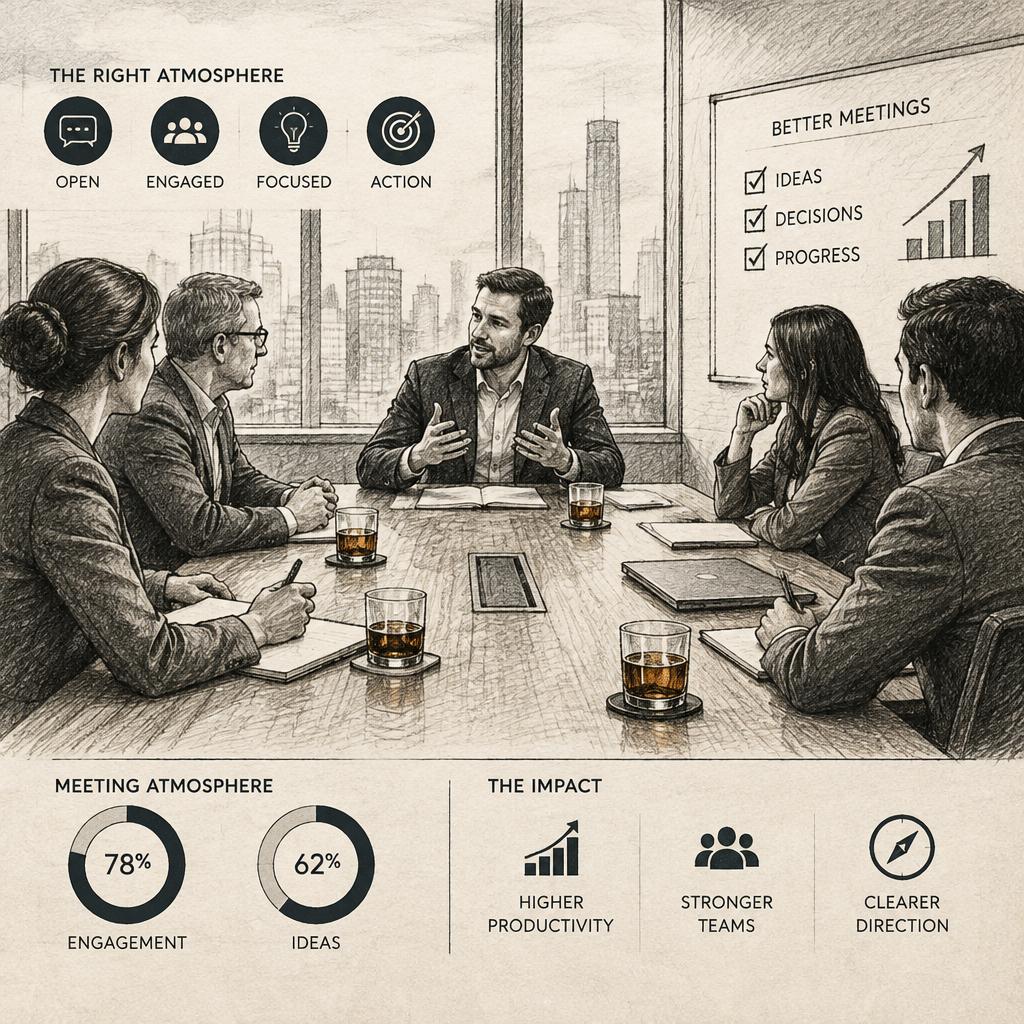
Meeting rooms set the tone for every important conversation. A few deliberate choices make them feel considered rather than generic.
For an executive office, avoid the showroom look. Choose a few high-quality pieces over many cheap ones. Good lighting, a clean table, and comfortable chairs do more than any wall display.
Objects That Make Meetings More Engaging
The objects on the table shape how people sit and talk. A shared focal point gives people something to reach for, and that small action starts conversation.
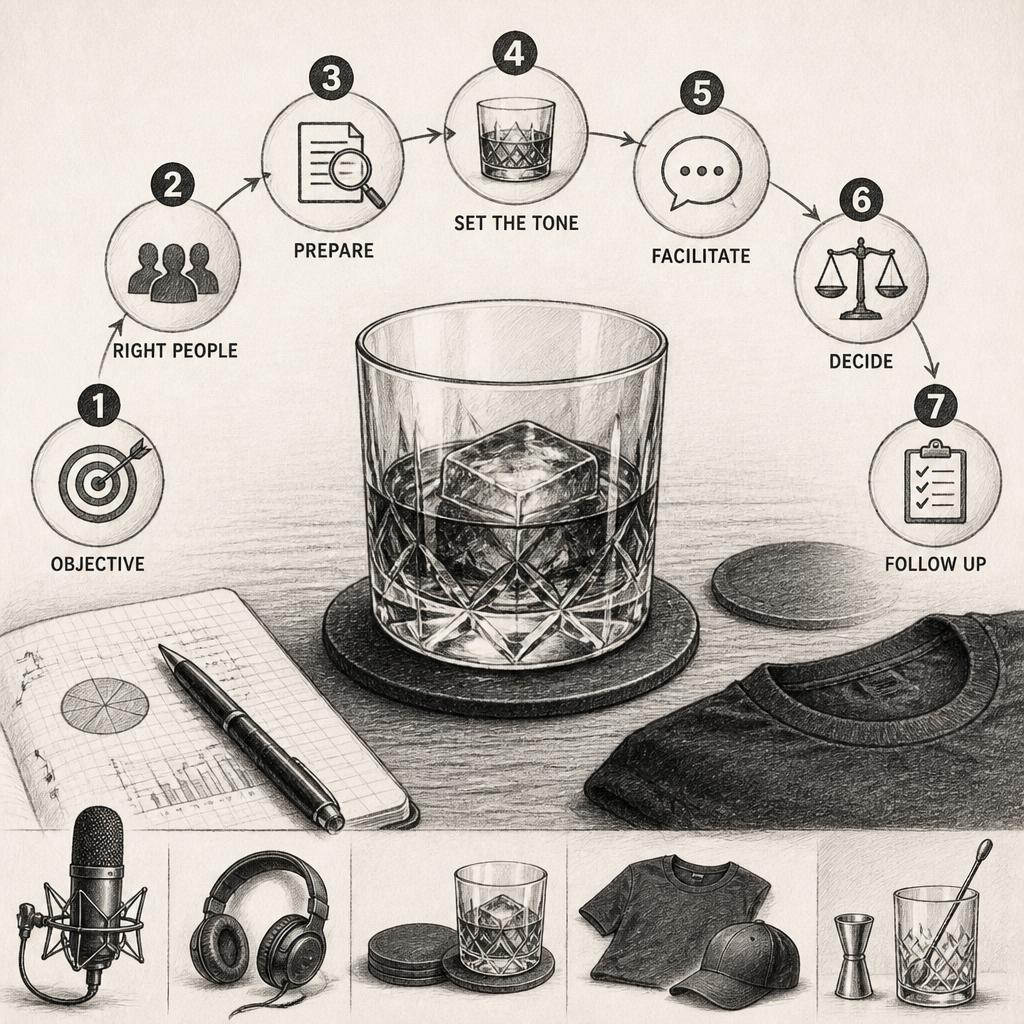
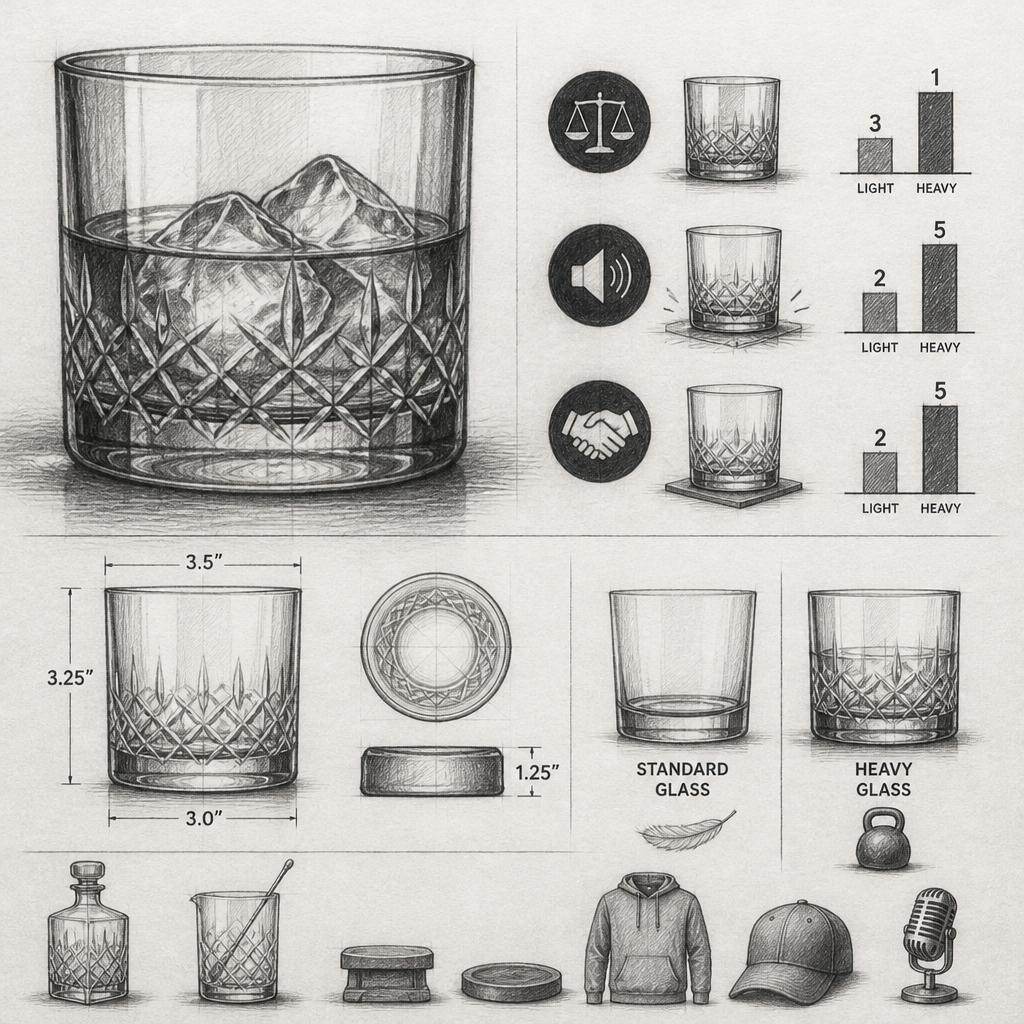
Weighted, classic old-fashioned glassware is one example. The Pour, from Bourbon in the boardroom, makes short, wide glasses with a solid feel in the hand and an etched tagline on the bottom.
- Choose objects with weight and texture over glossy plastic
- Keep one signature piece per table, not five
- Make sure anything on the table can survive regular use
U.S. Department of Labor ergonomics guidance
How to Measure Whether Your Office Changes Actually Worked
Measure before you change anything. A simple before-and-after survey gives you real numbers instead of opinions.
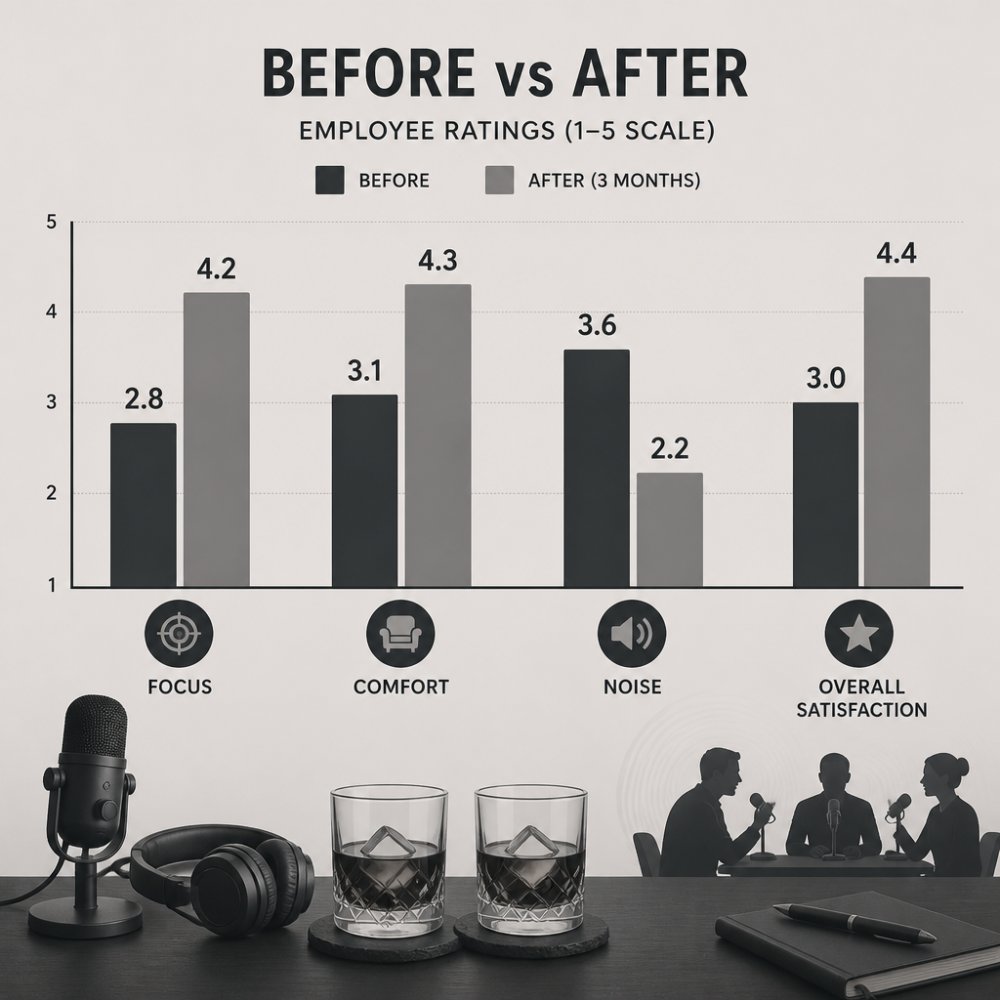
A few practical notes on measurement:
- Keep the same questions both times
- Survey everyone, not just the loudest voices
- Track one or two hard metrics too, like meeting room use
If scores do not move, the changes missed the real problem. Go back to the audit.
A Budget-Tiered Plan You Can Start Today
Not every office can do everything at once. Sequence the work by budget.
| Priority | Action | Effort | Time to See Results |
|---|---|---|---|
| Now | Declutter and label storage | Low | 1-2 weeks |
| Now | Add task lighting at desks | Low | Immediate |
| Soon | Add plants and natural materials | Low | 2-4 weeks |
| Soon | Fix noise with rugs and panels | Medium | 3-6 weeks |
| Later | Replace worn chairs and desks | High | 1-2 months |
| Later | Reconfigure layout for hybrid use | High | 2-3 months |
Start at the top. The cheap fixes often deliver the biggest shift in how the office feels.
Accessible and Inclusive Design Choices
An office that works for everyone is not a bonus. It is the baseline.
- Keep walkways wide enough for wheelchairs and mobility aids
- Add adjustable lighting so people can soften glare
- Use high-contrast signage for wayfinding
Accessibility and inclusive design overlap with every step above. Layout, lighting, noise, and storage all affect who can do their best work.
Getting Your Team Involved
Changes stick when people help make them. A small workplace committee beats a top-down rollout every time.
- Ask for volunteers across teams and roles
- Give the group a small budget to test ideas
- Share survey results openly, good or bad
The goal is a space people feel ownership over. That feeling is what keeps it tidy, used, and cared for.
Frequently Asked Questions
What does a good office environment include?
A good office environment covers seven basics: a layout that matches how people actually work, layered lighting with access to natural daylight, a calm color palette, some indoor plants, ergonomic furniture, noise control, and organized storage. Comfort matters too, including temperature and air quality. You do not need all seven on day one. Start with the two that affect daily focus most, usually layout and lighting, then work down the list as budget allows.
How can I improve my work environment without redesigning the whole office?
Focus on changes one person can make. Clear your desk surface, add a task lamp for visual comfort, reposition your chair for better ergonomics, and bring in one or two plants. If noise is the problem, try a rug or soft wall covering to absorb sound. These small moves often deliver more day-to-day improvement than a large renovation, and they cost far less. Measure your focus for two weeks before and after to see what actually helped.
How can office design support focus and productivity?
Design supports focus when it reduces friction. That means fewer interruptions from noise, lighting that does not cause glare or eye strain, and a workspace that stays organized. Layout matters most: keep high-traffic paths away from desks where people do concentrated work. A standing desk option helps too, since changing posture through the day reduces fatigue. Track one or two simple measures, such as how often you get interrupted or how long you can work without a break, to confirm the change worked.
What objects can help make meetings more engaging?
Tactile objects give people something to focus on and often loosen up conversation. Weighted glassware, a quality pen, or a well-made notebook on the table all work. The point is not decoration; it is a shared focal point that signals the meeting matters. For boardroom settings, classic short-wide old-fashioned glasses with a weighted feel serve this purpose well and hold up to regular use. Choose items that still look sophisticated in five years, not trend pieces that date quickly.
Most offices do not need a rebuild. They need a clear order of operations, a little patience, and objects that hold up to daily use. Bourbon in the boardroom supports that work through The Pour collection: weighted, classic old-fashioned glassware with a signature logo and an etched tagline on the bottom, built for leaders who value real conversation. Add a set to your boardroom or send one as a gift, and give your next meeting a focal point worth reaching for.